

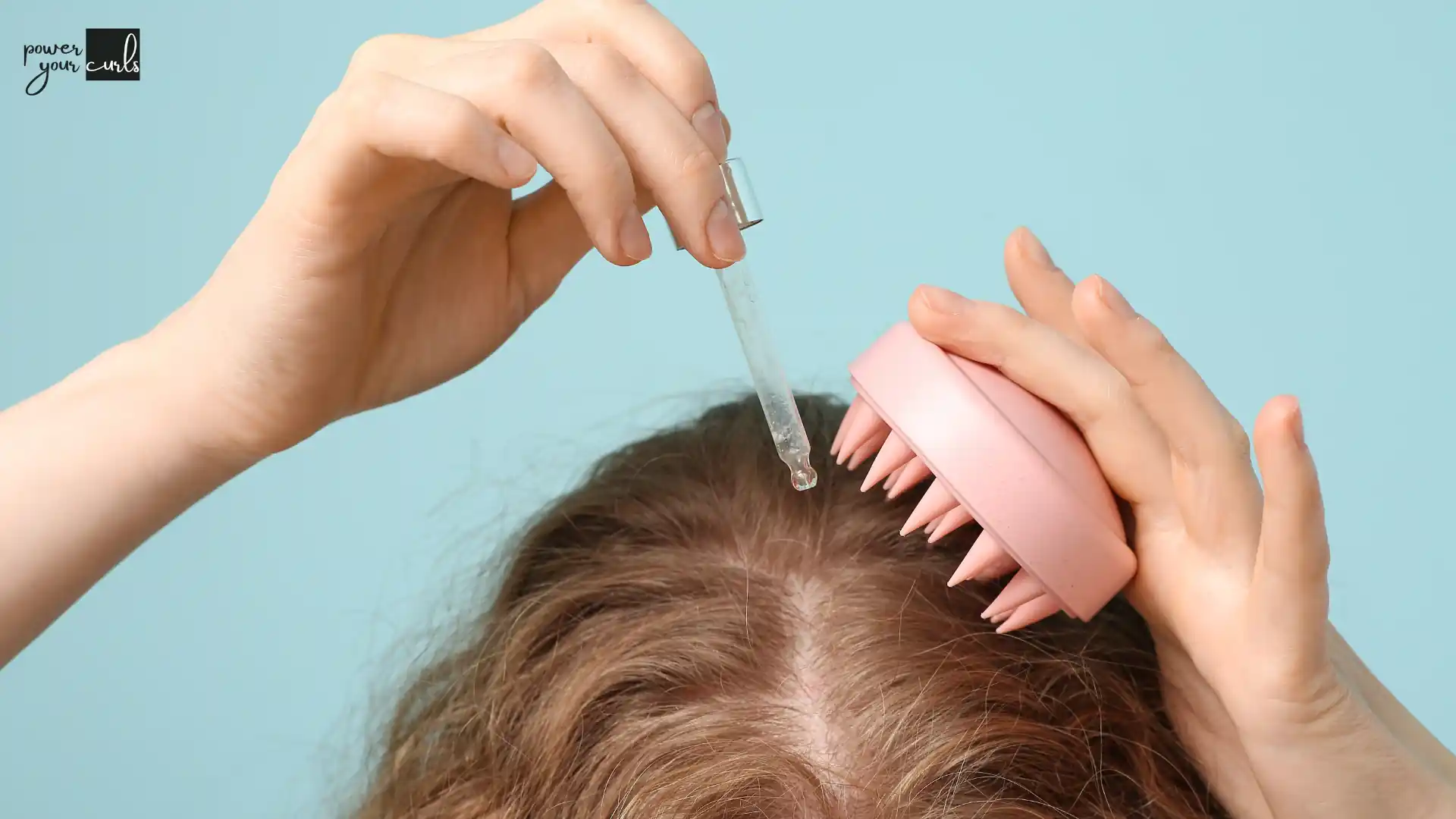
Has your hair been feeling limp, lifeless, and just blah lately? If you’re nodding sadly, product buildup on your scalp could be the culprit.
What is Product Buildup and Why Should You Care?
Product buildup occurs when residue from hair products like gels, sprays, and conditioners accumulates on the scalp over time, and removing this buildup regularly is crucial for maintaining a healthy scalp and gorgeous hair.
Simply put, product buildup refers to the stubborn residue left behind by hair products that get trapped on the scalp and strands. Over time, this gunk keeps piling on, clogging hair follicles, and weighing down your tresses. If left unchecked, it can lead to excessive oiliness, dandruff, dullness, and hair thinning or loss. Gross, right? That’s why it’s so important to regularly give your scalp a deep clean to remove this unsightly buildup.
Signs You Have Product Buildup
One or more of the following signs may indicate that you have product buildup on your scalp
Your Hair Feels Limp and Lifeless
If your hair has lost its beautiful bounce and body, product buildup could be one of the reasons (hygral fatigue being the other). All those product residues weighing down your strands can leave them looking flat and lackluster. You may also notice your hair feels grimier and coarser to the touch.
You Notice Flakes or Excessive Oiliness
Buildup traps sebum, dead skin cells, and other impurities on the scalp, giving rise to unsightly flakes and an overly oily appearance. No one wants to deal with that dandruff-like snow shower!
Your Scalp is Itchy and Irritated
When buildup clogs follicles, it can lead to scalp irritation, redness, and incessant itchiness. This discomfort is your scalp’s way of telling you it needs a deep clean, pronto!
A point to note here is that an itchy scalp is not necessarily a sign of product accumulation, it can be due to dandruff, scalp psoriasis, and so on in which case the remedies for product buildup may not be an effective treatment. If that’s the case, check out my guide on how to deal with an itchy scalp.
6 Easy Home Remedies to Remove Product Build-Up From Your Scalp
1. Baking Soda Scrub
Baking soda is a kitchen superhero when it comes to eliminating buildup.
Just mix a couple of tablespoons into your regular shampoo until you get a gritty paste. Gently massage this scrub into your scalp using circular motions, then rinse thoroughly. The mild abrasiveness helps slough off all that nasty gunk. Use it sparingly on curls, though. Baking soda is alkaline, and alkaline products raise the negative charge on the hair surface, which increases friction, frizz and tangling (Dias et al., 2014). Always follow it with conditioner.
2. Apple Cider Vinegar Rinse
Apple cider vinegar’s acidity (acetic acid) helps dissolve and wash away buildup. After shampooing, mix 1 part ACV with 4 parts water and pour the mixture over your hair, massaging it into your scalp. Let it sit for a few minutes before rinsing out.
3. Lemon Juice Rinse
Similar to ACV, the citric acid in lemon juice acts as a natural clarifier to break down buildup. Simply mix the juice of 1 lemon with 1 cup of water and massage it into your scalp after shampooing. Rinse thoroughly after letting it sit for 5 minutes.
4. Use a Clarifying Shampoo
When home remedies aren’t cutting it, reach for a clarifying or detox shampoo. Look for ones with ingredients like sulfates that deeply cleanse and strip away residue. Most people do not need one every week; the curly hair section below explains how often to clarify.
5. Apply Aloe Vera Mask
Aloe vera is renowned for its cleansing and soothing properties for the scalp and hair. Blend some aloe gel with a bit of lemon juice and apply it as a hair mask, focusing on the scalp area. Let it work its magic for 20-30 minutes before rinsing.
6. Bentonite Clay Treatment
This natural clay is like a magnet for impurities and product residues. Mix bentonite clay with ACV and water to form a spreadable paste. Apply it to your scalp, let it dry completely, then rinse off for an intensive deep clean.
Salon Clarifying Treatments: The Last Resort
For severe, stubborn buildup, a salon session may be in order. Professionals have access to heavy-duty clarifying treatments and tools to give your scalp an intensive detox. Options like the latest Scalp Facial use steam and specialized products to dissolve every last bit of gunk without damaging your strands.
How to Get Rid of Build-Up in Curly Hair
Curly routines are especially prone to build-up because they layer several leave-in products, such as a leave-in conditioner, a cream and a gel, and most of those are made to stay on the hair. Cationic conditioning polymers (the “polyquaterniums” on many styler labels) can bind so firmly to hair that they are difficult to remove, and some combine with shampoo surfactants into a residue that resists shampooing (Dias, 2015).
Signs of Build-Up on Curly Hair
On curls, build-up rarely shows up as flakes first. Look for curls that won’t clump or hold their shape, products that seem to sit on top of your hair instead of sinking in, a coated or waxy feel once your hair is dry, and wash-day results that keep getting worse even though your routine hasn’t changed. Limp, over-stretchy curls can also point to hygral fatigue or protein overload, so rule those out too.
A Curl-Safe Clarifying Routine
- Wet your hair thoroughly and work a clarifying shampoo into your scalp, then let the lather run down the lengths. We stock several, including Pure Curls Clarifying Shampoo. If you use a strong-hold gel, shampoo twice.
- If you have hard water or swim often, pick a chelating shampoo, which is made to bind minerals. Soap residue can also leave calcium salts that build up on hair and make it dull and tangled (Dias, 2015). Our guide to hard water and your hair covers the signs.
- Follow straight away with a moisturising mask or deep conditioner. Dias (2015) recommends pairing an anti-residue shampoo with a mask containing hydrolysed amino acids, silicones or vegetable oils, so you remove the residue without leaving hair stripped.
- Go lighter on stylers for the next few washes so you can see how much product your curls actually need.
As for how often, the same review suggests an anti-residue wash about once every 10 shampoos, or more often if you need it (Dias, 2015). If you wash your curls twice a week, that works out to roughly once a month. Heavy gels, hard water and swimming are all reasons to clarify more often; a light, water-based routine may need it less. For a routine-by-routine breakdown, see how often to use clarifying shampoo on curly hair.
How to Prevent Product Build-Up on Your Scalp
You know what they say – an ounce of prevention is worth a pound of cure. Once you’ve gotten rid of the existing buildup, make some easy changes to prevent it from returning.
Use Products Sparingly
We all love our styling products, but using too much can quickly lead to buildup. My rule? Use only a pea-sized amount and concentrate it on the ends rather than your roots and scalp.
Rotate Products Regularly
Sticking to the same shampoo, conditioner, or styler for too long allows their ingredients to accumulate on your hair. Get into the habit of switching up your products every few months to keep things fresh.
Deep Clean Monthly
Mark your calendar to give your scalp a deep cleansing treatment at least once a month. A little maintenance goes a long way! Try doing a baking soda scrub or using a clarifying shampoo to reset and refresh.
By following these tips and hacks, you can say goodbye to limp, lackluster hair from product buildup. Your scalp (and your gorgeous mane) will thank you! Do you have any favorite tricks for nixing buildup? Drop them in the comments – I’m always looking to learn more about hair care wisdom.
