

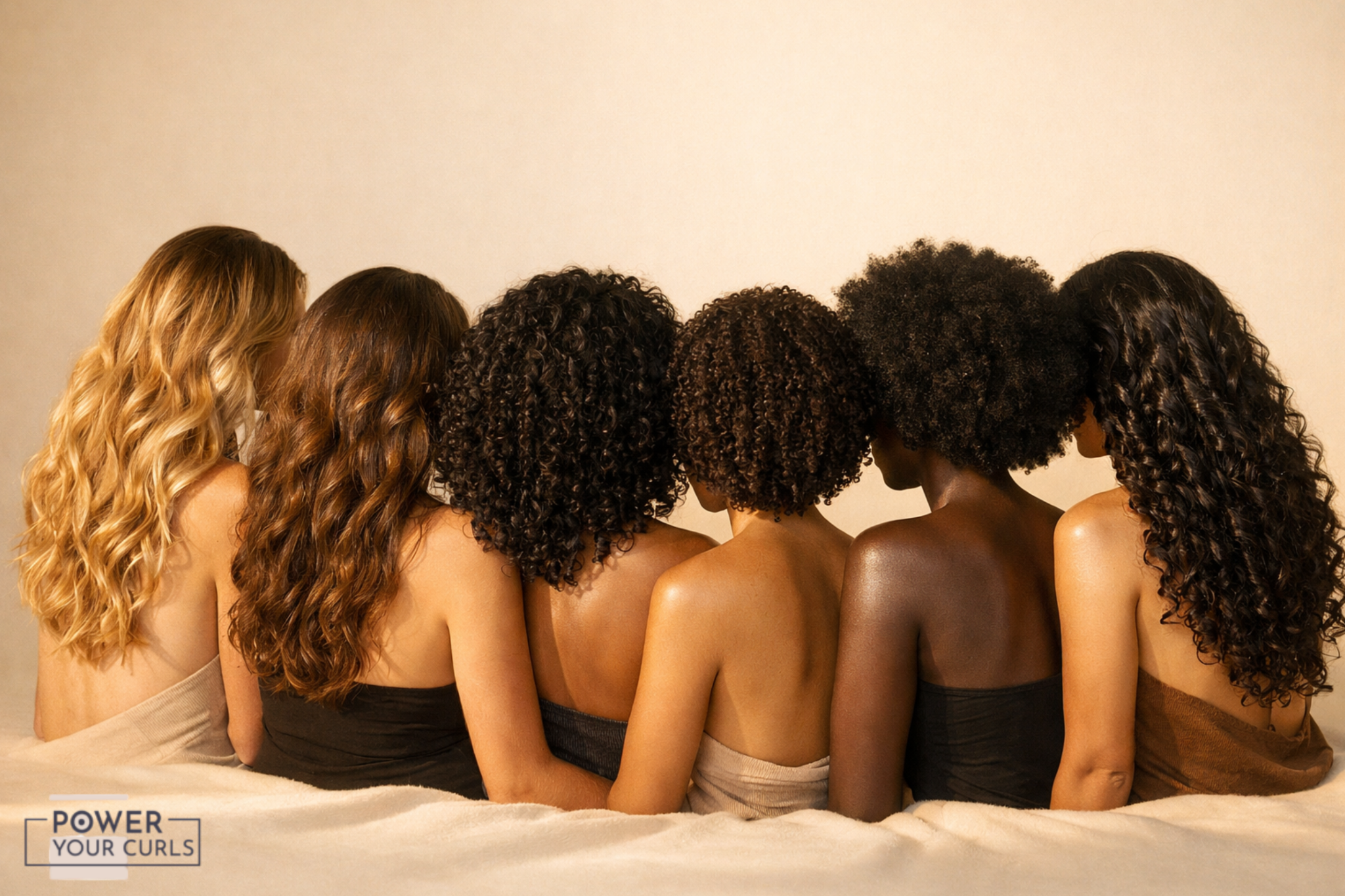
Have you ever looked at your curls and wondered where they actually come from? Whether you’re rocking a 3C ringlet crown or a 4B coil galaxy, hair texture is a visible expression of ancestry. It’s a biological fingerprint shaped over thousands of years of human evolution and migration.
Curly hair genetics is a genuinely fascinating science. It’s not controlled by a single curl gene, but by a constellation of factors. These genetic variants, the shape of your hair follicle, and proteins that determine how tightly your hair coils.
Different ethnicities carry different versions of these genes which is why curl patterns vary so dramatically across populations worldwide. A 2025 multinational study of 19,461 people across nine countries, confirmed just how wide that variation really is.
Below we break it all down using infographics, data charts, ethnicity genetics tables, and inheritance diagrams. You can use these to bring this content to life and visualize for yourself. If you want to understand how your specific curl pattern affects which products actually work for you, say no more. Our curl porosity guide is worth reading alongside this one.
BY THE NUMBERS
Curly Hair at a Glance
| ~22%
of 19,461 people surveyed globally reported curly hair Flament et al., 2025 |
43%
Brazil had the highest curly hair prevalence of any country studied in 2025 |
5.5%
China had the lowest curly hair prevalence of any country studied in 2025 |

THE BIOLOGY
Why Does Hair Curl at All
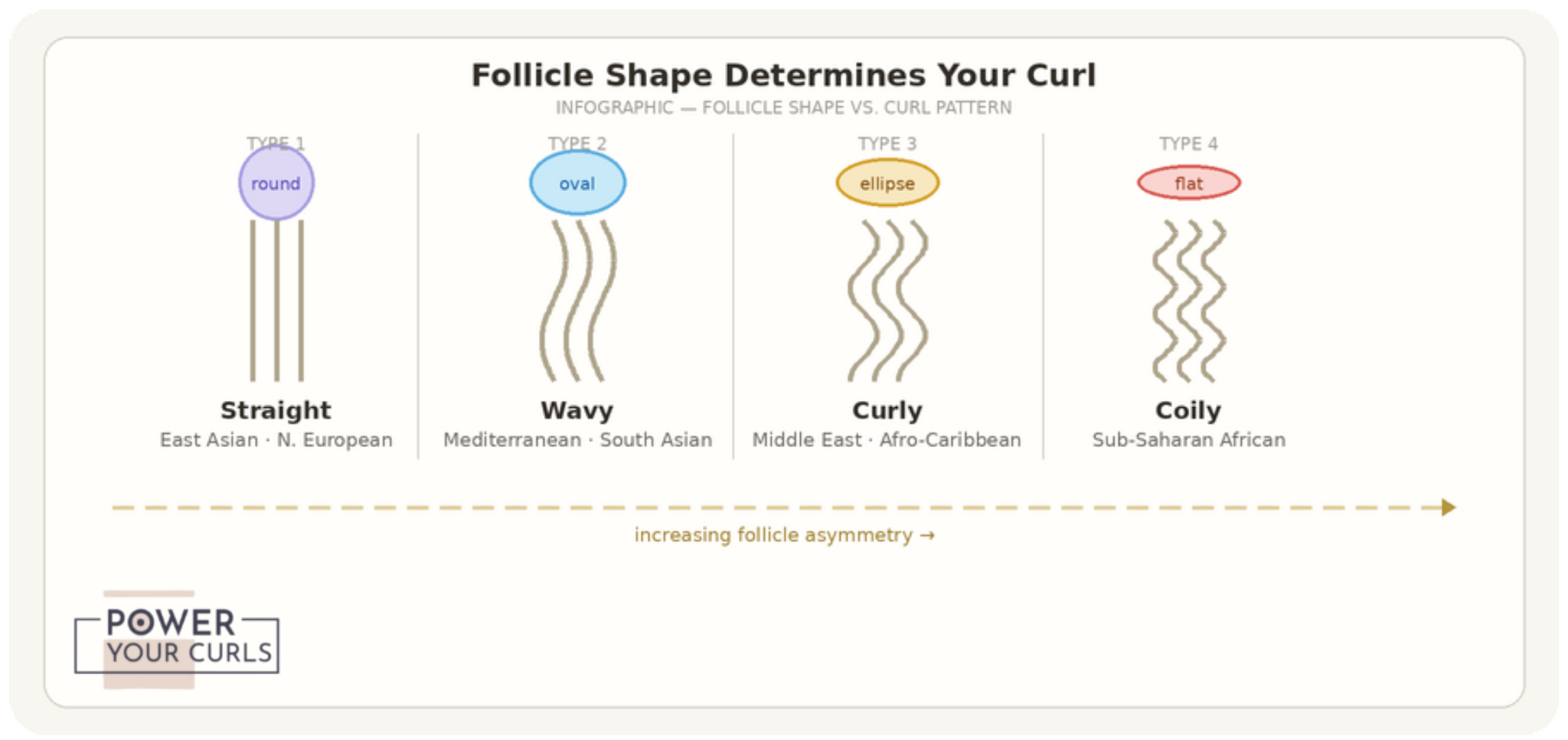
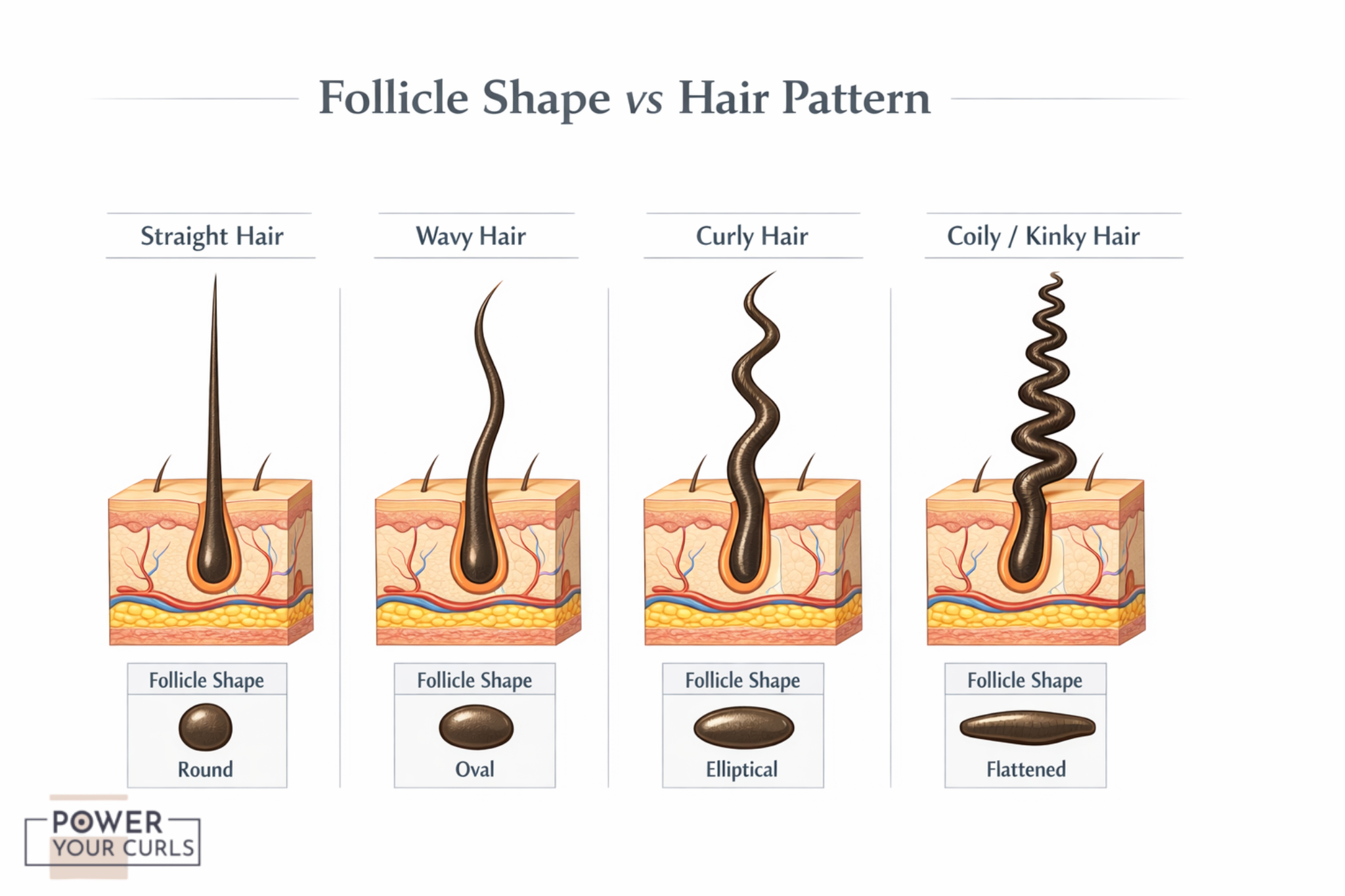
The key to your curl pattern is not the hair strand itself. It’s the hair follicle, or the tiny organ inside your scalp that produces each strand. Symmetrical, round follicles produce straight hair. Asymmetrical, oval, or flattened follicles produce wavy or curly hair. The more asymmetrical the follicle, the tighter the curl.
As the fiber grows through the follicle, proteins called keratins are laid down unevenly across the cortex of the strand. This phenomenon creates internal tension on one side of the hair strand, making the fiber naturally spiral and bend.
A structural protein called trichohyalin plays a central role in cross-linking your curls. Encoded by the TCHH gene, this protein essentially decides the strength and angle of each strand of your hair.
“Hair plays a critical role in enhancing physical appearance, self-esteem, and identity… curl degree varied significantly across age, gender, country and ethnicity.”
Flament et al. Clinical, Cosmetic and Investigational Dermatology, February 2025 · 19,461 participants across 9 countries
Curly hair is an additive, polygenetic trait. This means that multiple genes are behind your curly hair, including the hair structure and definition. One’s curliness will depend on how many inherited curl variants across multiple genes.
Key Genes That Shape Your Curl
| GENE | WHAT IT DOES | POPULATION AFFECTED MOST |
| TCHH | Encodes trichohyalin, a protein that cross-links keratin filaments in the follicle’s inner root sheath. The T-allele variant is strongly associated with straight hair in European populations. | Northern & Southern European |
| EDAR | Controls hair shaft thickness and follicle density. The V370A variant produces thick, straight hair one of the strongest signals of positive selection in the Asian genome. | East Asian populations |
| FGFR2 | A fibroblast growth factor receptor involved in follicle development. Polymorphisms linked to hair thickness in East Asian populations, working in concert with EDAR. | East Asian populations |
| PRSS53 | Encodes a serine protease in the inner root sheath. The Q30R variant has been linked to curl variation in South American admixed populations via GWAS. | Admixed Latin American |
| KRT81/86 | Keratin genes that determine structural integrity and shape of the hair fiber. Variants contribute to coil tightness across multiple populations. | Broad — multiple ethnicities |
THE CHART
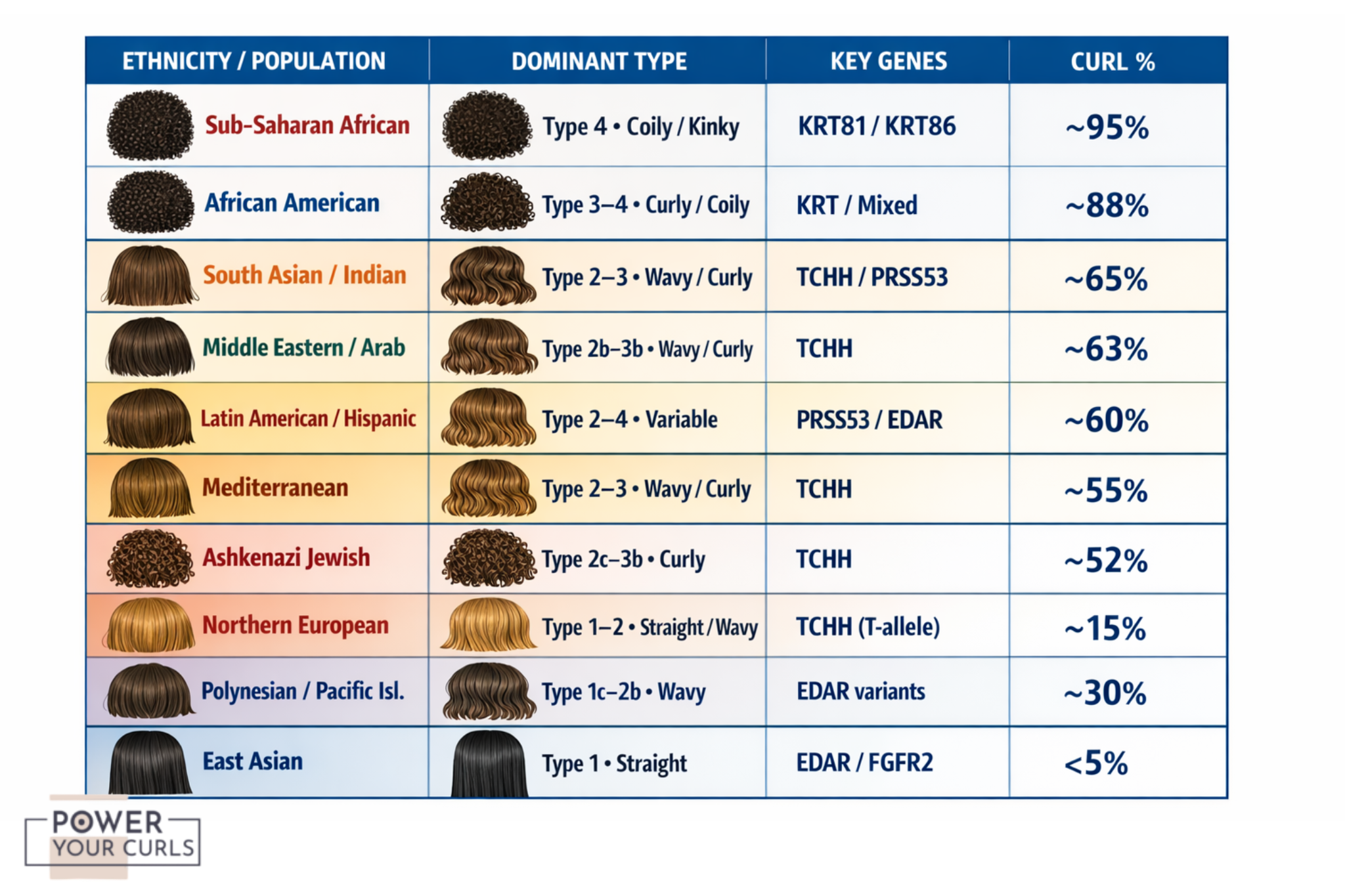
Curly Hair Genetics by Ethnicity
While curl patterns exist on a spectrum and vary enormously within any ethnic group, population genetics research reveals consistent trends. This is about population-level averages; your curls are always your own.
UNDERSTANDING CURL TYPES
The André Walker Hair Typing System & Ethnicity
The André Walker Hair Typing System is a well-known hair classification scale that ranges from one (1) to four (4). This scale maps fairly well onto genetic ancestry patterns, but it’s not a perfect one-to-one.
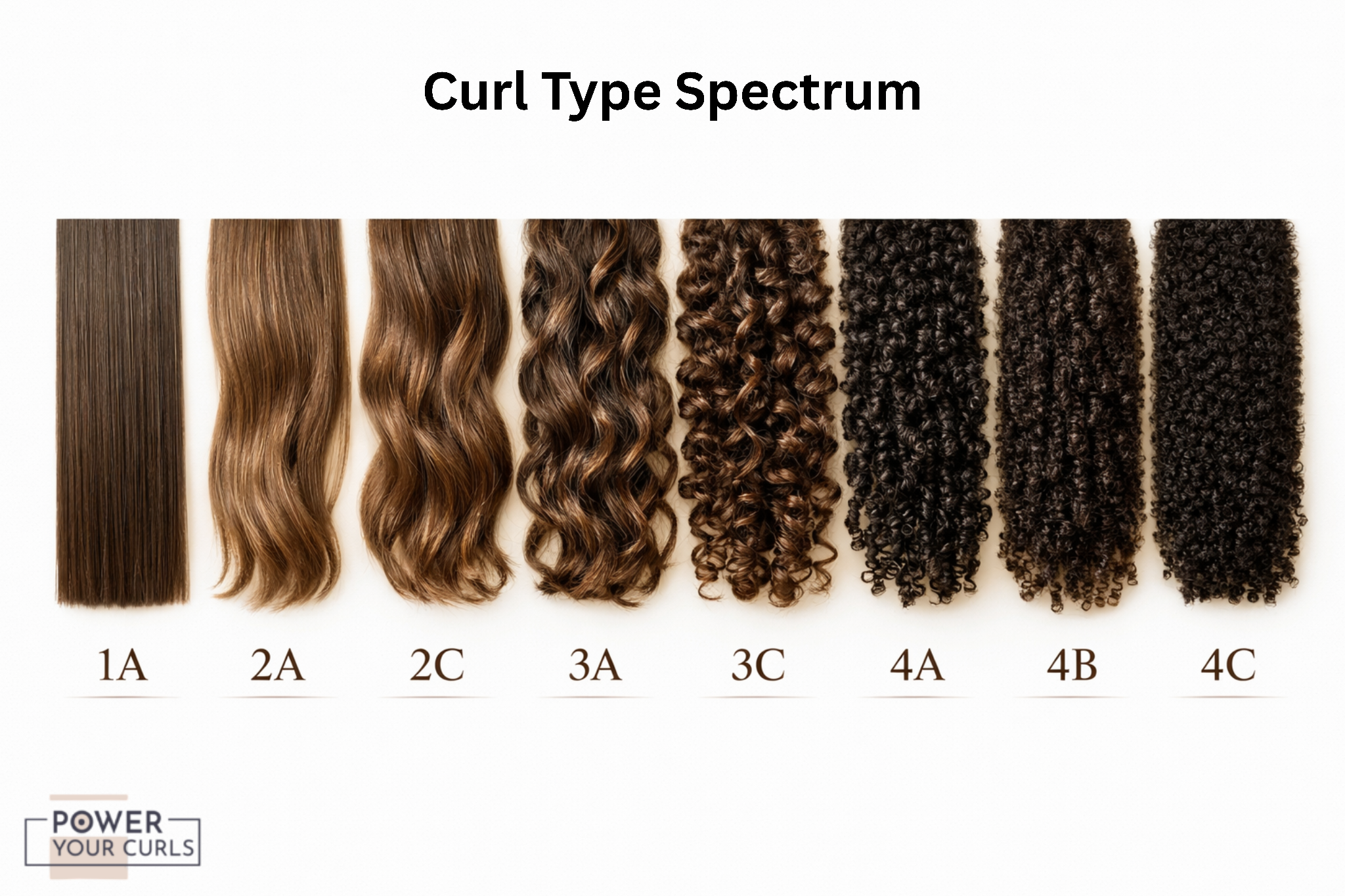
| TYPE 1
Straight No curl pattern. Round follicle, symmetrical keratin distribution. Oilier because sebum travels the shaft easily. East Asian · Northern European · Some Native American |
TYPE 2
Wavy S-shaped bends. Slightly oval follicle. Ranges from beach wave (2a) to defined waves (2c) with more frizz. Mediterranean · South Asian · Latin American · N. European |
| TYPE 3
Curly Springy, defined S or Z curls. Oval to elliptical follicle. Ranges from loose corkscrew (3a) to tight spirals (3c). Afro-Caribbean · Biracial · Middle Eastern · South Asian · Ashkenazi Jewish |
TYPE 4
Coily / Kinky Tight Z-pattern or springy coils. Highly asymmetrical follicle, greatest difference between sides of the cortex. Sub-Saharan African · African American · Afro-Latino |
INHERITANCE
How You Inherit Your Curl Pattern
Curly hair is generally considered a dominant trait, while straight hair is recessive. And since your curl is polygenic (influenced by many genes), the reality is more nuanced than a simple dominant/recessive flip. Think of it like a dimmer switch rather than an on/off button.
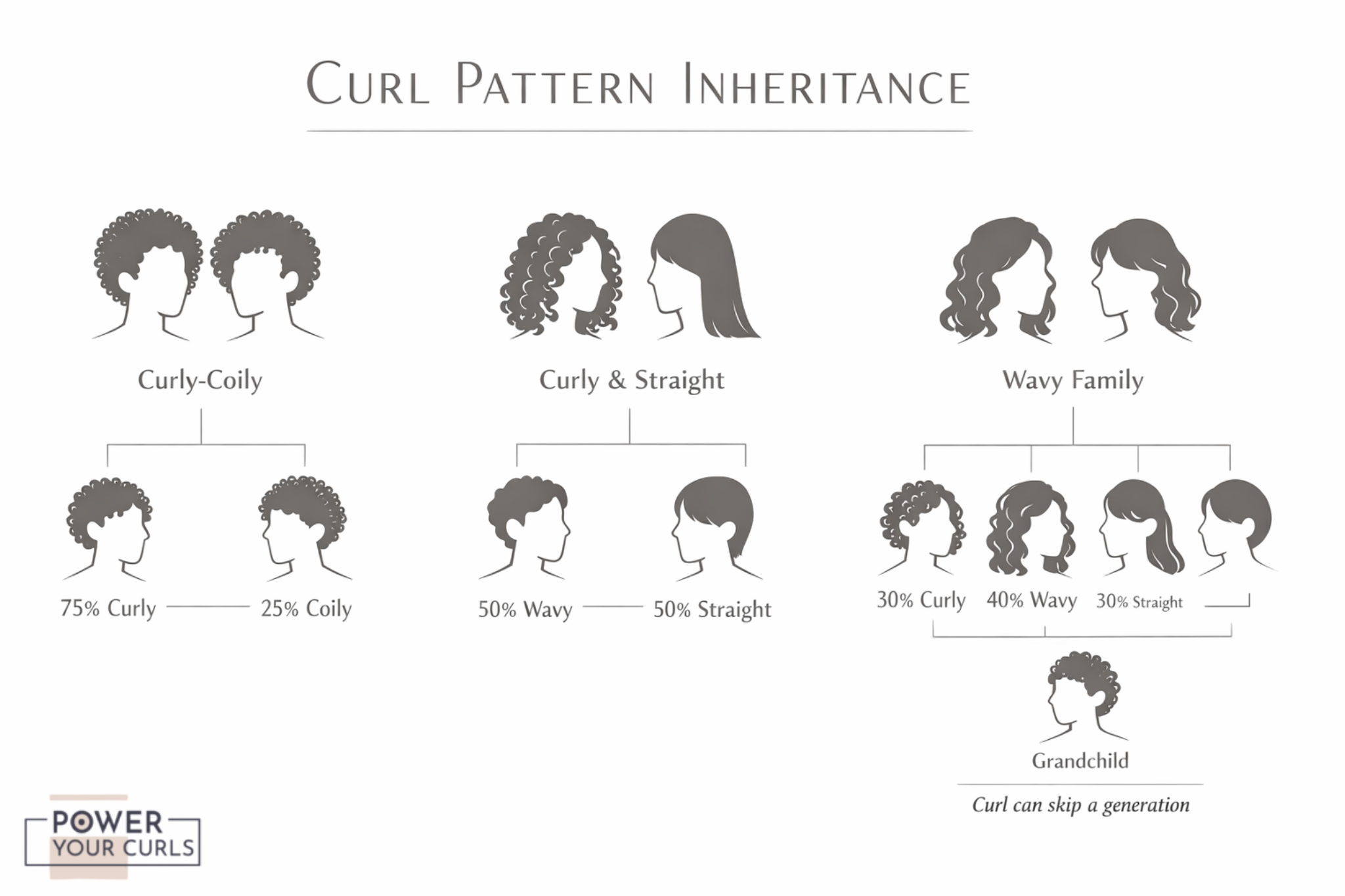
| When Both Parents Have Curly Hair
→ ~90% chance of having children with curly or coily hair → Wavy still possible if both carry recessive straight variants → Curl tightness can vary from either parent’s pattern → Straight from two curly parents is rare — but not impossible |
When One Parent is Curly, One Straight
→ Wavy or curly is the most likely outcome → Curly variants tend to be dominant over straight alleles → Child may have looser curls than the curly parent → Curl genes can re-emerge in grandchildren (skipping a generation) |
A Simplified Punnett Square for Curl Inheritance
‘C’ = curl allele (dominant), ‘s’ = straight allele (recessive). Real curl genetics involves many genes working together in an additive way.
Parent 1 (Cs) × Parent 2 (Cs) — Both Wavy/Curly Carriers
| C (curl) | s (straight) | ||
| Parent 1 | C (curl) | CC · Curly | Cs · Wavy/Curly |
| s (straight) | Cs · Wavy/Curly | ss · Straight |
Result: ~25% strongly curly, ~50% wavy/curly, ~25% straight — with actual texture falling on a spectrum between all outcomes.
BY ETHNICITY
Curly Hair Across Cultures
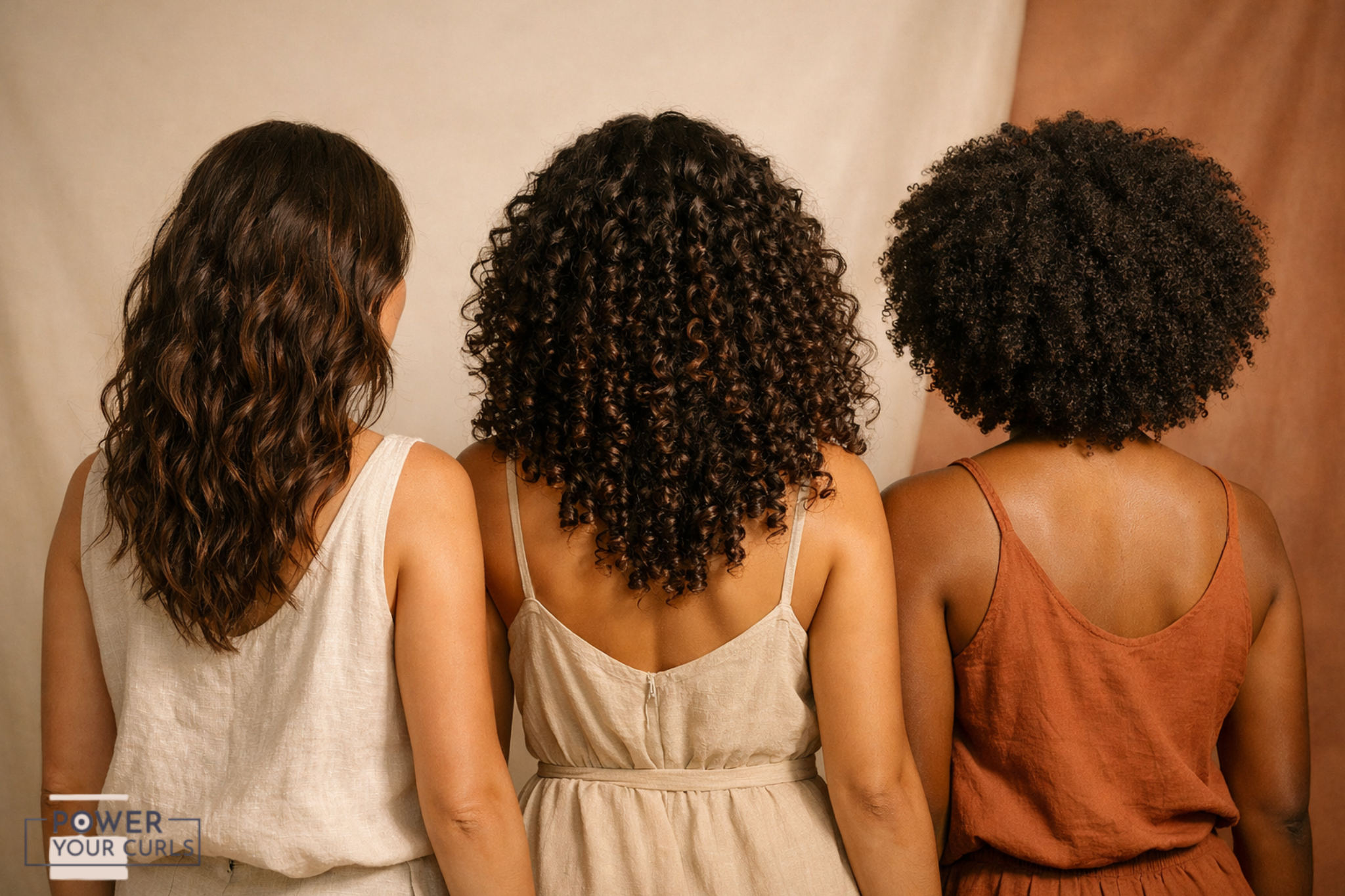
Let’s go deeper into the curl science behind specific ethnic backgrounds. Keep in mind that ancestry is complex, and most people carry genetic contributions from multiple populations.
African & African-Diaspora Hair
Sub-Saharan African · African American · Afro-Caribbean · Afro-Latino
African hair represents the ancestral norm for all of humanity’s curly hair. It’s our biological default, and straight hair evolved later in other populations.
The tight coils found across Sub-Saharan Africa are produced by highly asymmetrical follicles. The asymmetry also has significant differences between the two sides of the hair cortex. Research shows African hair shape is predominantly curly or kinky, accounting for around 95% of the population studied.
The African diaspora introduces significant genetic diversity. African Americans, Afro-Caribbeans, and Afro-Latinos carry blended ancestry that produces a wide spectrum from 3A to 4C. The hair textures often vary within the same family.
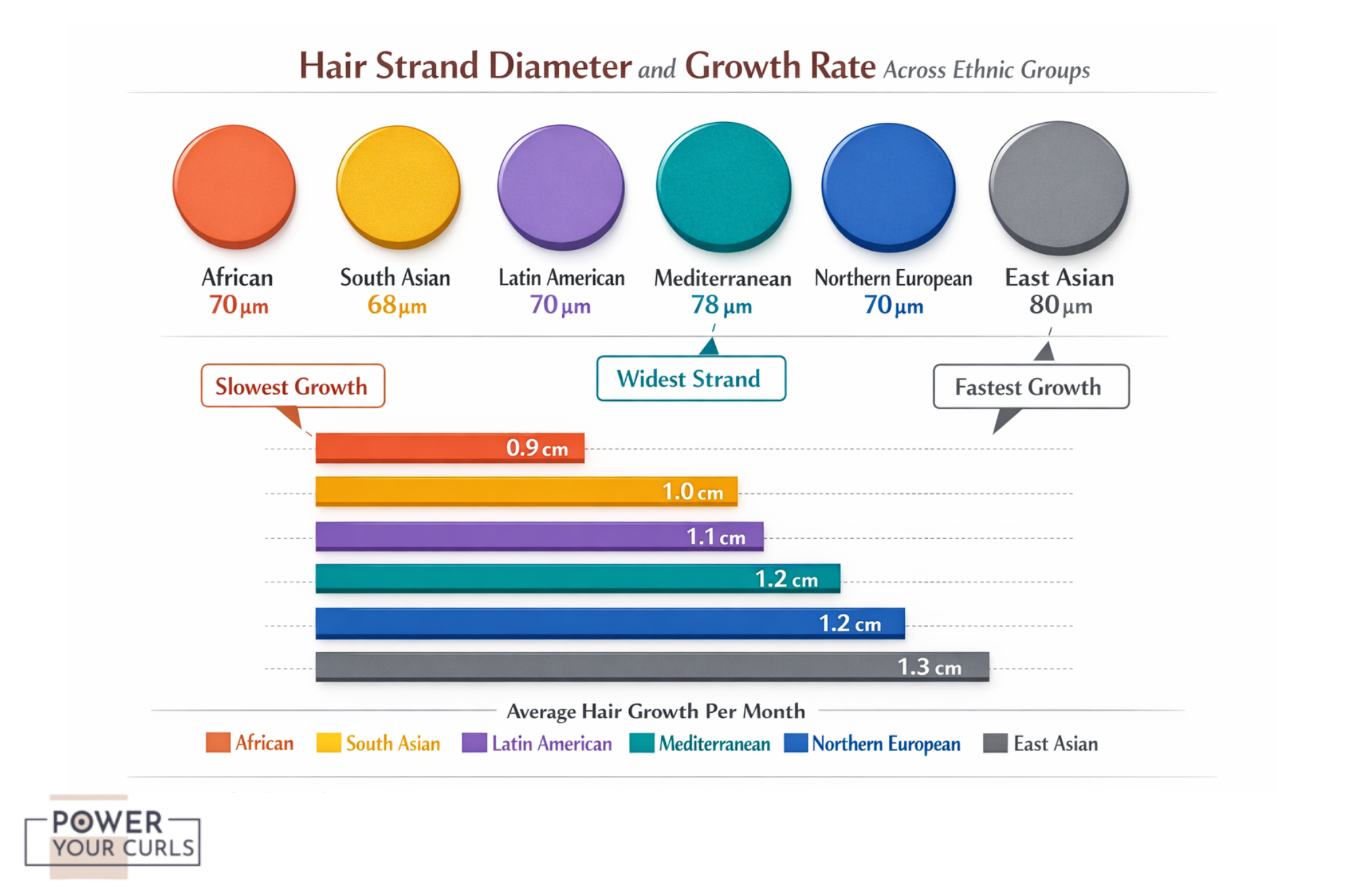
Type 4 hair has the lowest density on the scalp compared to European or Asian hair. Though individual strands tend to be thicker with a unique ribbon-like cross-section.
If you’re working with 4C hair specifically, you need to understand your hair’s porosity level. It’s one of the most useful things you can do for your routine. A nourishing formula like the 100% Virgin Coconut Oil Daily Hydration Conditioner works well for keeping that thickness moisturized daily.
South Asian & Indian Hair
Indian · Pakistani · Bangladeshi · Sri Lankan
South Asian hair sits at a fascinating genetic crossroads, drawing from ancestral North Indian (related to West Eurasian populations) and Dravidian ancestries. This produces an extraordinarily wide range of textures from pin-straight to tight ringlets and everything in between.
High humidity across much of South Asia means that curl patterns will look different from changing climates. Their hair will look wavy in dry conditions and can become full curls in the climate they evolved in,. Many South Asian-descent curlyheads experience this phenomenon when visiting their family’s home country.
If your waves seem to disappear in drier months, why curl patterns change is worth a read. Also, a lightweight formula like the For Curls & Waves Defining Gel can help hold definition through humidity and seasonal changes.
Latin American & Hispanic Hair
Mexican · Brazilian · Colombian · Puerto Rican · Dominican · South Asian
Latin American hair genetics is among the most complex in the world. They reflect centuries of admixture between Indigenous American, European (Spanish and Portuguese), and African populations in varying proportions. These even differ by region and family.
A large GWAS study of 6,630 admixed South American citizens identified three key genes. These genes (EDAR, TCHH, and PRSS53) all contribute to curl variation within this single population.
This genetic diversity means Latino/Hispanic hair spans the entire André Walker spectrum, sometimes dramatically within a single family. There was a multinational hair study in Brazil, one of the most admixed countries on earth. Researchers found that they had the highest curly hair prevalence of any nation studied, at 43%.
Mediterranean & Middle Eastern Hair
Greek · Italian · Lebanese · Egyptian · Turkish · Persian · Arab
Mediterranean and Middle Eastern populations sit genetically between Africa and Northern Europe, and their hair textures reflect this. They had looser strands than the tight coils of Sub-Saharan Africa, but often curlier and darker than Northern European hair.
A study of 120 Arab individuals found 63.4% had textured hair, the highest strand thickness of any studied population. The 2025 Flament study places France, with its significant Mediterranean and North African population, at 21% curly hair prevalence. These findings exactly reflect this genetic middle ground.
East Asian Hair
Chinese · Japanese · Korean · Vietnamese · Thai
East Asian hair is one of the best-studied examples of a genetic adaptation linked to climate. The EDAR gene variant (V370A) which arose roughly 30,000 years ago, produces thicker, straight hair and. It’s considered one of the strongest signatures of positive selection in the human genome.
East Asian hair typically grows fastest (~1.3cm/month), has the largest strand diameter, and shows the highest melanin density. The 2025 multinational study found Japan at 10% and China at 5.5% curly hair prevalence. These two are among the lowest of any countries studied.
EVOLUTION
Why Curly Hair Is the Original Hair Texture
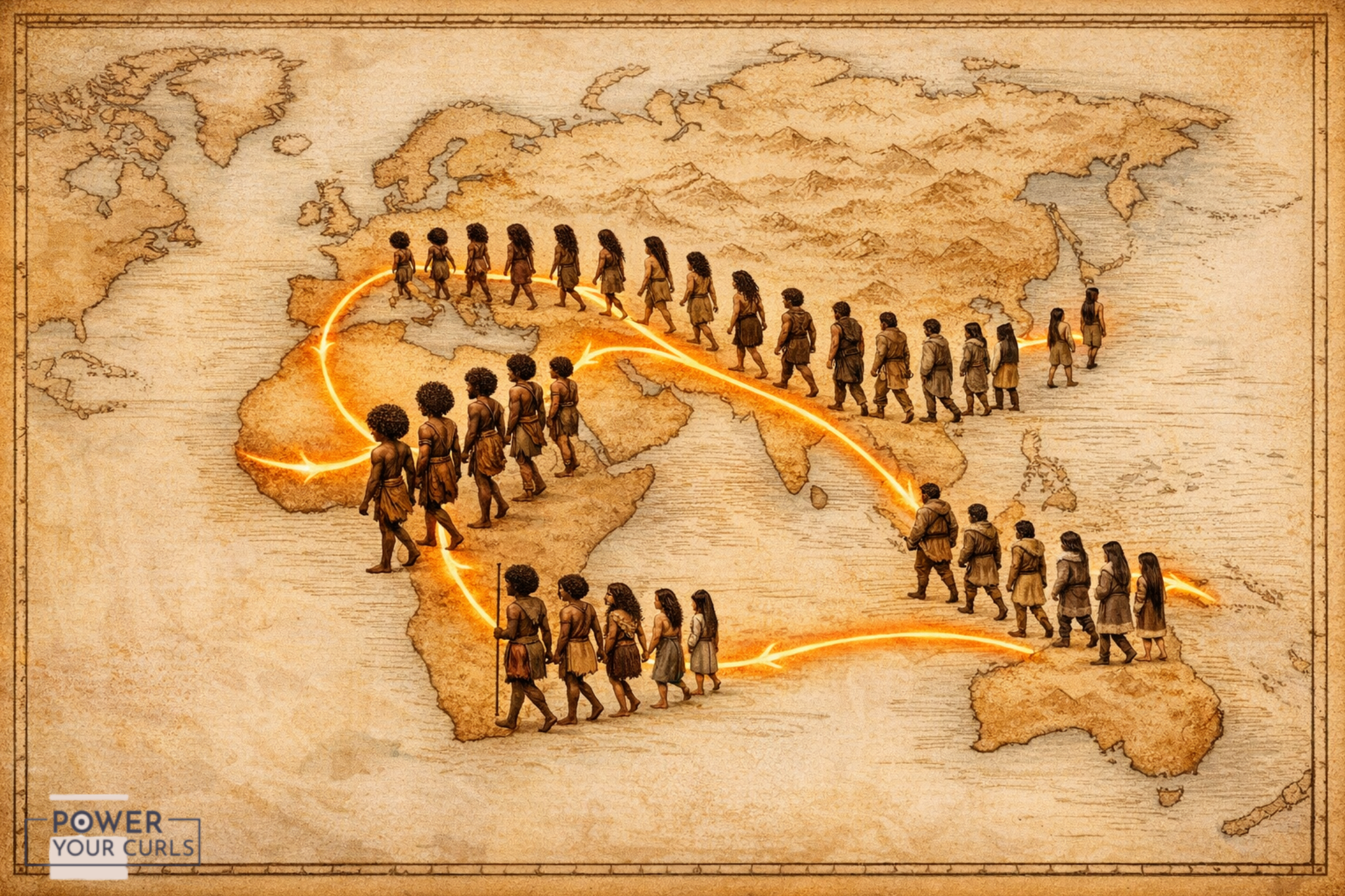
Curly hair is the ancestral default for Homo sapiens. Straight hair evolved independently in two separate genetic lineages — the TCHH mutation in Europe and the EDAR mutation in East Asia. These variations suggest that different climate pressures drove convergent evolution toward straight hair in cold regions.
The leading theories are as follows:
- straight hair lies flat against the scalp and provides more insulation
- straight hair is oilier, providing better moisture protection in cold, dry air
- tightly coiled hair in tropical climates may have aided thermoregulation by creating a micro-air-layer above the scalp to diffuse solar radiation
If you have curly hair, you’re carrying what scientists call the “ancestral allele”. It’s the genetic variant our earliest human ancestors had. Your curls hold the deep evolutionary history of your ancestors, written on your scalp like an ancient sonnet.
YOUR QUESTIONS ANSWERED
Curly Hair Genetics FAQ
Can curly hair skip a generation?
Yes. Because curl is polygenic, a person can carry recessive or lower-expression curl variants without expressing them. They can then pass them to a child who, combined with variants from the other parent, expresses curly hair.
It’s more common than people think, especially in mixed-ancestry families. Our inheritance diagram above shows exactly how this plays out across three parent combinations.
Can my curl pattern change over time?
Your DNA doesn’t change, but a number of factors influence the expression of your curly genes, like:
- hormones (pregnancy and menopause are major triggers)
- nutrition
- medications
- even hair damage history
Many people notice curlier hair emerging after pregnancy or going natural after years of heat styling. We go deeper on this in our piece on why curl patterns change.
I’m mixed race. Why is my hair texture hard to predict?
Mixed ancestry creates genetic combinations that weren’t “designed” for a specific outcome.
You may have received curl-promoting variants from one parent and curl-suppressing variants from another, resulting. A combination like this can result in a pattern that’s genuinely unique or that. Your pattern can even differs significantly even from siblings, who inherited a different combination of the same parental genes.
Is curly hair more fragile than straight hair?
The tighter the curl, the more mechanical stress points exist along the strand where it bends. This means Type 4 is more prone to breakage under the same conditions.
However, African hair has evolved protective structural features, including a thick cuticle. The key is moisture retention and gentle handling. This is why understanding your hair’s porosity matters so much for Type 3 and 4 textures. Starting your routine with a bond maintenance shampoo helps protect the structural integrity of your hair.
Can a DNA test tell me my curl type?
Partially. Companies like AncestryDNA’s Traits reports can give you a likelihood estimate for your hair type based on known associated variants. But because curl genetics is so polygenic, predictions are probabilistic. Your mirror remains the most accurate curl analysis tool at your disposal. Our curl porosity guide can help you understand what you’re actually seeing.
