

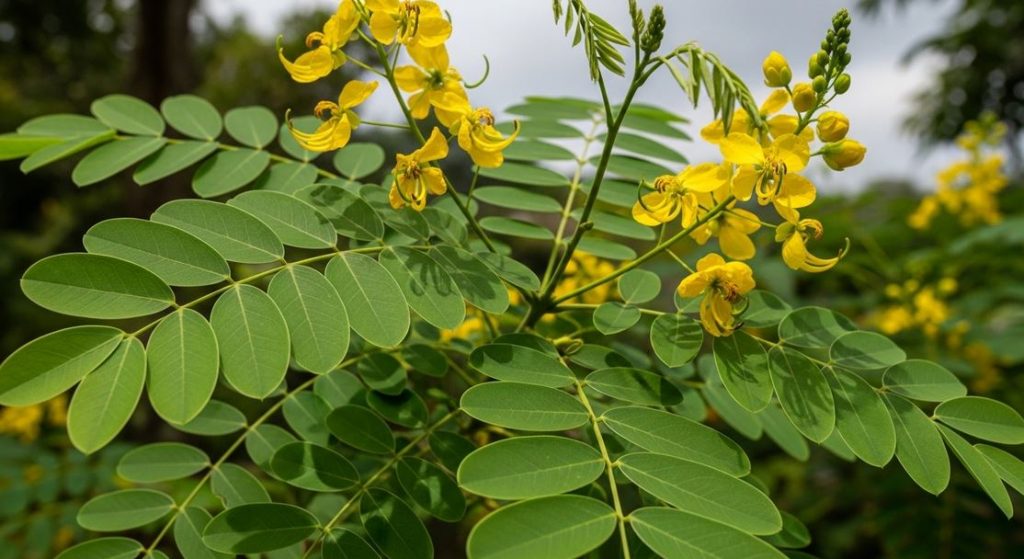
If you’ve started embracing your gray hair but still want it to look shiny, healthy, and a little more polished, you’ve probably stumbled across cassia obovata.
It’s all over natural hair forums, often called “neutral henna,” and people swear it makes their hair stronger and glossier.
But you might be wondering what this is actually going to do to my white strands. Before you mix up a bowl of green powder and commit to a few hours with plant paste on your head, let’s clear things up.
In this post, we’ll explain exactly what cassia does to gray hair, what it doesn’t do, and what you can realistically expect to see in the mirror.
What Does Cassia Do To Gray Hair?
Cassia is not a strong dye like traditional henna, and it doesn’t flood your hair with deep pigment. It lightly deposits a warm, golden tone and coats the hair shaft.
On dark hair, you’ll barely notice a color shift. Maybe a soft warmth in sunlight. That’s it.
On gray hair, though, it shows up more.
Gray hair has little to no pigment. So when you apply cassia, those strands can take on a pale golden, honey, or champagne tint. It’s translucent, not opaque.
If your hair is bright white, the golden tone can look more noticeable. If you have salt-and-pepper hair, cassia can soften the contrast between darker strands and lighter ones, making everything look a bit more blended.
It will not:
- Turn your gray brown
- Fully cover white hairs
- Give you dramatic color
What it does is warm things up slightly and add a natural-looking sheen.
Also Read: How To Get Nail Polish Out Of Hair
Some people love that soft golden shimmer. Others prefer cool silver tones and find it too warm.
Pros Of Using Cassia Obovata On Gray Hair
There are so many reasons to love this stuff, especially if you’re trying to move away from harsh chemicals that make your scalp sting:
#1 Adds Shine
Gray hair is notorious for looking a bit dull because the light doesn’t reflect off it the same way it does on pigmented hair.
Cassia is the ultimate shine booster.
Because it coats the hair and smooths out the rough edges of the cuticle, it creates a surface that actually bounces light back at the world.
You’ll notice that “halo” effect where your hair just looks healthy and vibrant rather than flat.
#2 Strength And Thickness
If your hair feels like it’s thinning out as you get older, you are going to love this.
Cassia contains tannins and properties that bind to the hair protein.
This adds a physical layer of “bulk” to every single strand. It’s not a permanent structural change, but for a few weeks, your ponytail will actually feel thicker, and your hair will have a lot more “oomph” and swing to it.
#3 Conditioning
Cassia obovata on gray hair also acts a lot like a deep conditioning treatment.
Once rinsed, hair often feels smoother and softer, tangles can be easier to manage, and the texture feels more controlled without feeling heavy.
If your gray hair tends to feel dry or rough, cassia can help calm that down.
Just make sure you follow up with a moisturizing conditioner if your hair leans dry. Cassia strengthens, and some hair types need a little extra hydration afterward to stay balanced.
#4 Soft Color Blending
Now let’s circle back to the color aspect.
If your white strands feel stark against darker hair, cassia can take the edge off. It doesn’t erase them, but it gently warms them so they don’t scream “bright white.”
This can make regrowth look softer.
The transition between shades feels less dramatic. It’s subtle, but it can make your overall color look more cohesive.
Also Read: Hair Curls At Back Of Neck?
Cons To Consider
Cassia is not perfect for everyone.
Because it deposits a yellow tone, it can lean warm. If you love icy silver or cool platinum gray, you might not love the golden shift.
On very white hair, the warmth can look stronger than expected.
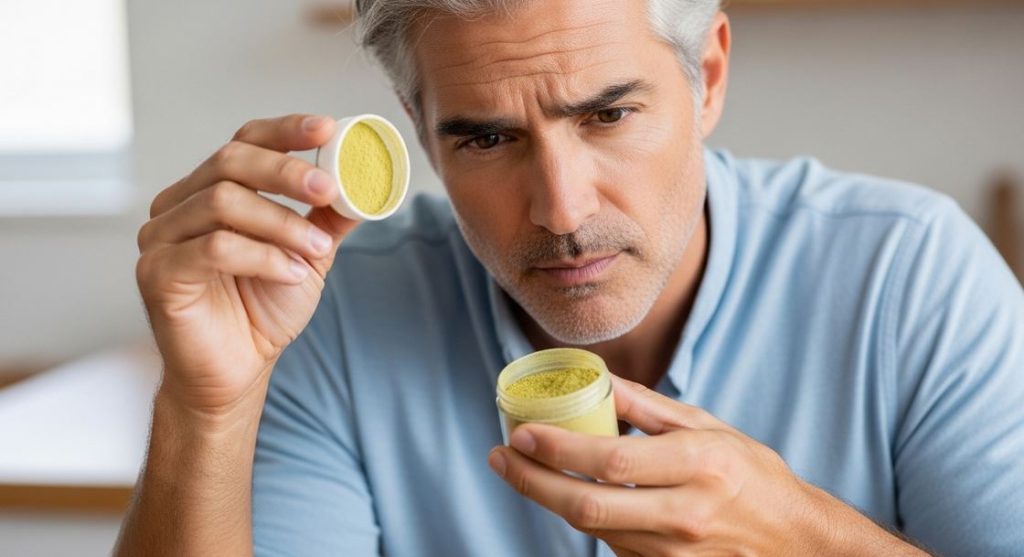
Also, it does not provide full gray coverage. If your goal is to hide gray completely, cassia alone won’t get you there.
Another thing to remember is that results vary. Hair porosity, previous chemical treatments, and even how long you leave it on can change the outcome. That’s why a strand test is always smart and it saves you from surprises.
And finally, it’s a bit messy. You’re mixing up a plant paste and letting it sit on your head for a couple of hours.
If you’re okay with a little effort in exchange for healthier-looking hair, it’s manageable. If you want something quick and zero mess, this might feel like a project.
How To Use Cassia Obovata On Gray Hair
The process is simple, even if it looks intimidating at first.
You’ll mix the cassia powder with warm water until it reaches a yogurt-like consistency. Let it sit for about 30 minutes so the dye can release. Then apply it to clean, damp hair.
From there:
- Leave it on for 1–3 hours depending on how strong you want the warmth
- Rinse thoroughly with water
- Skip shampoo for 24 hours if you can
Longer processing time usually means slightly more noticeable golden tone.
If you’re nervous about warmth, start on the shorter end.
It helps to wear gloves and protect your surfaces. Even though cassia is mild, it can stain fabrics temporarily. And after rinsing, your hair might feel a little coated until it fully dries.
Once it does, that’s when you’ll see the shine kick in.
Also Read: Honey As A Leave In Conditioner
How Long Does Cassia Last On Gray Hair?
Cassia isn’t permanent in the way chemical dye is, but it does lightly bind to the hair.
On gray hair, the golden tint usually sticks around for about 2 – 4 weeks.
It fades gradually with washing. The more often you shampoo, especially with clarifying products, the faster that warmth softens.
The shine and strengthening benefits can last a bit longer, though – even after the tint fades, many people still notice their hair feels better than before.
If you reapply regularly, the warmth can build slightly over time. It won’t get dramatically darker, but repeated treatments can deepen that golden tone just a bit. Stop using it, and your hair slowly returns to its natural gray.
Who Should Try Cassia On Gray Hair?
Cassia works best for someone who wants healthier, shinier hair and doesn’t mind a soft golden tint. It’s perfect if you lean toward natural beauty routines and prefer plant-based treatments.
It’s also ideal if you:
- Want subtle warmth instead of full coverage
- Have light blonde or white-gray hair
- Like low-commitment color changes
- Care more about shine and strength than dramatic color
It’s probably not your match if you love icy silver tones or want complete gray concealment.
And if you’re very sensitive to warm hues, proceed carefully and strand test first.
Bottom Line
Cassia obovata gives gray hair a soft golden glow, added shine, and a noticeable boost in strength without harsh chemicals. It won’t fully cover gray or drastically change your color, but it can warm up white strands and make hair look healthier and fuller.
If you’re into subtle, natural-looking results and don’t mind a little warmth, cassia is a gentle, low-commitment way to enhance your gray.
