

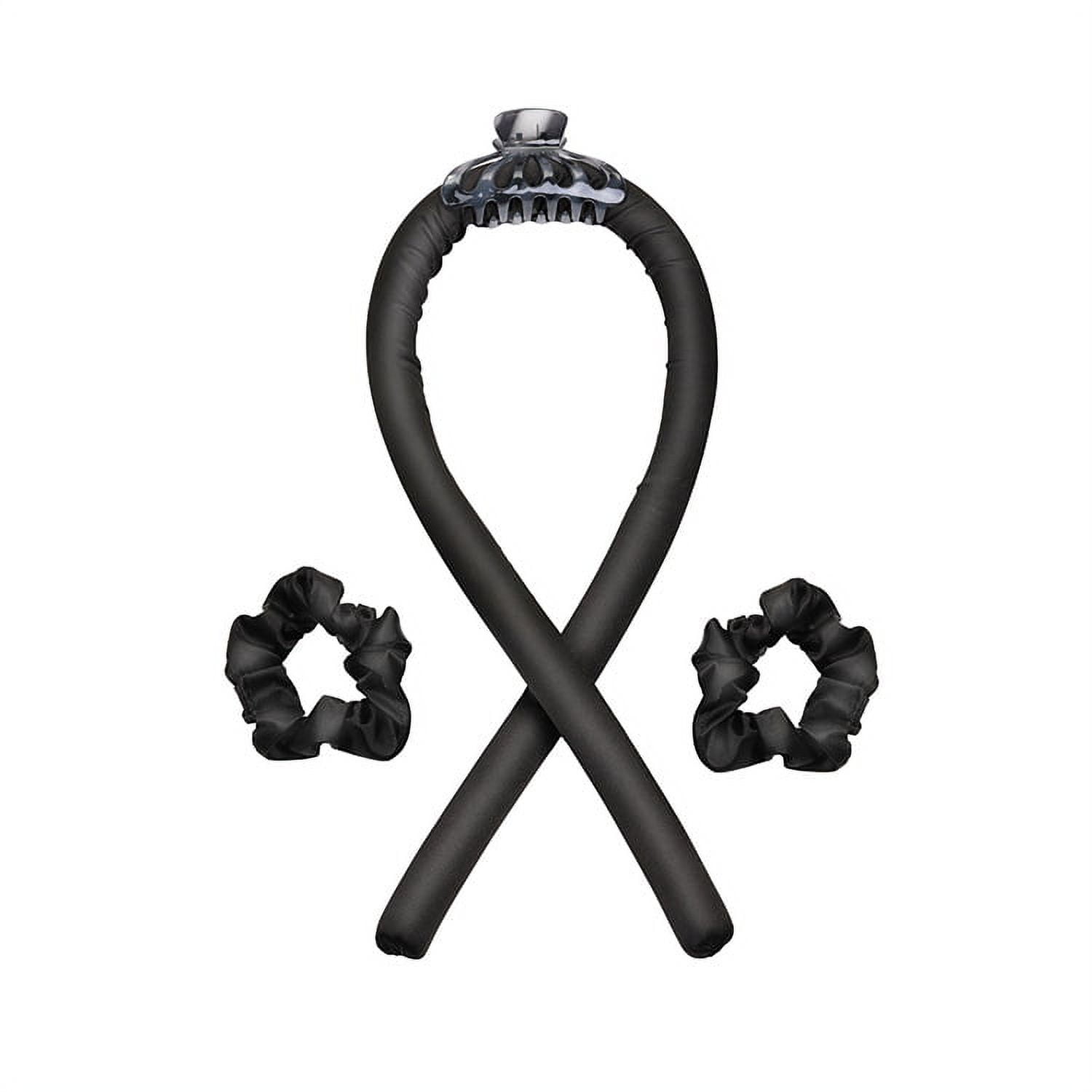
Yes, heatless curls work on curly hair, but they do a different job. Instead of creating curls from scratch, they reshape the curls you already have: smoothing an uneven pattern, stretching shrinkage or making loose curls more defined. They work best on damp hair set with flexi rods, a satin ribbon or twists and left to dry completely.
How Heatless Curls Work
Water breaks the hydrogen bonds that hold the hair’s keratin in shape, the same thing that lets a blow-dry reshape hair (Gavazzoni Dias, 2015). When damp hair dries wrapped around a rod or ribbon, those bonds re-form in the new shape and hold it until your hair gets wet again. That is why heatless curls only work if your hair dries completely while it’s set, and why rain or humidity loosens them.
The Best Heatless Curl Methods for Curly Hair
| Method | What you get | Best for |
|---|---|---|
| Flexi rods | Uniform, defined ringlets | Wavy to curly hair that wants more definition |
| Satin ribbon or robe-tie curls | Big, loose, bouncy curls | Wavy and loose curls |
| Twist-out | Defined, stretched curls | Curly and coily hair |
| Braid-out | Stretched waves with less shrinkage | Coily hair |
| Bantu knots or pin curls | Tight, springy curls | Short hair and coily hair |
A satin ribbon curler is the gentlest place to start. Our No Heat Silk Ribbon Hair Curler wraps damp hair around a soft rod you can sleep in.
How to Do Heatless Curls on Curly Hair
- Start with clean, damp hair, not soaking wet. Very wet hair won’t dry overnight, and a wet set falls flat.
- Apply a leave-in and a light-hold styler such as a mousse or curl cream. Heavy gels can leave the set crunchy and stiff.
- Section your hair. Smaller sections give tighter, more defined curls; larger sections give looser ones.
- Wrap, twist or braid each section in the direction your curls naturally fall, and secure the ends.
- Cover your hair with a satin scarf or bonnet and leave it until it is 100% dry, usually overnight.
- Take it down gently, then separate the curls with your fingers. A drop of oil on your fingertips cuts frizz.
To keep the set off your face while it dries, twist it up loosely and use a claw clip; our guide on how to put thick hair in a claw clip shows how. For more ways to protect curls overnight, see how to sleep with curly hair.
Why Heatless Curls Fall Flat on Curly Hair (and How to Fix It)
- Your hair wasn’t fully dry. Even slightly damp sections lose their shape. Use smaller sections or leave the set in longer.
- Too much product. Heavy creams weigh curls down. Use less, or switch to a mousse.
- The sections were too big. Thick sections dry slowly and only curl at the ends.
- Humidity re-wet your hair. Moisture in the air loosens the set, so finish with a light gel or anti-humidity spray on humid days.
Heatless Curls vs. Heat Styling
Heatless methods avoid the main downside of heat tools. In a lab study, hair dried with a hair dryer showed more surface damage as the temperature went up (Lee et al., 2011). Air-drying isn’t damage-free either: the same study found damage to the hair’s inner cell membrane complex only in the hair that dried naturally. So start your set on damp, not dripping, hair so it dries in one night. For most curly hair, a damp set that dries overnight is a gentler alternative to a curling iron.
Clips are handy for holding sections while a set dries; our guide to types of hair clips explains which ones won’t leave dents in your curls.
FAQ
Do heatless curls work on 4C hair?
Yes. Twist-outs, braid-outs and bantu knots are all heatless curl methods, and they are some of the most common ways to define and stretch coily hair.
How long do heatless curls last on curly hair?
Usually until your next wash, though humidity, sweat and touching your hair will loosen them sooner.
Can you do heatless curls on wet curly hair?
Damp is better than wet. Soaking-wet hair often won’t dry overnight, and a set that is still damp in the morning will drop.
