
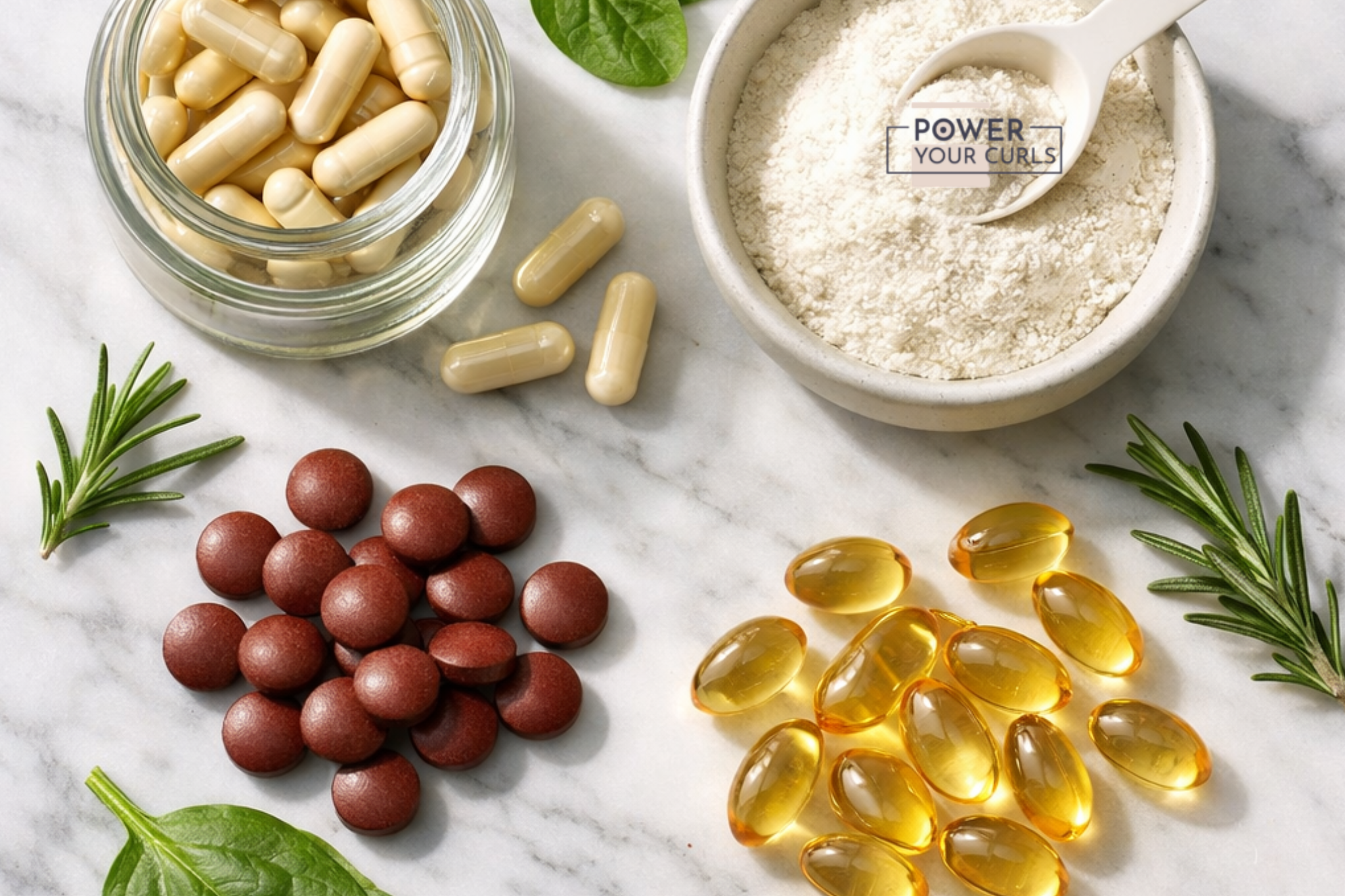
Maybe, but only if you have a deficiency. Most people don’t need supplements if they eat a balanced diet. However, hair loss is often the first visible sign of nutrient gaps. If you’re shedding more than usual, thinning at the crown, or your curls have lost their bounce, you can consider taking these. Using targeted supplementation may genuinely help.
Hair supplements are a multi-billion-dollar industry, and the marketing can be overwhelming. Every bottle promises thicker, longer, shinier hair. But do they actually work? The truth is more nuanced than most people realize, and far more hopeful too.
The Key Nutrients Your Hair Needs
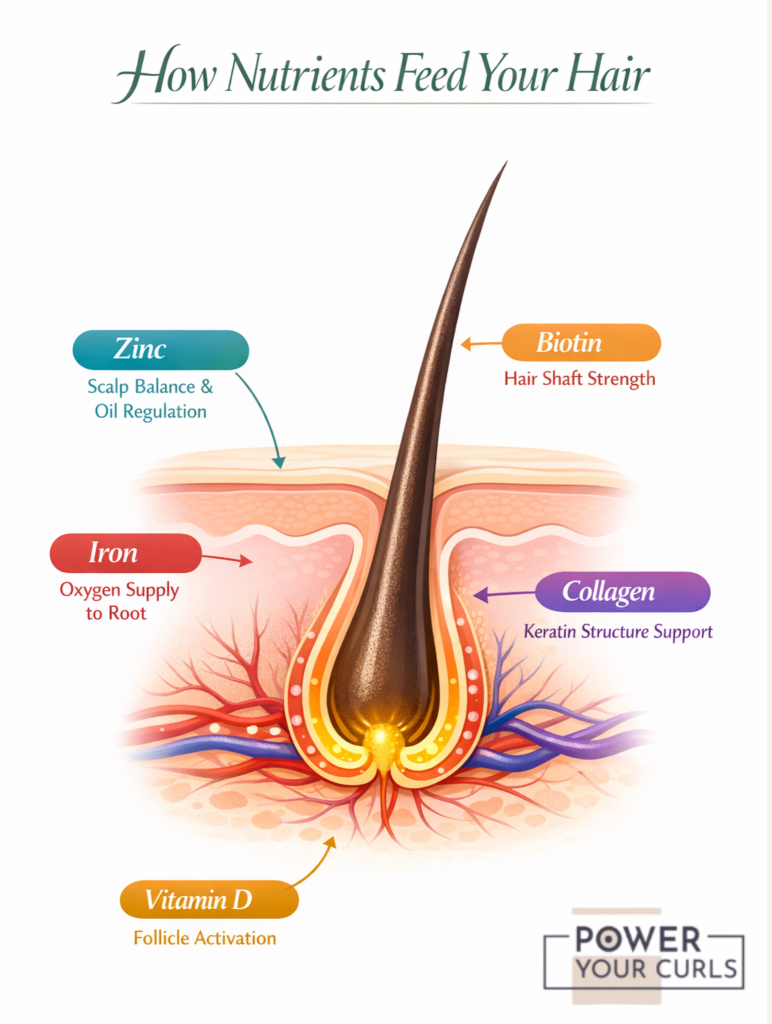
Hair follicles are among the most metabolically active cells in the body. They’re also one of the first to suffer when you’re low on key nutrients. Here are the big ones:

The Data: Hair Loss and Nutrient Deficiency

According to Korean Medical Science, NIH, this makes iron the single most common nitritional factor behind female hair thining.

What Foods Should You Eat for Hair Loss
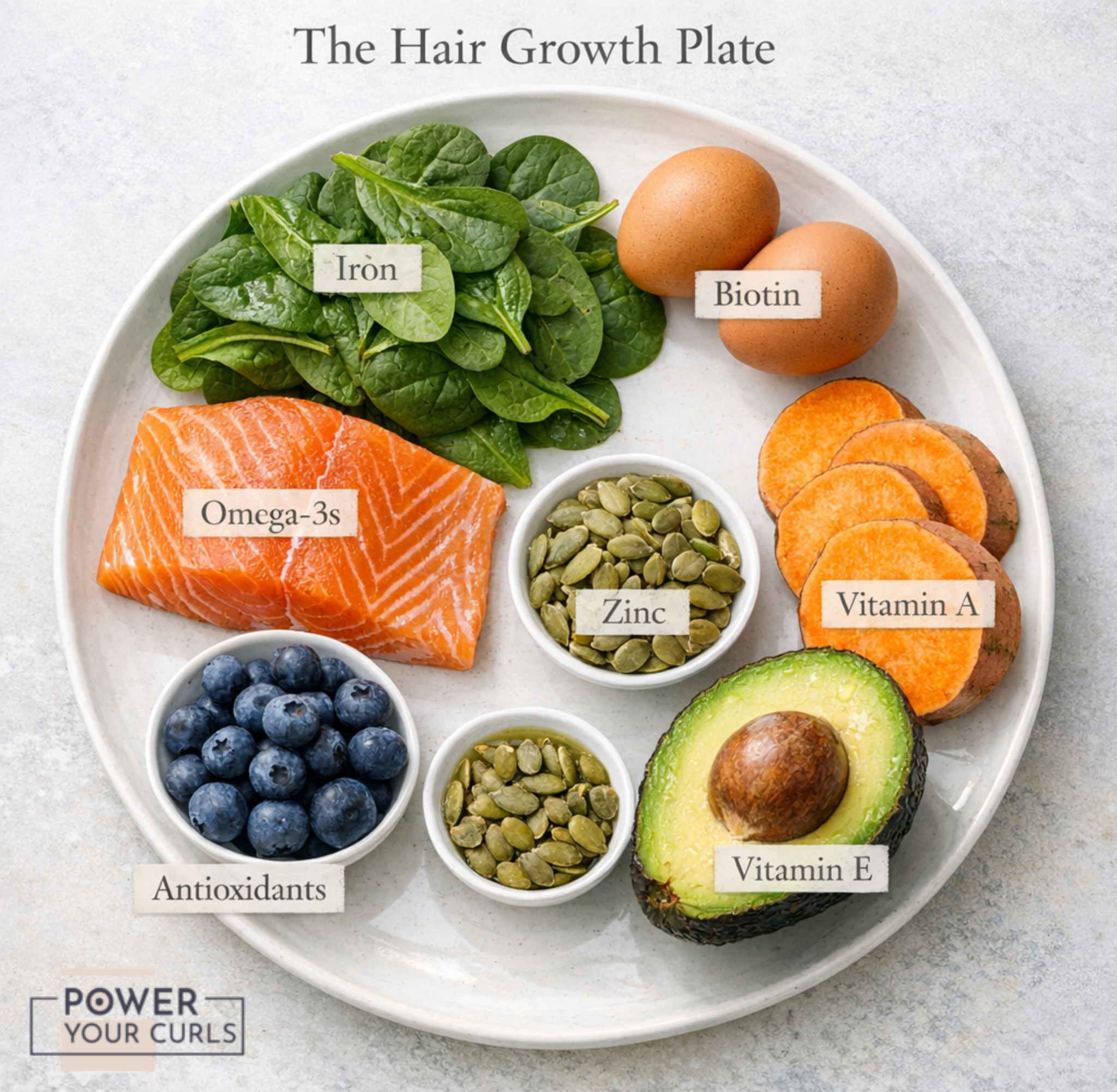
Before reaching for a supplement, food comes first. These are the most hair-beneficial foods, organized by the nutrients they deliver:

The American Academy of Dermatology recommends getting nutrients from whole foods before turning to supplements.
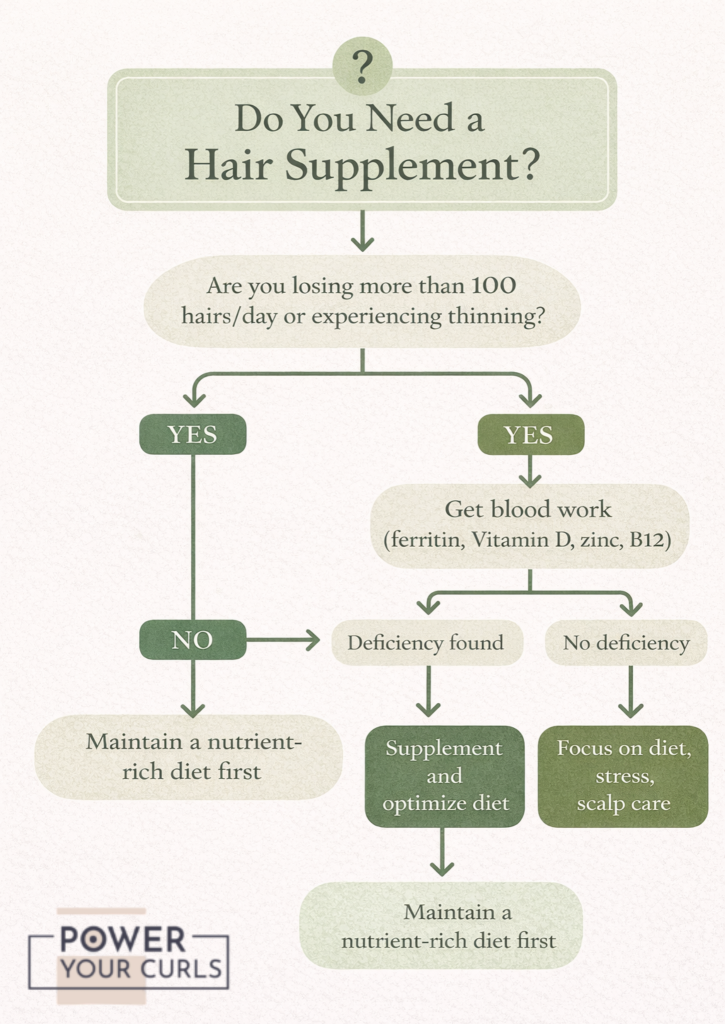
So, Should You Take Hair Supplements?
Yes, if you:
- Have a confirmed deficiency (get blood work done and ask your doctor to check ferritin Vitamin D, zinc, and B12 specifically)
- Follow a restrictive diet
- Are postpartum, perimenopausal, or dealing with chronic stress
- Have been diagnosed with telogen effluvium or alopecia.
You probably don’t need them if you:
- Eat a varied, whole-food diet rich in the nutrients above
- Have had blood work that shows no deficiencies
- Are expecting supplements to override other issues like hormonal imbalance, scalp disease, or genetics
More is not better. Too much vitamin A, selenium, or even biotin can actually worsen hair loss or interfere with lab results. Always test before supplementing your diet, especially with iron.
The Bottom Line on Hair Supplements
Hair supplements can be genuinely effective, but they work best when used to address a real gap in your nutrition. Start with food, get your levels tested, and supplement strategically. Your curls will thank you.
