
In today’s world of beauty and diversity, people frequently use hair and makeup to make statements and express themselves. Finding the right styles can be overwhelming, so Power Your Curls has created a guide to find your face shape, allowing you to find the styles that compliment your best.
How to Find Your Face Shape
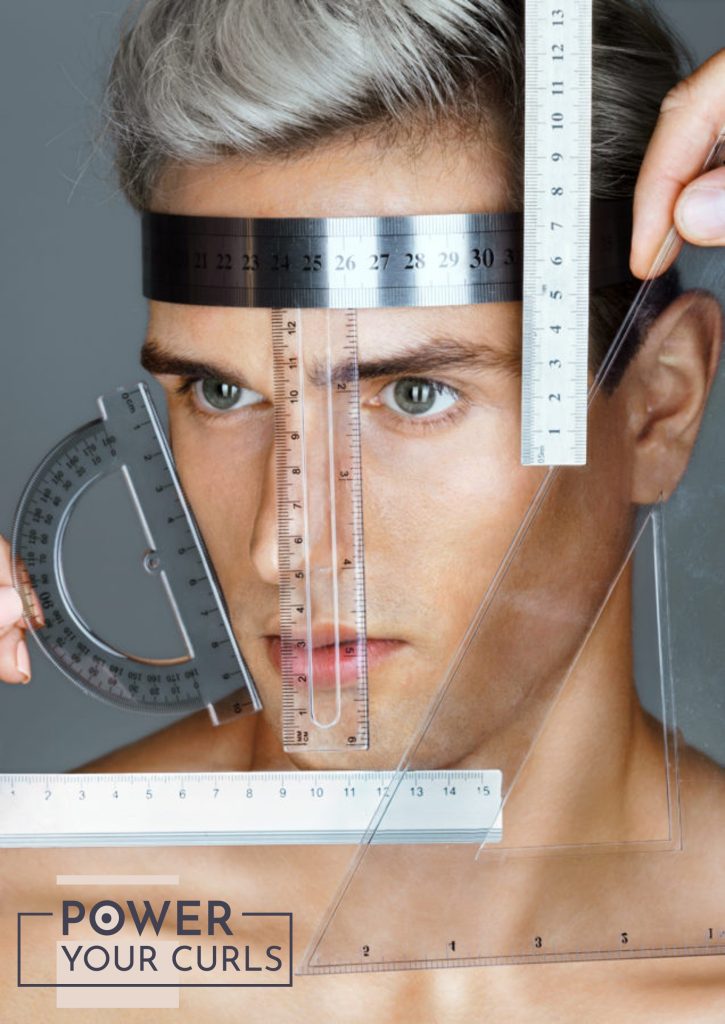
To find your face shape, pull your hair back and measure four things with a soft tape measure: face length (hairline to chin), forehead width, cheekbone width and jawline (ear to chin, doubled). Then check which measurement is widest and whether your face is clearly longer than it is wide, and match the result below.
- Longer than wide, with forehead, cheekbones and jaw about equal: rectangle (oblong).
- About as long as wide: round if your jaw is soft and curved, square if it’s strong and angular.
- Longer than wide, cheekbones widest, forehead a little wider than a rounded chin: oval.
- Cheekbones widest, with a narrower forehead and jaw and a pointed chin: diamond.
- Forehead and cheekbones widest, narrowing to a slim chin: heart (often with a widow’s peak) or inverted triangle.
- Jaw wider than the forehead: triangle (pear).
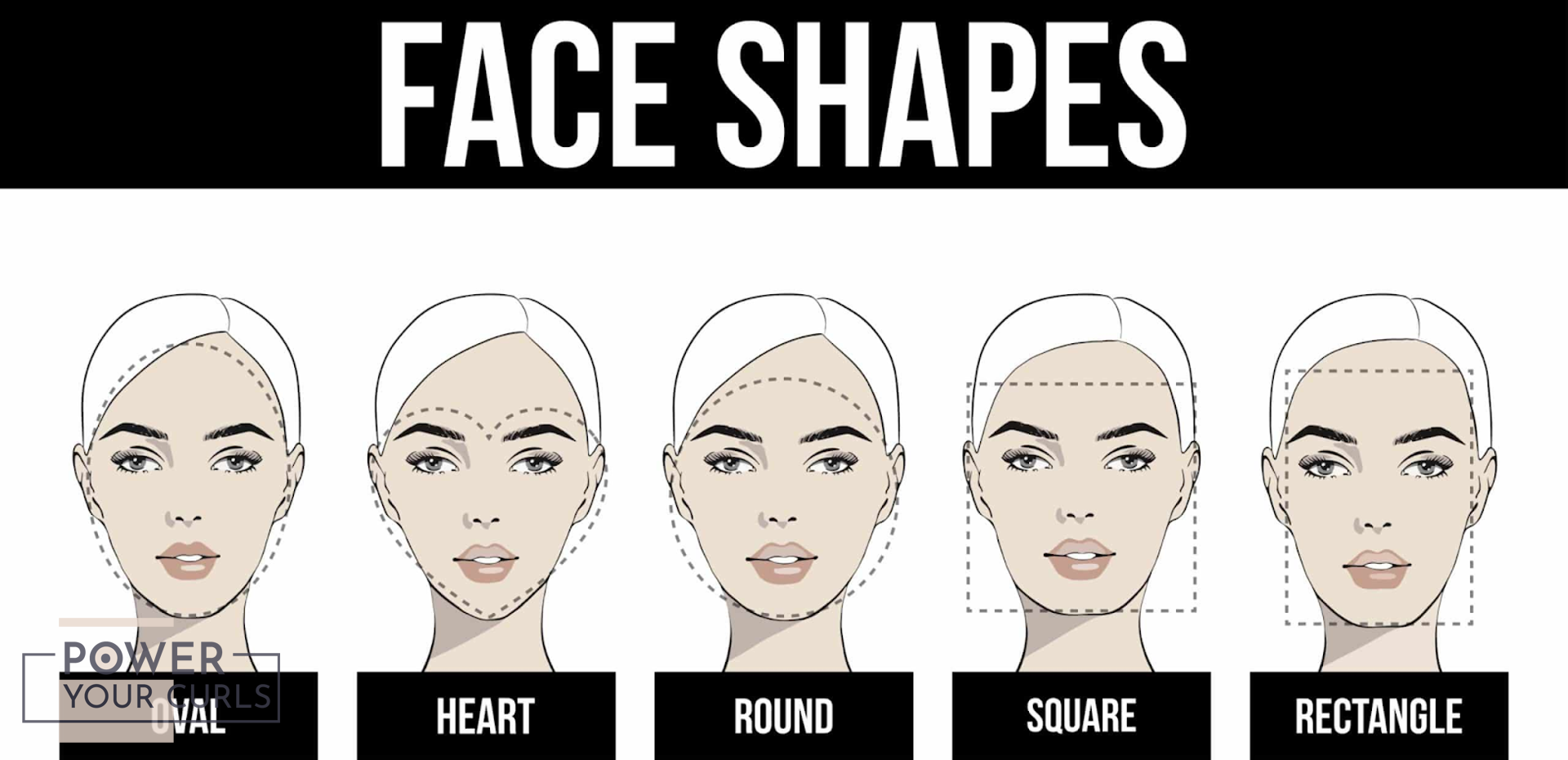
No tape measure? Stand close to a mirror, trace the outline of your face on the glass with a washable marker or lipstick, then step back and compare the shape with the table below. Detailed measuring tips are in the “Determining Your Face Shape” section further down.
What Are the Different Face Shapes?
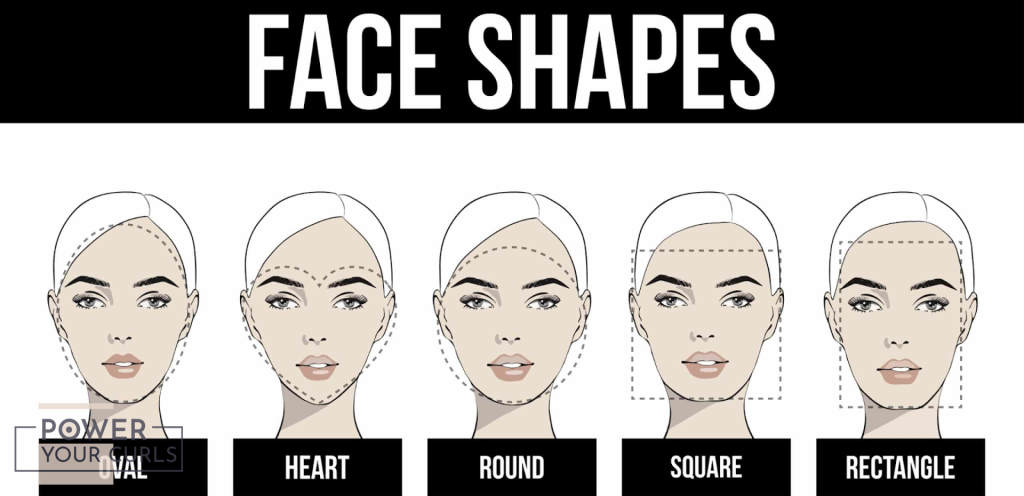
Common face shapes include oval, round, square, heart, diamond, rectangle, and triangle. Oval faces balance length and width with soft features. Round faces usually have similar width and height with fuller cheeks. Square faces feature strong jawlines and angular edges. Heart-shaped faces have a wider forehead and a narrower chin, while diamond faces highlight the cheekbones. Rectangle faces are longer than they are wide, and inverted triangle faces are widest across the forehead and cheekbones with a thin, pointed chin. (An upright triangle, or pear shape, is the reverse: a wider jaw and a narrower forehead.)
| Face shape | Length vs. width | Widest part | Jaw and chin |
|---|---|---|---|
| Oval | Longer than wide | Cheekbones | Rounded chin, slightly narrower than the forehead |
| Round | About as long as wide | Cheeks | Soft, rounded jaw and chin |
| Square | About as long as wide | Forehead and jaw about equal | Strong, angular jaw and square chin |
| Heart | Longer than wide | Forehead and cheekbones | Narrow, pointed chin; often a widow’s peak |
| Diamond | Longer than wide | High cheekbones | Narrow, pointed chin and narrower forehead |
| Rectangle (oblong) | Clearly longer than wide | Forehead, cheeks and jaw about equal | Straight jawline |
| Triangle (inverted) | Longer than wide | Forehead and cheekbones | Thin chin with a soft or pointed tip |
Why Should You Know Your Face Shape?
Knowing the shape of your face is important for many things, such as choosing a hairstyle, accessories, hygiene techniques, makeup, and even guessing how you will look as you become older. It also gives you more confidence by helping you understand your best features and making them look even better. So, knowing what shape your face is can help you grow as a person and learn more about yourself.
Determining Your Face Shape
Accurately finding out your face shape involves more than just looking at yourself in a mirror. It takes a bit of time, but taking accurate measurements of your face can give you a better idea of how to define your face’s most desirable features.
Before you measure your facial features, ensure you are seated comfortably in front of a mirror. Tie your hair back or use a headband to make sure your hair stays out of the way.
Face length
Simply note down the number that comes up when you measure your face’s natural edges, from the top of your hairline to the base of your chin.
Forehead width
Measure the distance from one side of the hairline to the other using a tape measure on your forehead, keeping the tape flat and not bent or curved.
Cheek bones
Find the highest point on your cheekbones and measure the distance between them. Don’t put the tape measure directly on your skin because that may cause the tape to curve. Hold the tape steady and straight from point to point for an accurate measurement.
Jaw line
Place the measuring tape right behind your ear and pull it down to the middle of your chin. Next, multiply by two. You can bend the tape in this scenario so that it touches your skin.
If you’re finding it difficult to take your own measurements, ask someone for help.
After recording measurements, identify any distinctive features, such as if any measurements are identical, how far apart each measurement is, or if your facial structure resembles any of the specified face shapes listed in the next section.
The Face Shapes
In this article, we’ll be talking about seven (7) different face shapes, but depending on who you ask, there may be as many as nine (9).
It’s also important to remember that people can have a mix of face shapes and don’t fit into just one group. Humans are not machines, our faces and bodies are naturally unique, and hybrid face shapes are common.
Round face
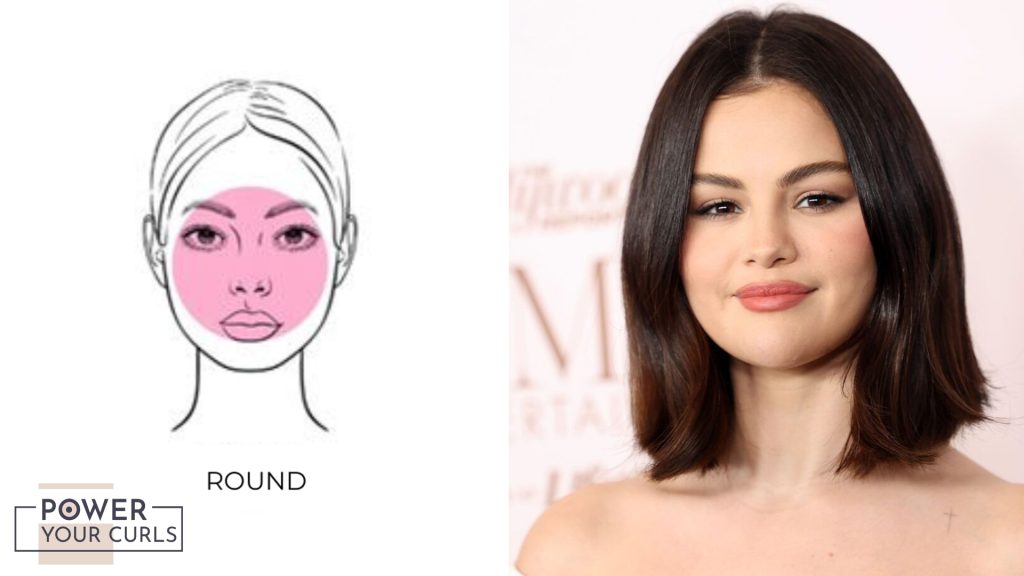
Round face shapes are short and full, with wide cheekbones, a round forehead, and chin. They lack hard edges or defined contours. Key features include a rounded hairline and jawline, equal face width and length measurements, and prominent, rounded cheeks.
Square face
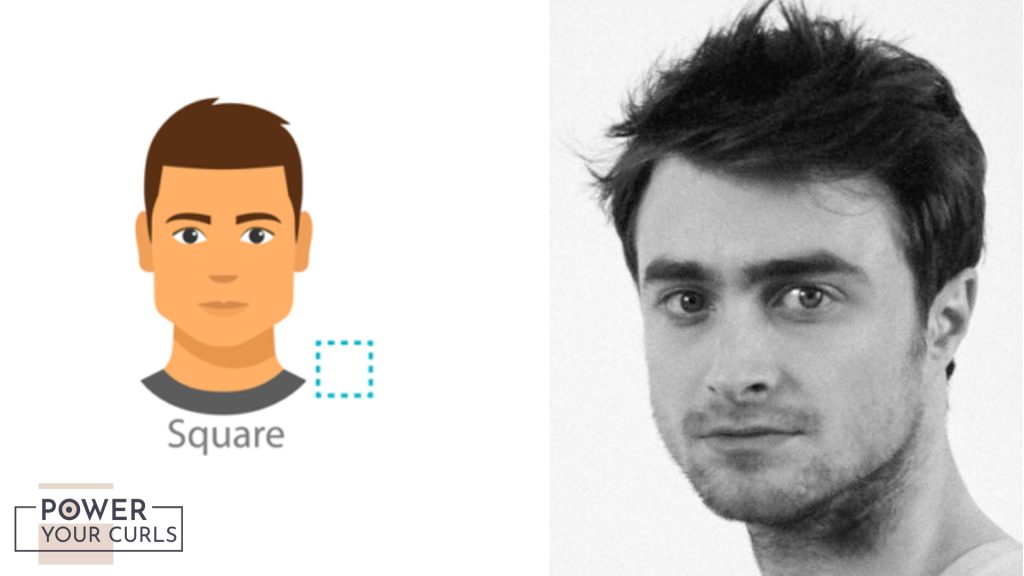
A square face shape is characterized by an equally wide hairline and jawline, long vertical contours, and a square chin. The overall structure of a square face is more angular with minimal curves, with a prominent jaw.
Oval face
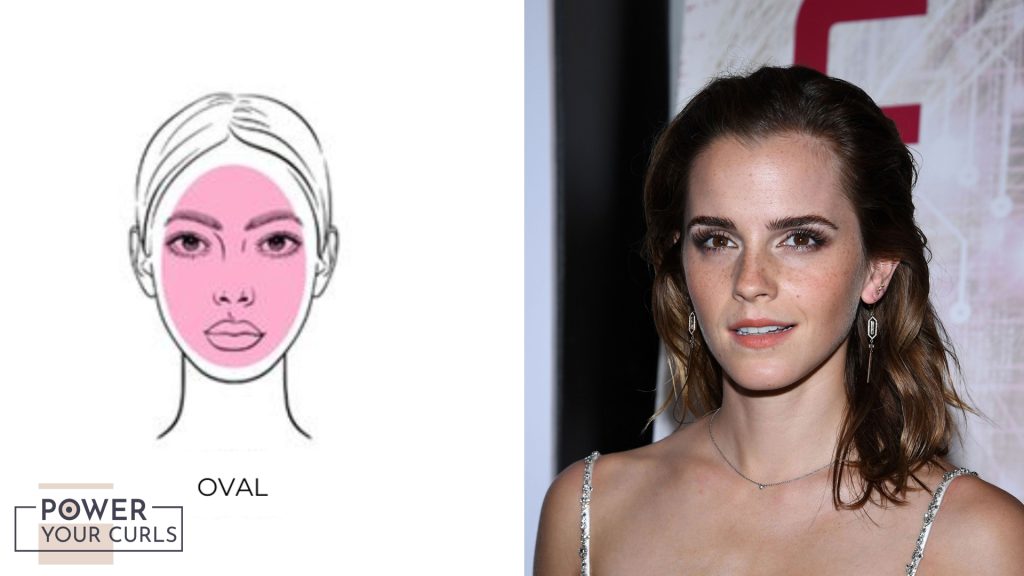
Oval faces are longer than wide, with a shorter forehead and wider cheekbone width. They have rounded hairlines and chins, soft facial features, and is a combination of square and round features.
Diamond face
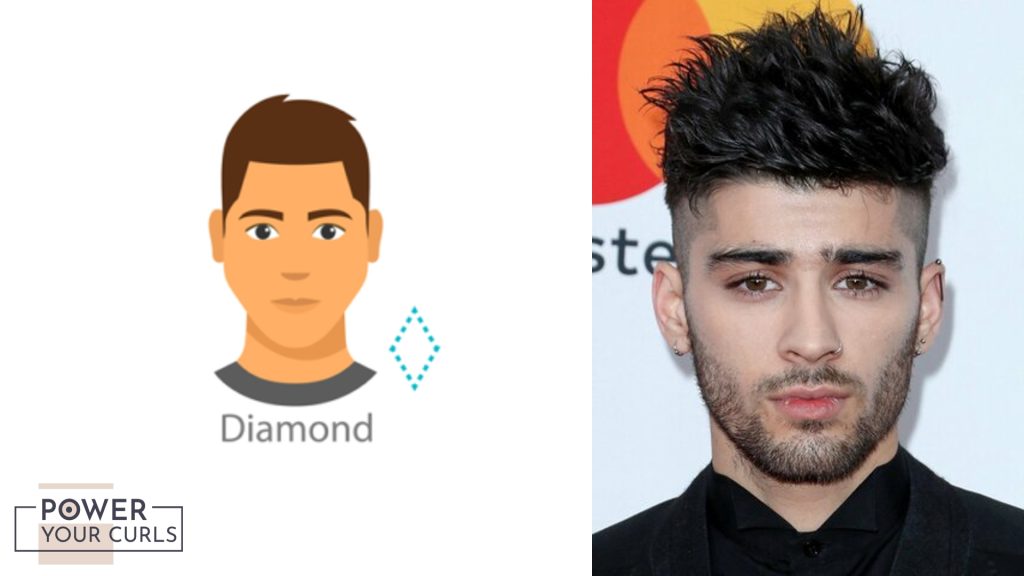
This angular version of an oval face shape features high, strong cheekbones, a narrow, pointed chin, and a more angular hairline.
Heart shaped face
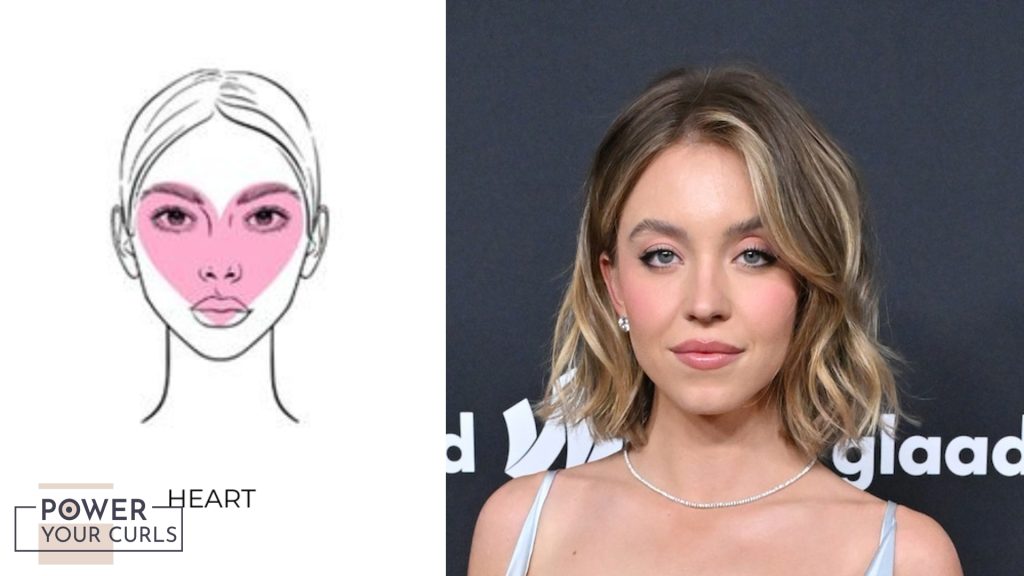
Heart-shaped faces are characterized by a wide forehead, wider cheekbones, and a narrow chin with a strong point. They often have a pointed hairline ( also known as a widow’s peak hairline).
Rectangle face
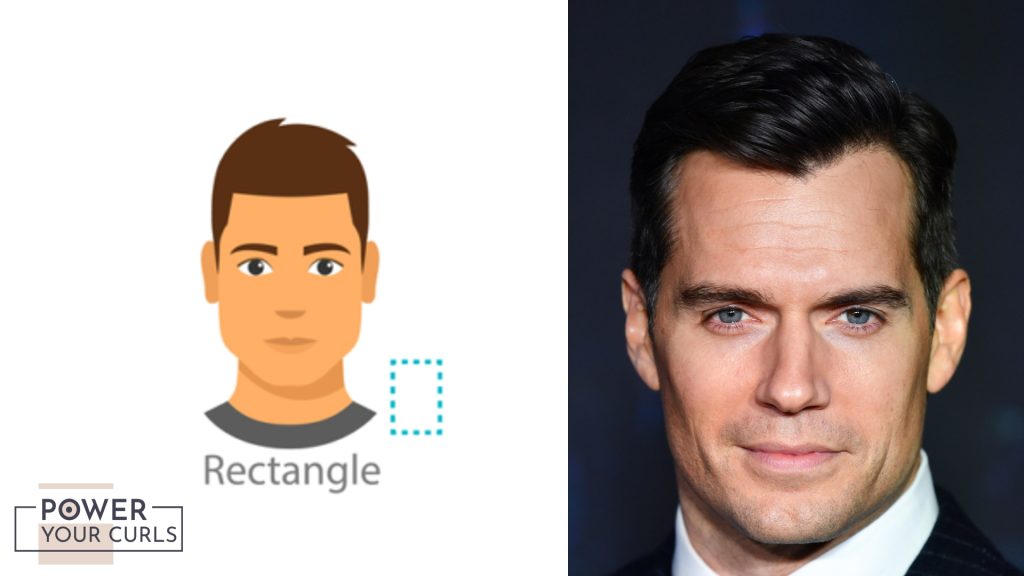
A rectangular face, also known as an oblong, is narrow and long, with the jaw, cheeks, and forehead being roughly the same width. This shape is often seen in older individuals, where skin from the cheeks and jowls settles into the lower half of their face, but younger people may have prominent buccal fat pads, a natural mass of fat found in the cheek resulting in a rectangle face shape.
Triangle (inverted triangle) face
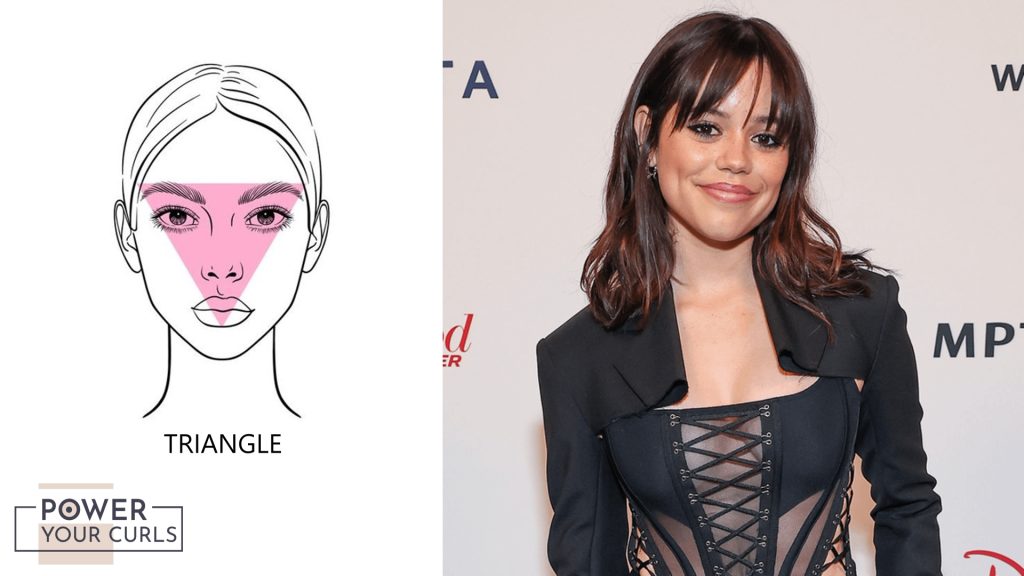
A triangular face features a broad forehead and broad cheekbones, with a thin chin ending in a soft or pointed tip, resembling an upside-down triangle. This is why it’s also called an inverted triangle. An upright triangle, or pear-shaped face, is the opposite: the jaw is the widest part and the forehead is narrower.
Something to remember
Your face shape can change
Factors including your age, skin aging, and the amount of fat in your face all affect the shape of your face. Beginning at age 30, you can lose up to 40% of your facial fat by the time you’re 50.
Another factor is age; as you age, the building blocks of your skin, collagen and elastin, may deteriorate, resulting in a loss of firmness and elasticity.
Some Final Thoughts
Understanding your face shape is crucial for various aspects of life, including hairstyle, makeup, and personal growth. Accurate measurements of your face can help define desirable features and help you grow as a person.
Disclaimer
Power Your Curls Pty Ltd. and all of its content are for informational purposes only. All information is believed to be accurate at the time of posting and should NOT be taken as professional medical advice. Please seek a medical professional in the event of pain or injury.
