

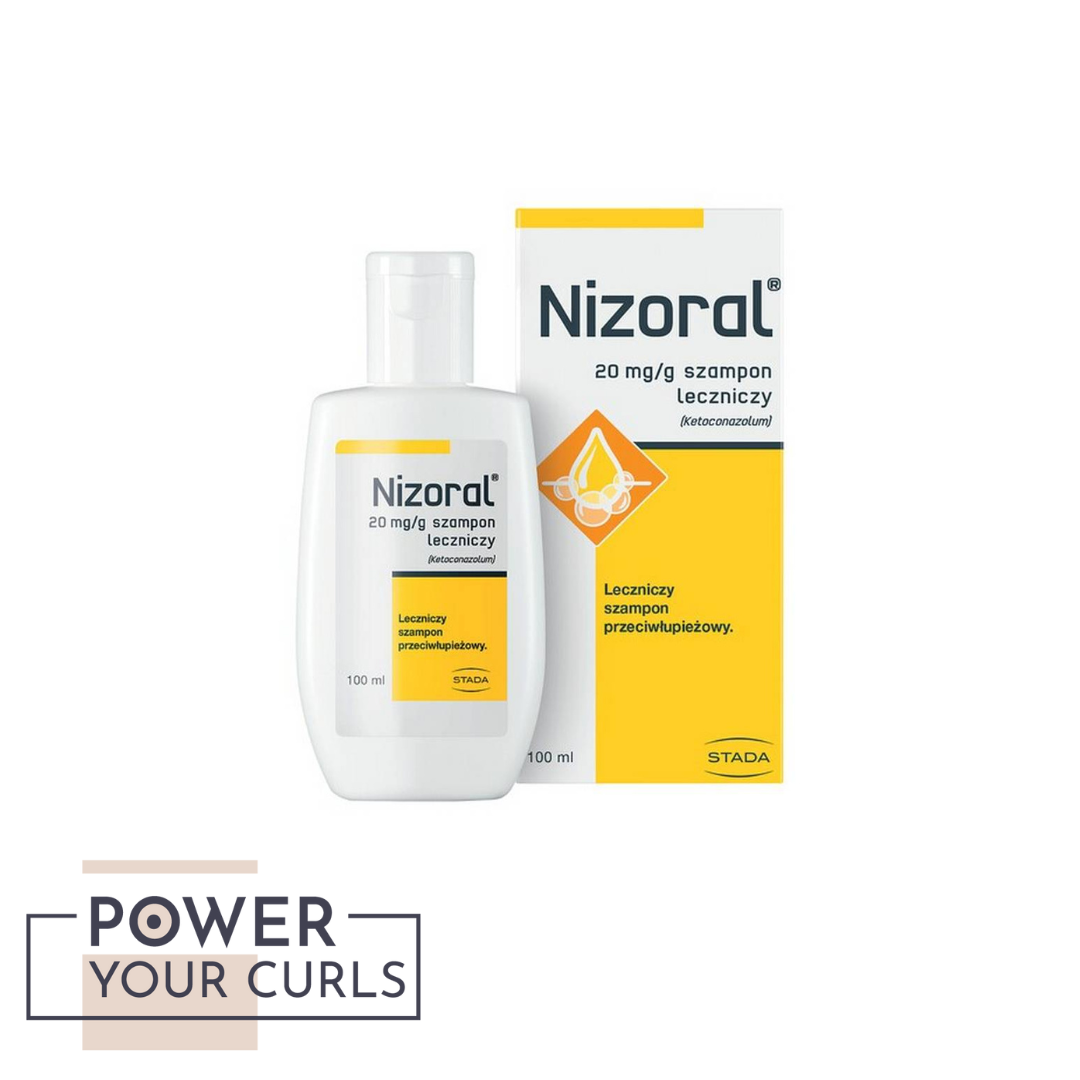
Wet your hair, massage a palm-sized amount of Nizoral shampoo into your scalp, leave it on for 3 to 5 minutes, then rinse. For dandruff, use it twice a week for 2 to 4 weeks, then once every 1 to 2 weeks to keep flakes from coming back, unless your doctor or the pack tells you otherwise.
What is Nizoral shampoo?
Nizoral is a medicated shampoo whose active ingredient is ketoconazole, an antifungal. Dandruff is closely linked to Malassezia, a yeast that lives on everyone’s scalp, and a review of seborrhoeic dermatitis and dandruff notes that antifungal activity is the one mechanism the effective treatments have in common.
It comes in two main strengths. In the US, the over-the-counter Nizoral Anti-Dandruff label lists ketoconazole 1% to control flaking, scaling and itching, while ketoconazole 2% shampoo is a prescription product there. The Nizoral Shampoo we stock is the Stada version, labelled ketoconazole 20 mg/g (2%), and its description lists dandruff, seborrhoeic dermatitis and pityriasis versicolor among its uses.
Ketoconazole is one of several dandruff actives; zinc pyrithione, selenium sulfide, coal tar and salicylic acid work differently, and our ketoconazole vs zinc pyrithione vs coal tar comparison explains which suits which scalp.
How to use Nizoral shampoo, step by step
Apply it to a wet scalp, work it into a lather, leave it on for a few minutes and rinse well. These steps follow the product’s own directions and the NHS guidance on ketoconazole shampoo:
- Wet your hair and scalp thoroughly and shake the bottle.
- Section curly or coily hair into four to six parts so you can reach the scalp rather than coating your lengths.
- Apply about a palm-sized amount directly to the scalp, which the product description says is generally enough for one wash.
- Massage with your fingertips (not your nails) until it lathers. If you also have flaking on your hairline, ears or chest, the description says to wash the affected skin too, not just the hair.
- Leave it on for 3 to 5 minutes.
- Rinse thoroughly, keeping it out of your eyes. If it gets in, rinse with water.
- Condition your lengths as usual, and wash your hands afterwards.
How long to leave Nizoral on
Leave it on your scalp for 3 to 5 minutes before rinsing. That is the contact time in both the product description and the NHS instructions, and the US prescription label for 2% ketoconazole uses 5 minutes for skin treatment.
Leaving it on far longer is not part of the directions, and more is not better. The NHS notes that using too much, or using it too often, can irritate or redden the skin, and that redness can be harder to spot on brown or black skin.
How often to use Nizoral (and for how long)
For dandruff, the NHS advises twice a week for 2 to 4 weeks, then once every 1 to 2 weeks to stop it returning. How often you need it depends on whether you are treating a flare or preventing one, so follow the pack or your doctor.
| Condition | How often | For how long |
|---|---|---|
| Dandruff | Twice a week | 2 to 4 weeks, then once every 1 to 2 weeks to prevent it |
| Seborrhoeic dermatitis of the scalp | Twice a week | 2 to 4 weeks until it clears, then once every 1 to 2 weeks |
| Pityriasis versicolor (patches on the body) | Once a day | Up to 5 days |
Source: NHS, how and when to use ketoconazole. The US 1% label gives a similar rhythm: every 3 to 4 days for up to 8 weeks, then only as needed. Twice a week with a few days in between fits both.
On your other wash days, use your regular gentle shampoo. If flakes have not improved after 2 to 4 weeks, the 1% label says to stop and ask a doctor, as it may not be ordinary dandruff.
Using Nizoral on curly and coily hair
Keep the shampoo on your scalp and protect your lengths with conditioner. Mayo Clinic suggests people with curly, coiled or textured hair use medicated shampoos less often and wash only when needed, and the 2% label lists dry skin, abnormal hair texture and loss of curl in permed hair among reported reactions.
- Scalp only: apply in sections and let the rinse water run through your lengths rather than scrubbing them.
- Pre-protect: a little conditioner on your mid-lengths and ends before you shampoo helps keep the lather off them.
- Condition every time: follow with a rinse-out conditioner on your lengths, keeping heavy products off the scalp.
- Space it out: twice a week is enough; there is no need to add extra medicated washes.
If flakes keep returning between courses, our guide on why curly hair is prone to dandruff covers the likely reasons and how to adjust your wash routine.
Nizoral side effects and when to stop
Side effects from the shampoo are unlikely if you use the right amount, according to the NHS side-effects page. In trials of 2% ketoconazole shampoo for dandruff, increased hair shedding and irritation each occurred in under 1% of people, and the label also lists dryness, itching, burning and hair discolouration as reported effects.
- Don’t use it on a scalp that is broken or inflamed, or if you are allergic to any ingredient.
- Stop and speak to a pharmacist or doctor if a rash appears, your scalp burns or itches more, or it gets worse or doesn’t improve in 2 to 4 weeks.
- Get urgent medical help for swelling of the lips, face or throat, or difficulty breathing, which are signs of a rare serious allergic reaction.
- Ask a doctor first if you are pregnant or breastfeeding, or before using it on a child under 12.
Always follow the label on your pack. If you want to compare Nizoral with gentler or differently acting options, browse our anti-dandruff shampoos.
Nizoral shampoo FAQ
Can I use Nizoral every day?
Not for dandruff. The directions are twice a week, then less often for prevention. Daily use is only for short courses on body patches (pityriasis versicolor), and overuse can irritate the skin.
How long does Nizoral take to work?
A dandruff course runs 2 to 4 weeks. If your scalp hasn’t improved by then, stop and see a doctor or pharmacist rather than using it more often.
Should I use conditioner after Nizoral?
Yes. Rinse the shampoo out fully, then condition your lengths. This matters most for curly and coily hair, which dries out more easily.
Is Nizoral 1% or 2%?
Both exist. The US over-the-counter version is 1%; the Stada Nizoral we sell is labelled 20 mg/g, which is 2%. Check the strength on your own bottle and follow its directions.
