
The last time a single beauty treatment seeded a billion-dollar product category, and filled appointment books for months entirely without paid advertising, it was the Korean skincare wave of the early 2010s. That wave restructured the Western cosmetic industry from shelf space to clinical vocabulary.
Something structurally similar is now underway. The Japanese head spa has moved from a niche travel curiosity to the defining wellness ritual of the mid-2020s, and the supply infrastructure in Western markets has yet to keep pace with the demand that has already materialized. This is not a trend piece. It is a market briefing.
The Viral head Spa Surge Is Backed by Real Numbers
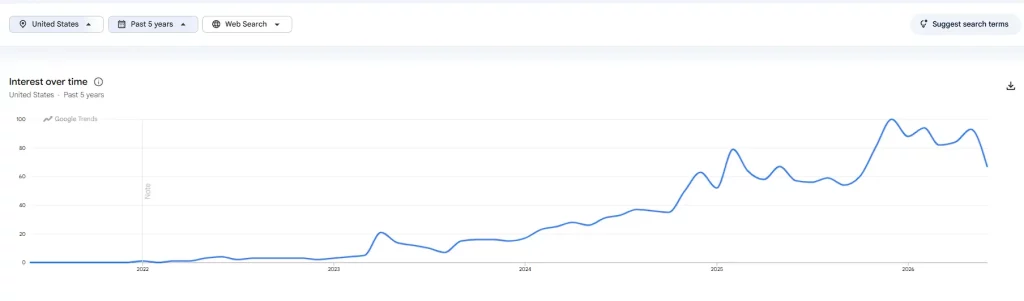
Searches for “Japanese head spa” have spiked by 9,200% in recent trend reports. Google Trends data show a sustained 180% year-over-year increase in baseline interest — not a viral spike followed by collapse, but a compounding floor of consumer awareness that builds across consecutive quarters. This pattern is structurally distinct from trend-driven search cycles: the floor rises with each passing quarter rather than decaying after an initial peak.
On TikTok, the hashtag #headspa has accumulated over 2 billion views globally. The dominant format, being the ASMR-style overhead shot of a scalp treatment in progress, does not come off as blatant marketing but instead looks like an authentic documentation of a deeply relaxing personal experience.
That is precisely why it converts so well to real-life intrigue. The viewer isn’t consuming an advertisement; they are witnessing an unmediated sensory event that creates an immediate FOMO for the same.
Pinterest as a Purchase-Intent Signal
There are currently over 12,000 active searches for “Japanese head spa” on Pinterest — a platform that market researchers treat as a leading indicator of purchase intent rather than passive discovery. A consumer building a Pinterest board around head spa aesthetics is not browsing idly. They are actively sifting through providers, evaluating them, visualising the experience within their lifestyle context, and searching for a local booking option. In most Western cities, local booking does not yet exist at the scale demand requires, resulting in a supply gap with direct commercial implications.
Premier providers like Yubi Head Spa in New York City are reported to be booked out months in advance — a market signal clear as day about the potential service engagement for early-mover operators.
The Japanese Tourist Effect Is Quantifying Latent Demand Even More
A 2026 survey of Western and Australian tourists visiting Japan found that over 40% specifically sought out beauty services, including head spas, during their trips. This is not a population that is curious in the abstract. These are eager consumers who have already paid, already converted, and have returned home to markets that cannot fulfil their repeat demand. This is precisely the consumer behavioural profile that precedes category explosions: a large, affluent, experience-validated cohort whose demand is both confirmed and currently unserved at home.
The demographic alignment sharpens the picture further. The primary growth cohort is Millennial and Gen Z women aged 25–40, who treat scalp care not as a hygiene function but as a ritualistic component of a broader wellness identity. Within this group, 49% of US consumers aged 25–34 are actively seeking solutions for dry scalp conditions — connecting an existing product-category demand to the head spa service model. These consumers do not need education about the problem. They need a credible, clinically grounded solution.
Social reach vs. search growth — head spa vs. comparable wellness trends (indexed, 2024–2026)
The Science Is Peer-Reviewed and Underreported
Most lifestyle coverage frames head spas as luxury relaxation with vague hair benefits. The peer-reviewed literature tells a considerably more specific story — and most of it has not yet reached mainstream editorial coverage. Four distinct clinical pillars support the head spa’s therapeutic positioning, each addressing a different biological mechanism.
Head Spa changed Gene Expression, Not Just Circulation
A landmark study archived via PubMed (PMC4740347) followed healthy male participants through 24 weeks of standardised scalp massage. The findings were precise and mechanistically specific. Hair strand thickness increased from an average of 0.085 mm to 0.092 mm — a statistically significant result achieved not through topical treatment but through physical stimulus alone. The mechanism was mechanobiological: massage transmitted stretching forces to the subcutaneous tissue, which directly altered gene expression in human dermal papilla cells.
Specifically, hair-growth genes NOGGIN and BMP4 were upregulated, while the hair-loss-associated gene IL-6 was downregulated. This is not a moisturising effect or a circulation effect. It is targeted regulation of the molecular environment of the hair follicle through physical stimulus — a distinction that elevates head spa treatment from mere spa amenity to biological intervention.
Hair strand thickness — before vs. after 24-week massage protocol (mm)
A Sustained Blood Flow Increase
Clinical research published via ResearchGate (full study) isolated the hemodynamic effects of specific scalp massage techniques. Targeted pressing and manipulation methods — identical to those used in professional Japanese head spa protocols — increased blood flow to the scalp by 120% above the pre-treatment baseline. Critically, this elevation was not transient. The heightened state of oxygenation and nutrient delivery to the follicular environment persisted for more than 20 minutes after the treatment ended.
For a tissue environment where follicle miniaturisation and reduced vascularisation are established precursors to progressive thinning, a 120% blood flow increase that outlasts the treatment window points towards clinically relevant intervention. The distinction between an acute and a sustained effect matters: it means a single head spa session produces biological conditions that remain in effect even after the client has left the chair.
Scalp blood flow — baseline vs. during treatment vs. 20 min post-treatment (%)
Cortisol, Blood Pressure, Heart Rate, All Measurably Reduced
A study published in the Journal of Physical Therapy Science (PMC5088109) measured the systemic physiological effects of scalp massage in office worker populations — a study design that deliberately mirrors the primary head spa consumer demographic. The findings documented a significant decrease in circulating norepinephrine and cortisol following treatment, alongside measurable reductions in both systolic and diastolic blood pressure, and a slowing of heart rate. The mechanism is well-established in neurophysiology: mechanical stimulation of the scalp’s dense innervation initiates a parasympathetic nervous system response, shifting autonomic balance away from the sympathetic “fight-or-flight” dominance that characterizes chronic stress.
With approximately 40% of US workers reporting high daily stress, and with burnout-related spending driving a measurable share of premium wellness expenditure among Millennial women specifically, a treatment with documented, measurable autonomic effects offers a very lucrative opportunity at the intersection of clinical authenticity and consumer demand.
The Scalp Has a Microbiome, and Most Products Ignore It
Research highlighted by TRI Princeton — one of the leading independent hair and scalp research institutions — alongside recent dermatological literature (PMC12256380) identifies the scalp microbiome as a clinically significant variable that has largely been ignored by conventional haircare. A healthy scalp maintains a finely balanced ecosystem of microbial species. Disruptions to this balance — particularly overgrowth of Staphylococcus epidermidis and certain Malassezia strains — are directly responsible for common scalp issues like dandruff, follicular inflammation, and hair thinning.
Microscopic scalp analysis, targeted steam therapy, and exfoliation are all standard parts of a professional head spa session, and they mechanically disrupt the biofilm structures through which dysbiotic organisms persist and restore the scalp’s microbial equilibrium. The analogy to gut health is quite stark: just as probiotic intervention has entered mainstream consumer acceptance, scalp microbiome treatment is slowly entering the clinical vocabulary of dermatology and daily haircare. The head spa is the first experiential treatment category positioned to translate this emerging science into a bookable consumer service.
The Market Is Large, Growing, and Supply-Constrained in the West
Three Overlapping Markets, All Expanding
The head spa category sits at the intersection of three independently growing markets, each of which provides a different layer of commercial validation. The global hair and scalp care market — the product supply chain underpinning professional treatments — is estimated at approximately $110 billion in 2025 and is projected to reach $174 billion by 2032. The global spa services market, which represents the service delivery infrastructure, is expected to nearly double from $102 billion in 2025 to $194 billion by 2033. Within these, the specialist head spa machine category has emerged as a distinct investment signal: valued at $1.2 billion in 2025, it is projected to reach $2.7 billion by 2034, representing a compound annual growth rate of 8.9%.
The capital equipment figure is particularly telling. Investment in manufacturing, distribution, and financing of head spa hardware at this scale indicates that the institutional layer of the industry — the companies that profit only when the market grows — has already made its conviction bet on the category’s durability. Equipment manufacturers do not commit to billion-dollar projections on the basis of a TikTok trend; they do so when the underlying service economics are proven.
Market size projections — three converging sectors ($B)
Japan as the Reference Point for Scale
Japan’s domestic beauty industry is a $44 billion sector supported by over 250,000 registered salons — a density exceeding four times the number of convenience stores in the country. This is not a niche artisan service; it is a deeply embedded infrastructure that has been refined over decades into a highly efficient, premium-priced, repeat-visit model. It is the endpoint toward which the Western market is now moving, and the distance between Japan’s infrastructure and what currently exists in North American and European cities is the commercial opportunity expressed in measurable form.
Major Western metropolitan centres like New York, London, Sydney, and Toronto typically have fewer than a dozen dedicated head spa providers each. That gap does not point towards lower Western demand — rather, it is a telltale sign of market development lag. The 40% tourist conversion rate, the 2 billion TikTok views, and the months-long waiting lists at the handful of existing Western providers are all consistent indicators of one thing: demand is present and growing, but supply has yet to catch up.
Dedicated head spa locations — Japan vs. major Western cities
Unit Economics Favour Early Operators Significantly
The financial profile of a head spa station is unusual in the premium wellness services context because the ratio of revenue potential to capital investment is exceptionally favourable.
A single-head spa basin — sourced as a mobile unit in the $550–$950 range- is capable of generating between $2,000 and $8,000 in monthly revenue depending on capacity utilization and service tiering. Session pricing reflects genuine premium positioning: a standard 60-minute treatment commands $85–$120, while a 90-minute multi-step luxury protocol can be priced at $250 or above.
At moderate capacity, five sessions per operating day — a single basin generates approximately $375–$400 in daily revenue, translating to close to $10,000 per month on a full schedule. The operating cost structure is comparatively lean: primary consumables are water, steam, treatment-grade shampoos, and scalp serums. There are no laser maintenance contracts, no consumable cartridges, and no regulatory device classification requirements. A single basin can be amortized within weeks on a standard pricing model — a payback period that is exceptional by the standards of premium wellness equipment.
| Metric | Figure |
|---|---|
| Session price — 60-min standard | $85 – $120 |
| Session price — 90-min luxury | $250+ |
| Monthly revenue per station | $2,000 – $8,000 |
| Daily revenue at 5 sessions | ~$375 – $400 |
| Capital cost (mobile basin) | $550 – $950 |
| Estimated payback period | Weeks |
The Consumer Shift Is Structural, Not Cyclical
Skinification Has Reached the Scalp
The “skinification” trend — the transference of multi-step, ingredient-conscious, dermatologically informed skincare protocols onto previously neglected body areas- has now extended to the scalp in full force. A scalp that was previously managed with a single shampoo product is now being evaluated across the same axes as facial skin: moisture balance, barrier integrity, microbiome health, microcirculation, inflammatory response, and aging. This framework shift is not cosmetic industry marketing; it is a response to an expanding dermatological evidence base and a consumer cohort whose engagement with skincare science has elevated their biological literacy substantially over the past decade.
The scalp aging data point provides the most powerful editorial hook: dermatological research indicates that scalp skin ages approximately six times faster than facial skin. For beauty editors who have spent a decade covering facial anti-aging innovation — serums, retinoids, injectables, energy devices — this statistic opens an entirely new and unoccupied editorial territory. The head spa is not an alternative to the facial. It addresses the surface aging six times faster, located two inches above the face.
Relative aging rate — scalp vs. facial skin (indexed, facial skin = 1x)
The Third Place Positioning
The “Third Place” concept — a location that is neither work nor home, dedicated to psychological decompression — has gained significant traction in post-pandemic wellness discourse as a response to the twin pressures of hybrid work intensification and the erosion of social and relaxation infrastructure that followed 2020. The head spa fits this positioning with unusual precision. It is private — there are no communal areas and no performance of relaxation required. It is silent — no instructor, no class format, no social obligation. It is sensory and duration-bounded — a defined beginning and end, unlike gym memberships or yoga subscriptions that demand ongoing commitment and self-motivation.
Crucially, it is clinically grounded rather than vaguely “wellness.” The documented cortisol and norepinephrine reduction following scalp treatment gives this positioning scientific weight that most wellness service categories cannot claim. The growing consumer willingness to pay premium prices for experiences with measurable physiological outcomes is a documented macro-trend, and the head spa is one of the very few service categories positioned to satisfy that expectation with peer-reviewed evidence rather than brand narrative.
The Competitive Window Is Open, but Not Indefinitely
Asia-Pacific currently holds approximately 37% of the global head spa market share, anchored by Japan’s infrastructure and adjacent markets in South Korea and China, where scalp care has been a professional service category for decades. North America and Europe are structurally in the early adoption phase: high consumer awareness generated by social media exposure and tourist experience, low local supply, and compressed waitlists at the handful of existing providers. This is the market configuration that precedes rapid category expansion.
Global head spa market share by region (2025)
The first-mover dynamics are not subtle. A brand that establishes authentic Japanese head spa methodology in a major Western market within the next 12–24 months enters a landscape where primary competitors are a small number of boutique locations and traditional salons offering adjacent but non-equivalent services. Category leadership in an early-adoption market compounds — it is captured once and defended for years. The operators, investors, and media platforms that move with this trend rather than behind it will capture the disproportionate share of value that first-mover positioning consistently produces.
