

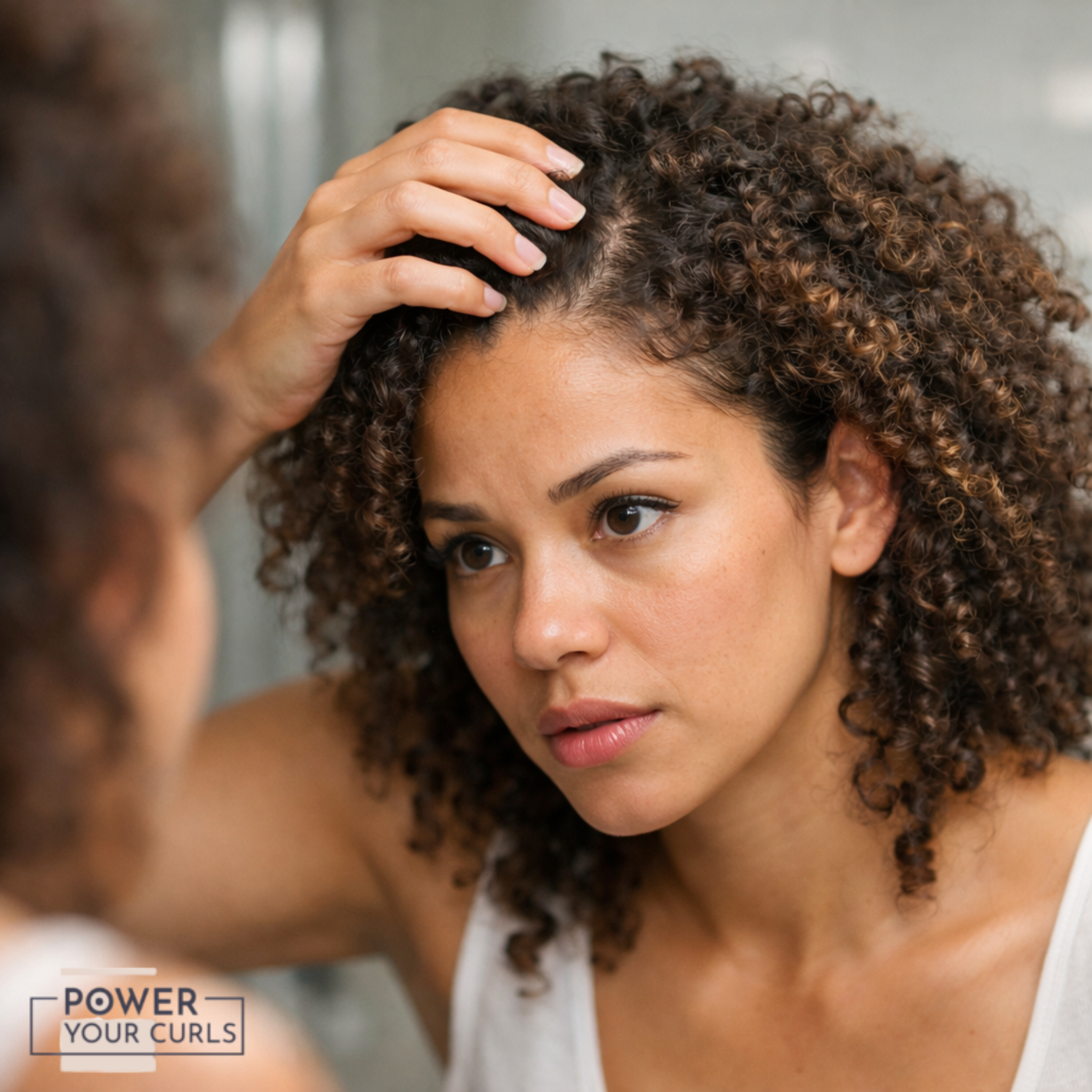
When you think of hair loss, you would automatically think of something like male pattern baldness. It’s the most well-known form of hair loss, and just like in the title, it features the struggles of men. On the flip side, for millions of women, they notice something different with their curly hair. Instead, they experience hair thinning.
Having curly hair already gives you a different perspective, and some well-meaning concern, regarding the state of your locks. Your experience with it might make you more susceptible to hair thinning.
To give your hair the best care possible, our curly-hair experts delved into what you need to know about hair thinning. In this article, we’ll focus on causes, prevalence, and treatment options. But first, how common is hair thinning?
- How Common is Hair Thinning in Women?
- Why Is Curly Hair More Vulnerable to Thinning?
- Understanding the Hair Growth Cycle
- Common Types of Hair Loss in Curly-Haired Women
- Scalp Conditions That Can Interfere Curly Hair Growth
- Treatment Options for Hair Thinning
- Nutritional Advice for Healthy Hair
- Hair Care Tips for Curly-Haired Women
- When to See a Dermatologist
How Common is Hair Thinning in Women?
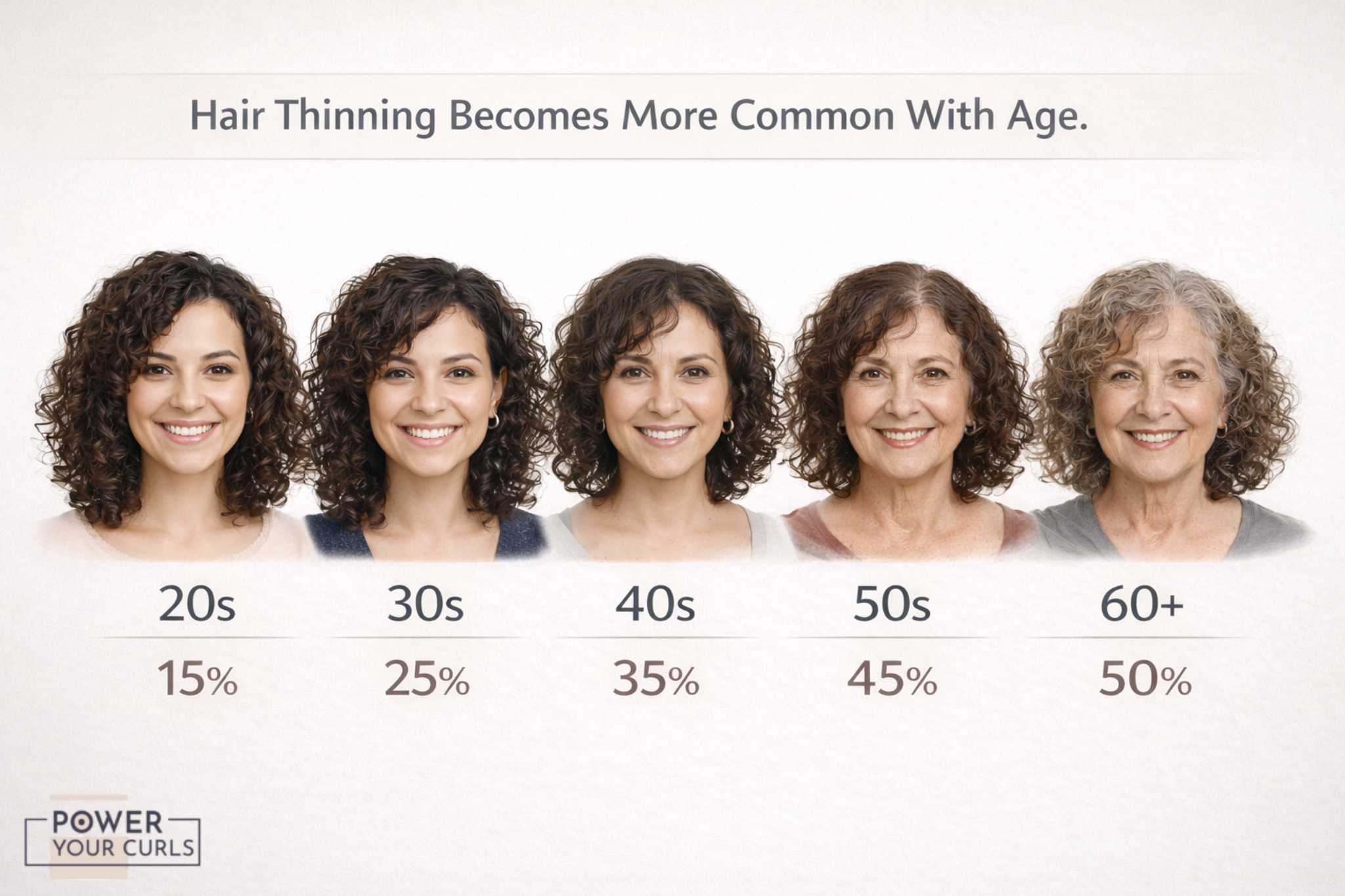
Hair thinning is more broad and pervasive than most people are aware of. In fact, on average, you lose more hair in your lifetime than you realize. Here is a list of facts about hair thinning you might not know yet, regardless of your hair type:
- As part of the natural hair growth cycle, women on average shed 50-100 hairs per day.
- In the United States, around 30 million women sustain some kind of hair loss in their lives.
- Researchers estimate that a third of the current women’s population spot hair thinning
- By the age of 50, 40% of all women show signs of visible hair loss.
- Female pattern hair loss is apparent in more than half of women post-menopause.
Why Is Curly Hair More Vulnerable to Thinning?
Your curls have their own remarkable design. It presents as a more oval shape that spirals, giving it its unique shape. However, this structure gives the hair strands its fragile nature. The twists along the hair shaft produce weak fault points. These bends make your hair more prone to:
- Breakage
- Dehydration
- Mechanical stress
- Tangling
Curly hair and similar hair types typically have a lot more volume than other hair textures. Hair thinning is more noticeable with curly hair because:
- More of your scalp becomes prominent
- The part in your hair
Noticing hair thinning with your curls can be another thing entirely. It could be breakage than true hair loss. Keeping your curls damage-free by learning proper curl care techniques is a must. You can start with simple habits such as preserving moisture, detangling gently, and refraining from excessive heating tools. These easy steps work wonders with your curls.
Understanding the Hair Growth Cycle
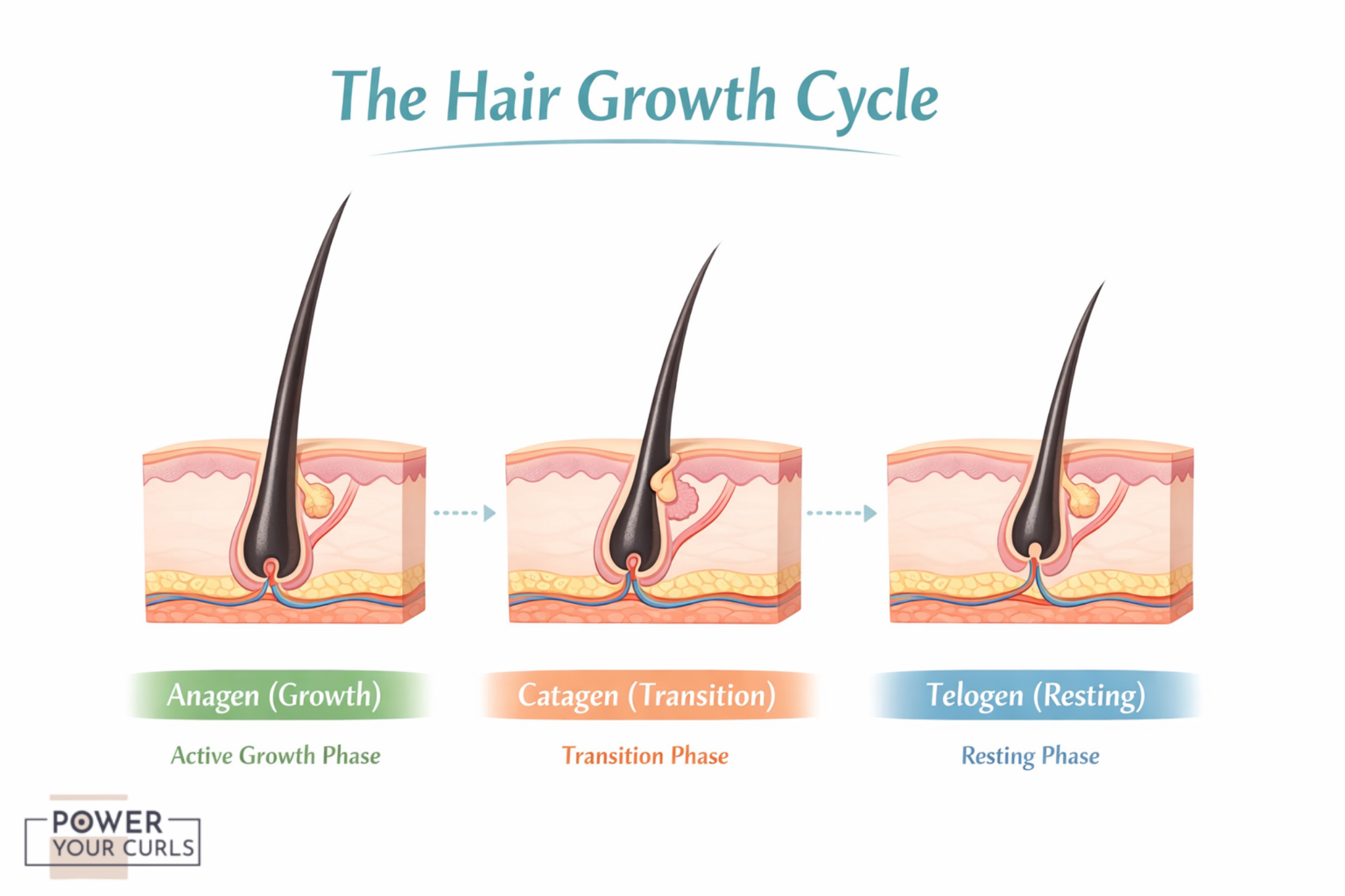
Hair growth happens in three main stages, each stage lasting several weeks or even months at a time. This continuous cycle contain the following phases:
Anagen
In the anagen or growth phase, the hair is active. It grows right from the follicle at a faster pace during this time. This phase can last for several years at a time.
Catagen
The catagen or transition phase is a little different from the anagen phase. The hair growth here slows down. That’s because the follicle shrinks down, which helps the cycle transition to the next phase. This phase can last for only a couple of weeks.
Telogen
Your hair rests during the telogen or rest phase. It gives your hair the space to breathe before shedding and getting ready to start the cycle again. This phase can last for a month or two at most.
There’s a chance that a bunch of hair follicles enter the telogen phase all at once. This excessive shedding will lead to visible hair thinning.
Common Types of Hair Loss in Curly-Haired Women
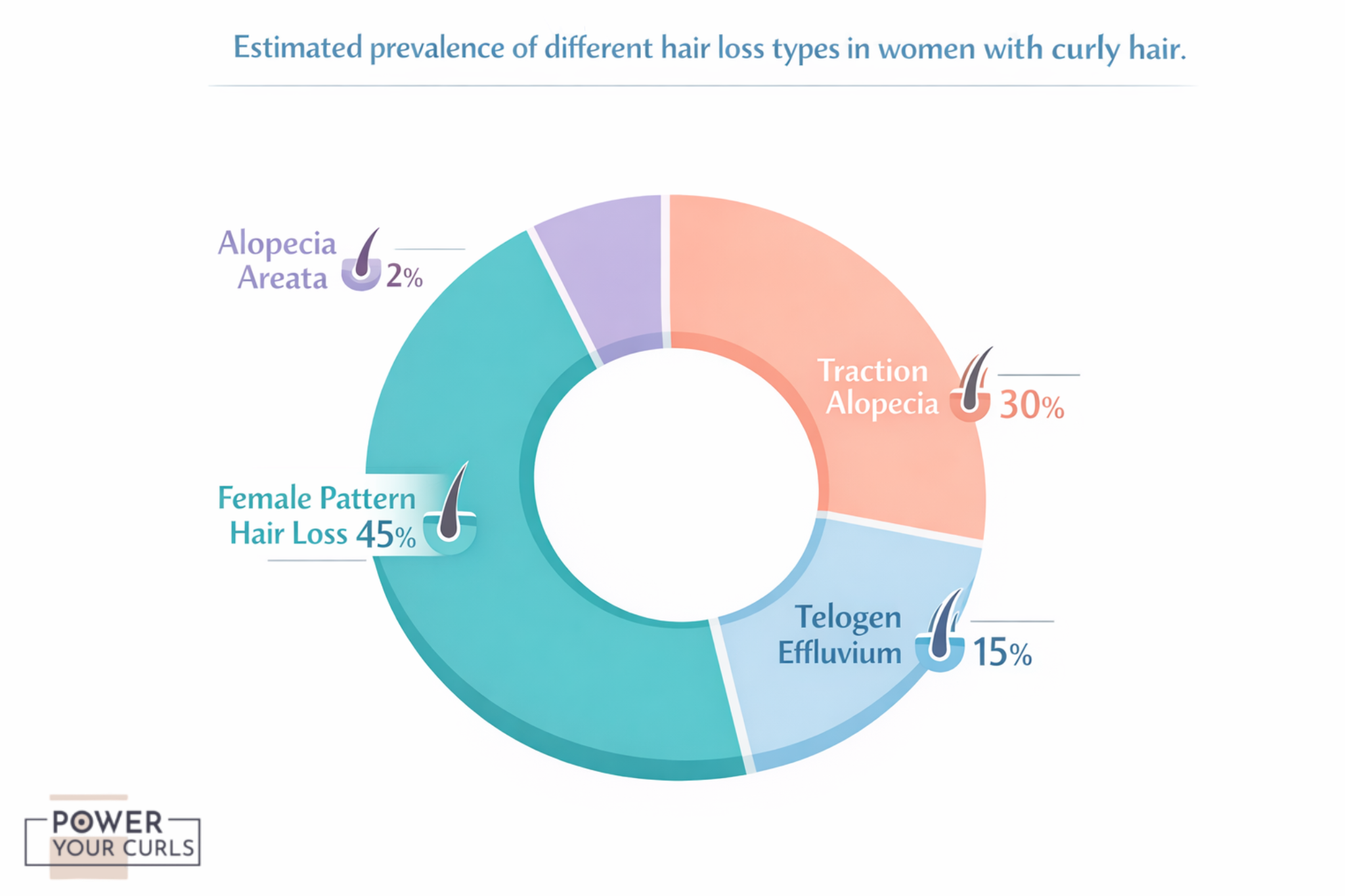
1. Female Pattern Hair Loss (Androgenetic Alopecia)
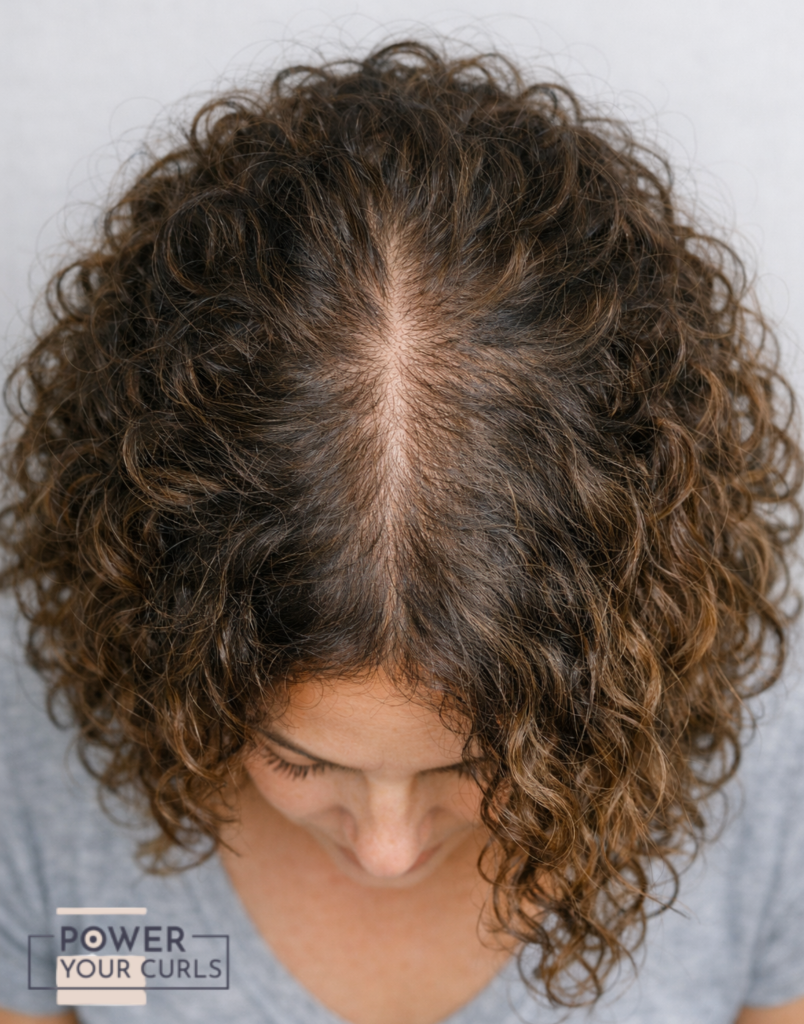
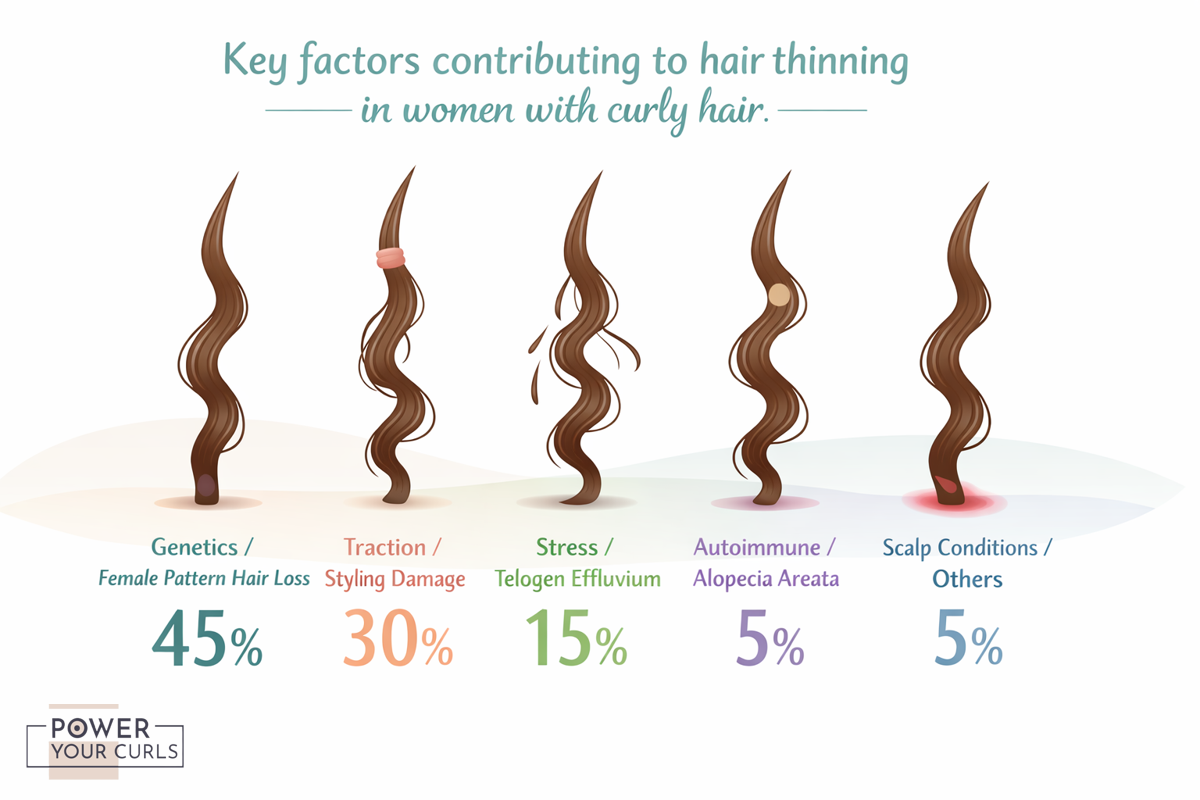
Female pattern hair loss is one of the prevalent causes of hair thinning in women. As a genetic condition, it’s more noticeable with consistent hormonal changes. This condition appears as the following signs:
- The visible widening of the hair part
- The gradual thinning of the crown
- The discernible loss of hair density at the top of the scalp
2. Traction Alopecia
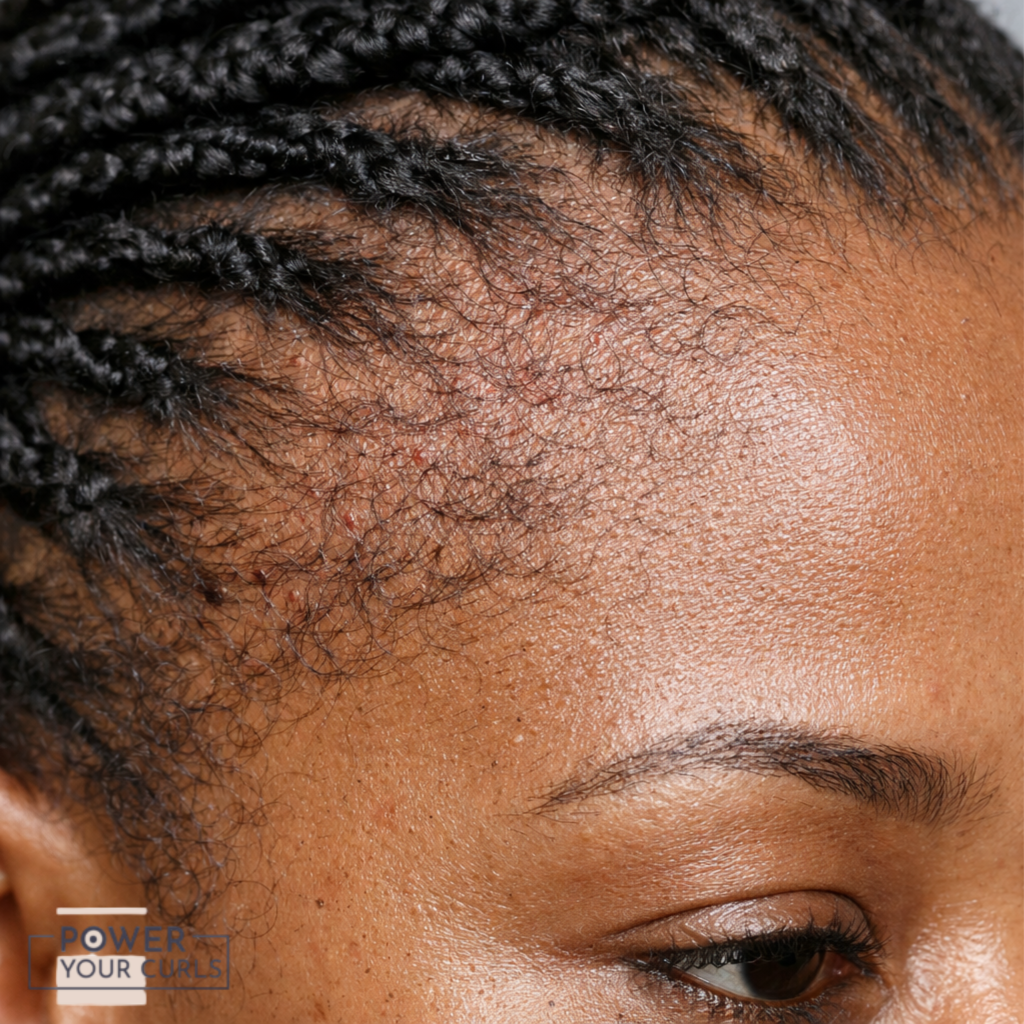
Traction alopecia has a history with women who have curly or coily hair. This condition happens when there’s repeated tension on hair follicles, leading to damage over time. Tension can be from the following sources:
- Braids
- Cornrows
- Extensions
- Severe buns
- Tight ponytails
- Weaves
- Wigs with tight clips
Research shows that 31.7% of women have traction alopecia in some populations around the world. However, with proper detection, those numbers can lower, making it one of the most preventable forms of hair loss.
3. Alopecia Areata
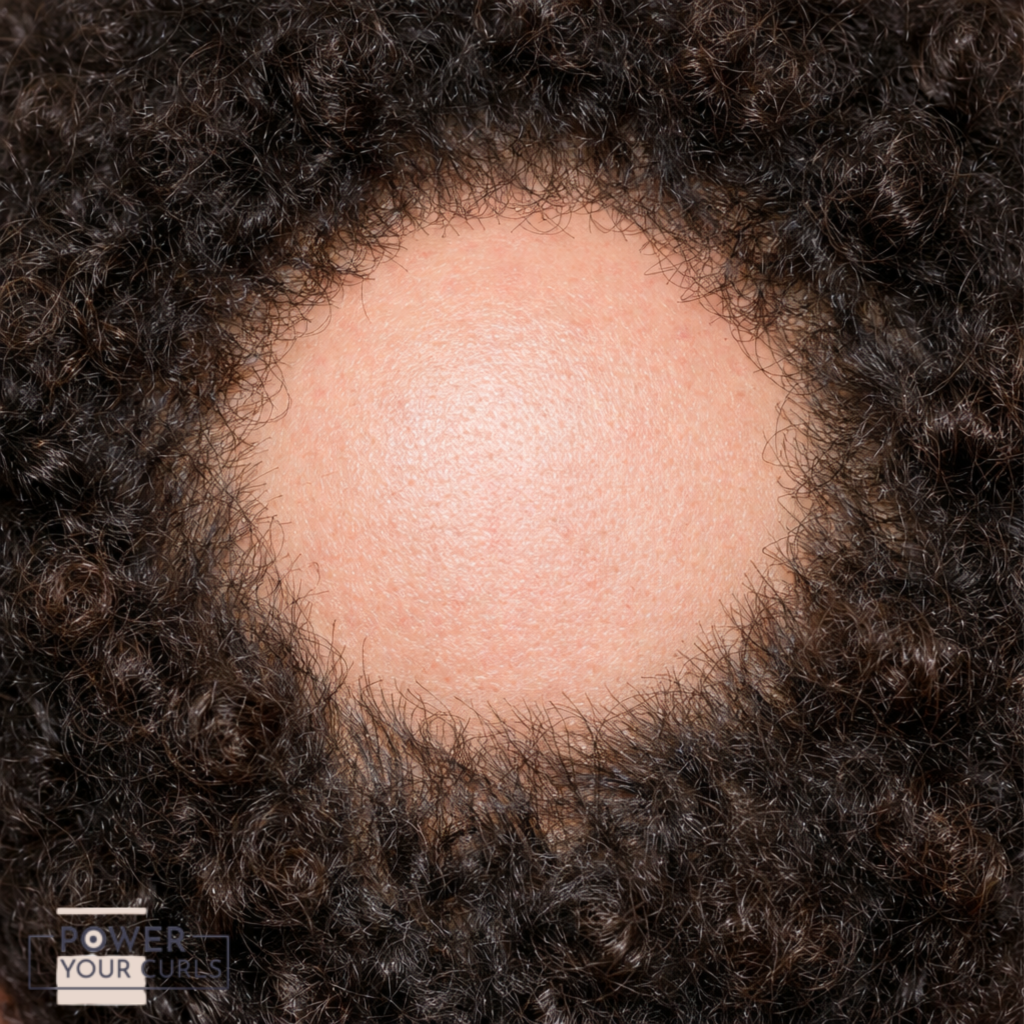
Alopecia areata is the most distinct among the hair loss types on this list. With its round patches of hair loss, doctors have classified this as an autoimmune condition. Only 2% of the world’s population can have alopecia areata sometime during their lives. The hair can grow back, but this condition is also recurring even after treatment.
4. Telogen Effluvium
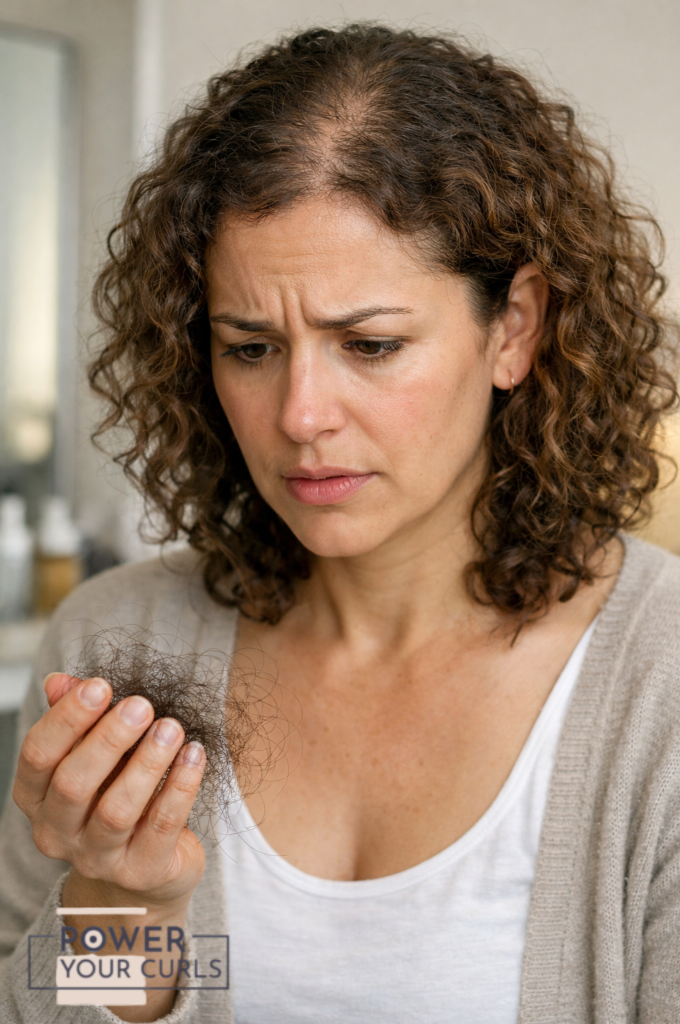
Telogen effluvium looks distressing, though it’s not as bad as you think. This condition does affect the entire scalp, albeit temporarily. Experiencing one or more of the following triggers can lead to telogen effluvium:
- Childbirth
- Pregnancy
- Illness
- Intense stress
- Medications
- Rapid weight loss
- Surgery
- Thyroid disorders
Hair usually grows back after a few months once the person resolves the underlying trigger.
Scalp Conditions That Can Interfere Curly Hair Growth
Your scalp’s health will also determine the health of your hair. It’s essential for strong hair growth. As it were, certain scalp conditions can disturb your curls’ natural growing process. Here are just a few you can look out for:
- Seborrheic Dermatitis: A condition common for the scalp that causes inflammation, flaking, and redness.
- Psoriasis: An autoimmune disorder that produces thick, scaly patches on the scalp, which may disrupt hair follicles.
- Scarring Alopecia: A rare but serious condition in which inflammation permanently damages hair follicles. Early diagnosis from a dermatologist is important to prevent long-term hair loss.
Treatment Options for Hair Thinning
1. Medical Treatments
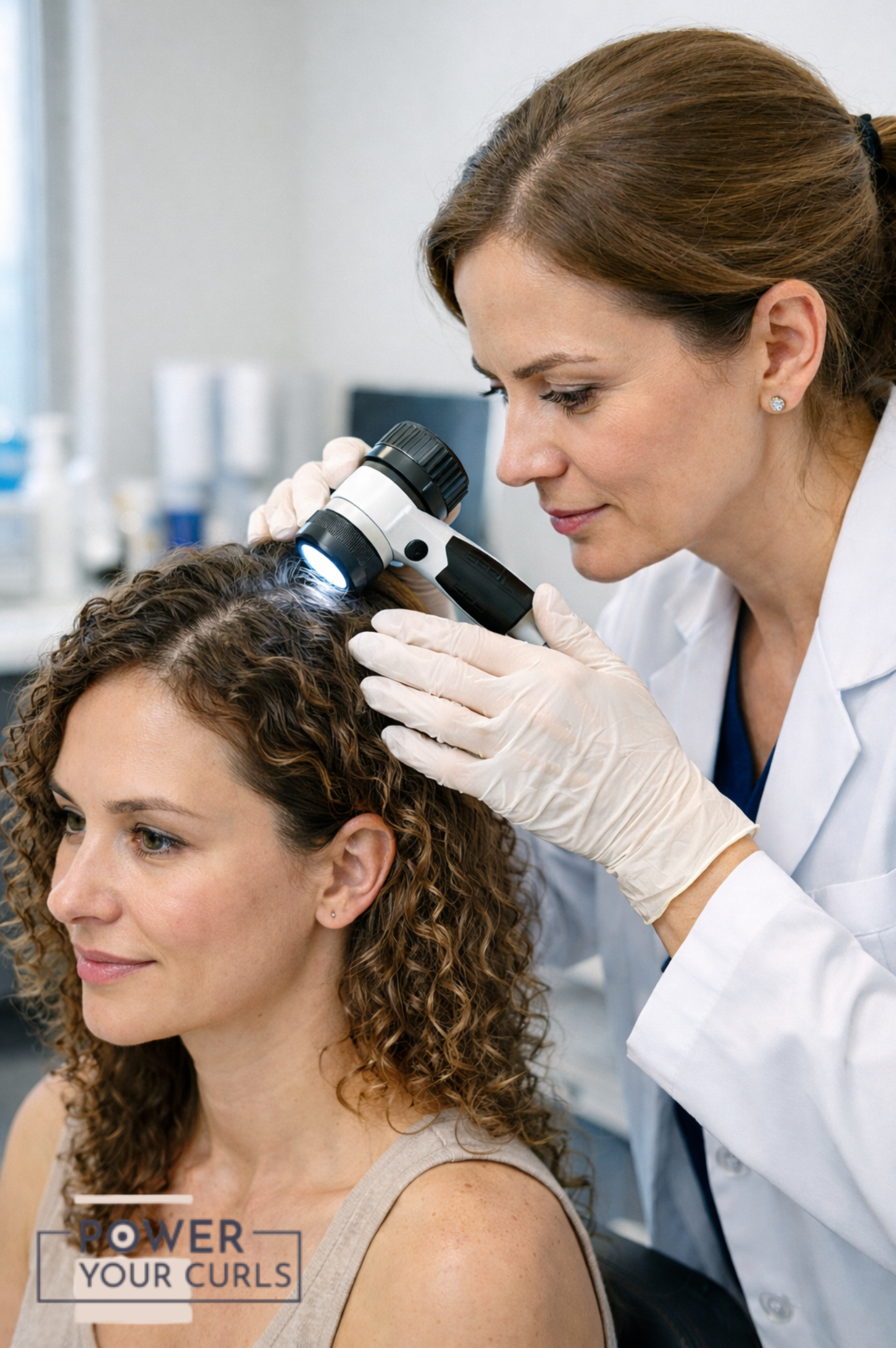
There are medications that dermatologists recommend to slow down hair loss. Some of them even stimulate hair follicles to promote regrowth. Go to a doctor if you show signs of hair thinning to get immediate treatment since it produces the best results.
2. Hair Transplant Surgery
Hair transplant procedures move healthy follicles from the back of the scalp to thinning areas. Being the most advanced treatment on this list, it’s also the most expensive, so do your research first before proceeding.
3. Low-Level Laser Therapy
Low levels of laser therapy on the scalp can stimulate hair follicles. This treatment option is a popular choice among patients since it’s non-invasive. Examples of these devices include laser combs and helmets.
4. Specialized Hair and Scalp Care Systems
There is a range of products available in the market right now, with their primary design being hair regrowth. These treatments can:
- Fortify weak hair strands
- Better scalp health
- Enhance hair volume
Most of these products have little-to-no harsh ingredients. These gentle cleansers specifically for curly hair targets vulnerable areas like the scalp without harming its delicate microbiome.
There’s hair care like this stimulating hair growth shampoo nourishes the scalp while removing buildup. You can follow it up with this moisturizing curly hair conditioner that can revive elasticity, improving the strength of each strand.
Nutritional Advice for Healthy Hair
Like any other part of your body, hair health will depend on the nutrients you take in. Your overall wellness is key to healthy hair growth. Some of the most important nutrients for proper hair health are:
- Biotin and other B vitamins: These B vitamins contribute to better keratin production
- Iron: There are links between hair shedding and low iron levels
- Omega-3 fatty acids: Best for hair growth, these reduce inflammation and hydrate the scalp
- Protein: Keratin, a structural protein, is the primary component of hair
Health professionals, including hair specialists, recommend a balanced diet of lean proteins, leafy greens, fatty fish, nuts, and seeds. The combination of this and a good hair care routine will give you stronger hair in no time.
Hair Care Tips for Curly-Haired Women
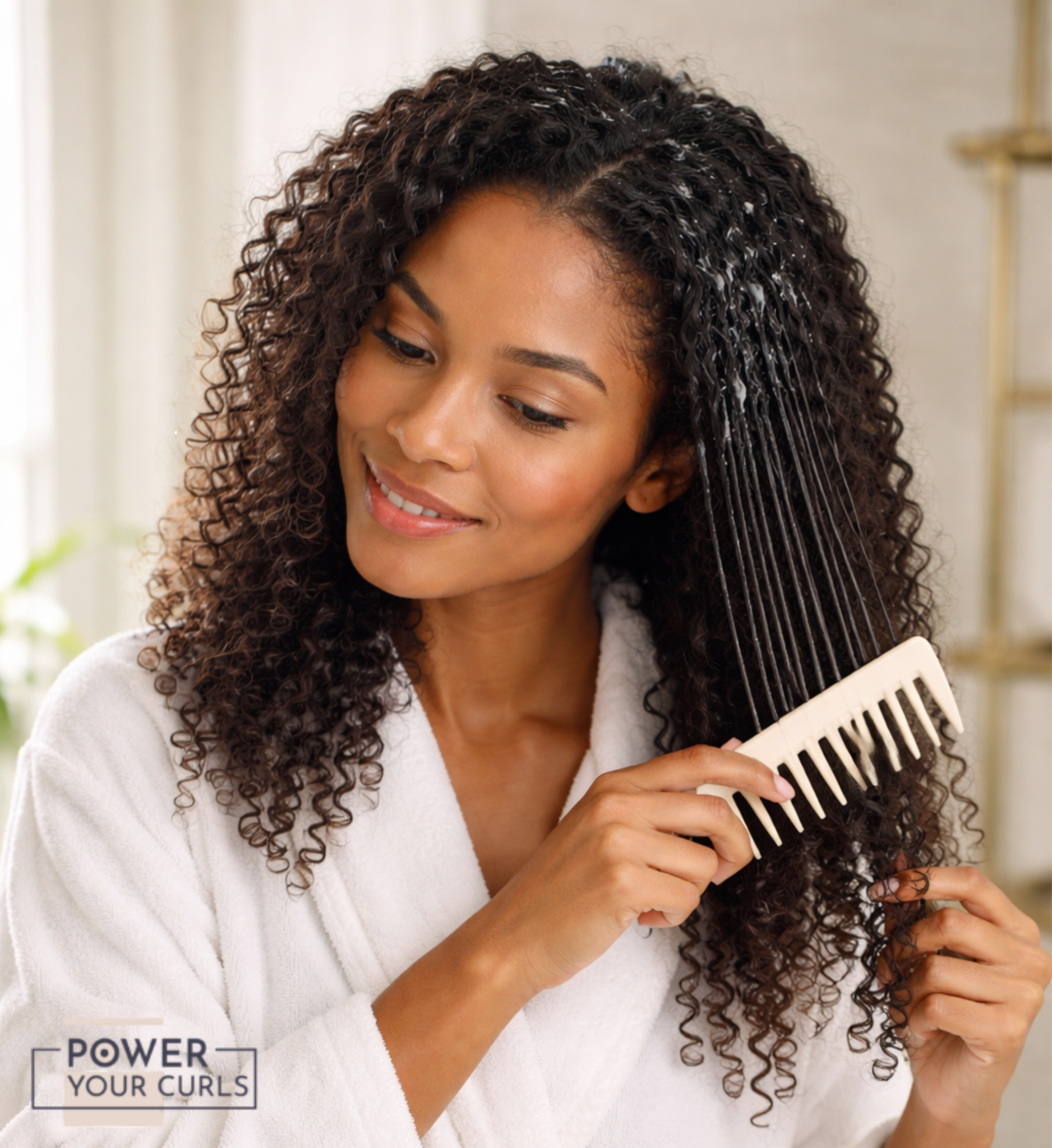
Curly hair needs a gentler touch. Curly-haired women and men are capable of protecting their luscious locks with a few simple tweaks in their routine. Here are few to get you started:
- Moisturize your hair with non-damaging treatments
- Detangle with a wide-toothed comb
- Restrict excessive heat styling
- Abstain from constantly using tight hairstyles
- Don’t leave in protective styles for too long
By implementing these practices in your current curly hair method, you’ll see less breakage and more volume.
When to See a Dermatologist
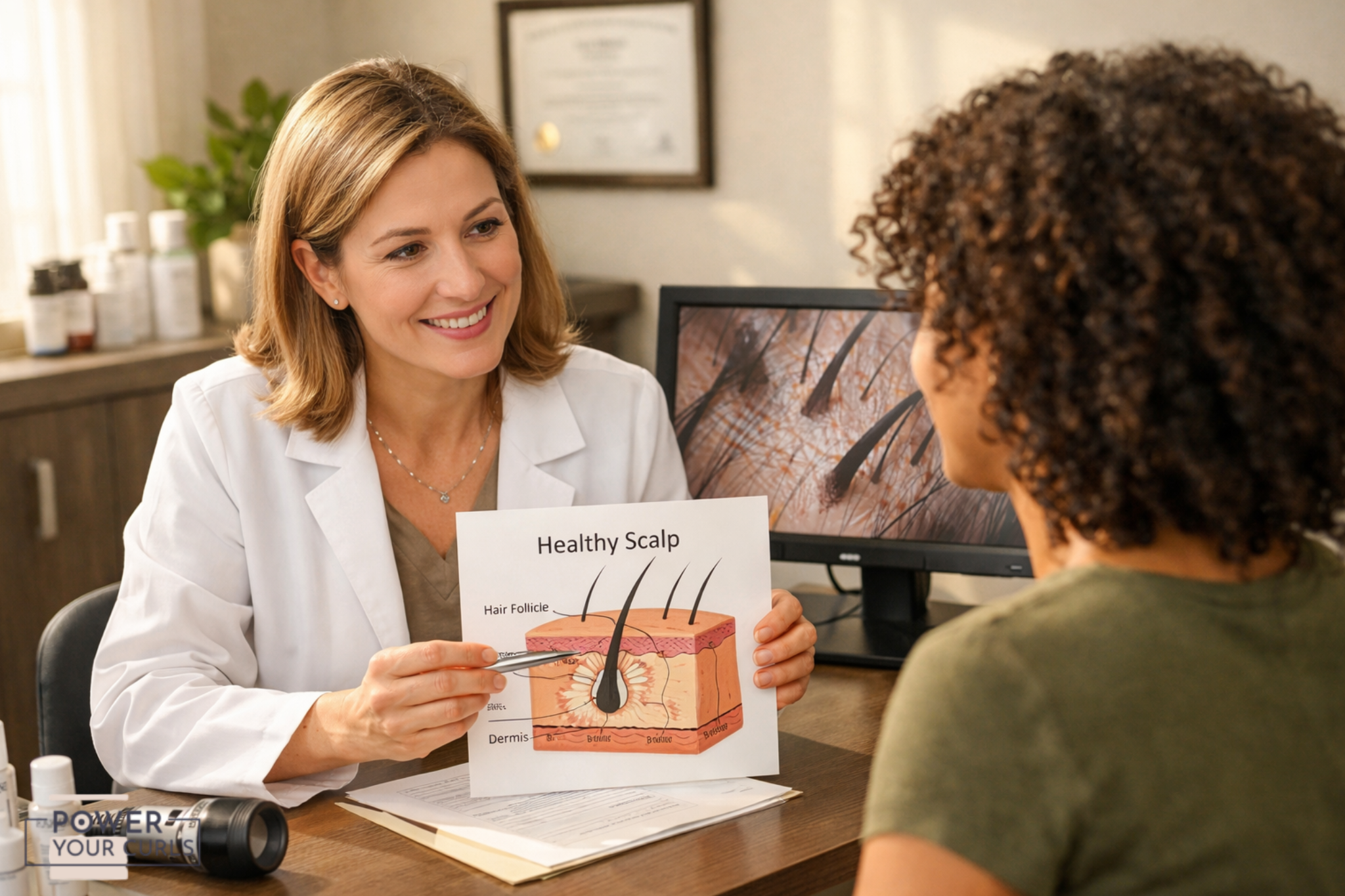
It’s time to consult a dermatologist if you experience any or all of the following signs:
- Constant scalp irritation
- Patches of hair falling off
- Abrupt and/or inordinate hair shedding
- Accelerated hair thinning
An evaluation from a professional will surely help them figure out the reason for the hair issues. It’ll find the underlying cause, which will help your doctor narrow down the best course of treatment.
