

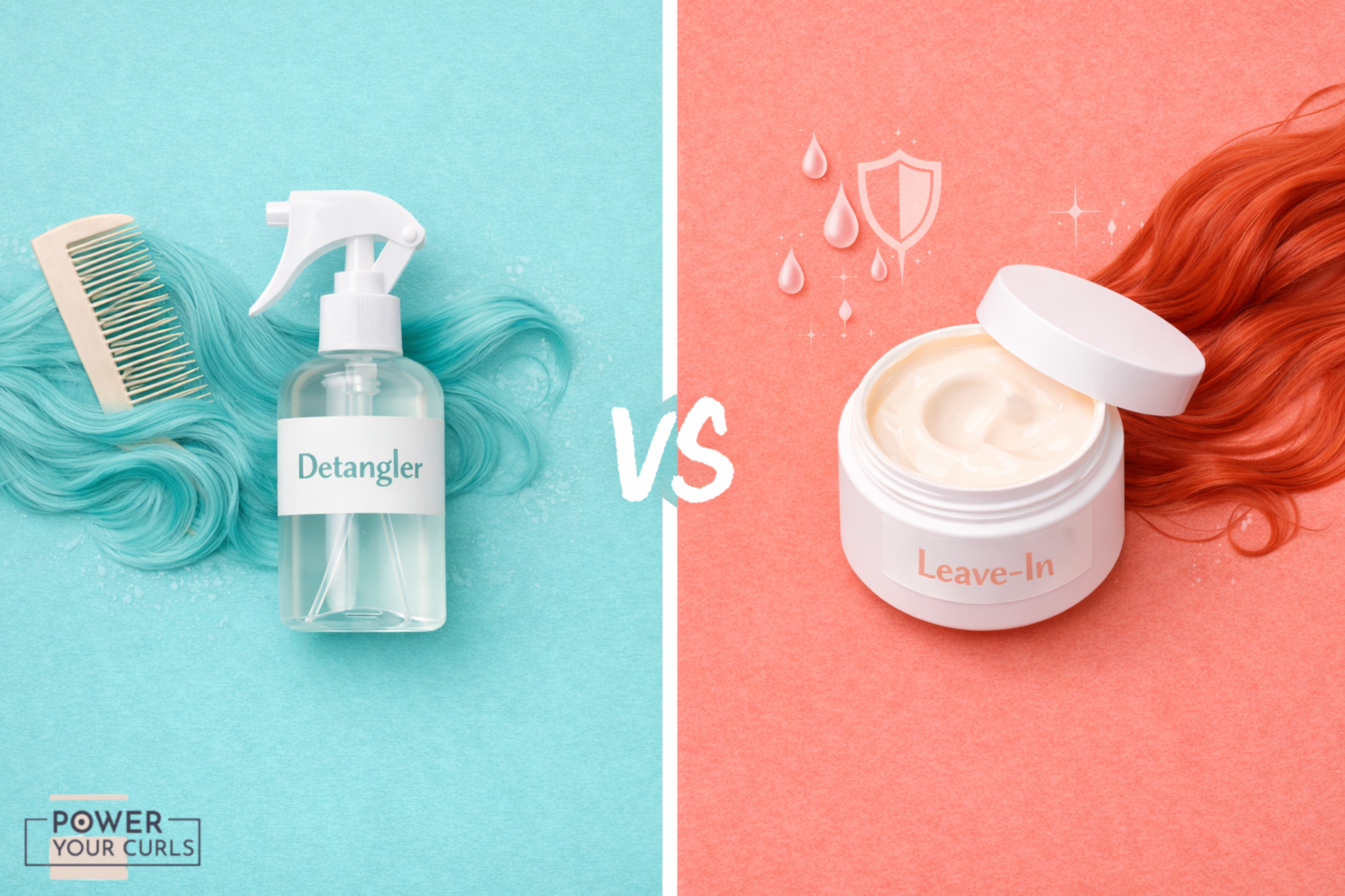
You’re in the hair care aisle or scrolling product pages at midnight, and two bottles catch your eye. Both promise smoother, more manageable hair. Both come in spray bottles, and both contain slip-inducing ingredients. So, what’s the actual difference? If you’ve ever struggled with detangling your curly hair, you’ve probably asked this exact question.
This guide covers the chemistry behind each product, looking into the analogy that finally makes the difference click. We compiled the insights of real people and experts alike across Reddit and beauty forums. This is the ultimate practical decision guide for your specific hair type.
- What Is a Detangler?
- What Is a Leave-in Conditioner?
- How to Add Moisture to Your Hair
- The LOC Method: Layering Moisture for Maximum Effect
- How to Use a Detangler and a Leave-in Conditioner
- Which One Do You Actually Need?
- FAQs About Detanglers and Leave-in Conditioners
- Detanglers and Leave-In Conditioners: The Bottom Line
What Is a Detangler?
A detangler has one primary job: make knots and tangles easier to remove without breaking your hair. It does this by creating slip, reducing friction between strands so they glide past each other instead of snagging.
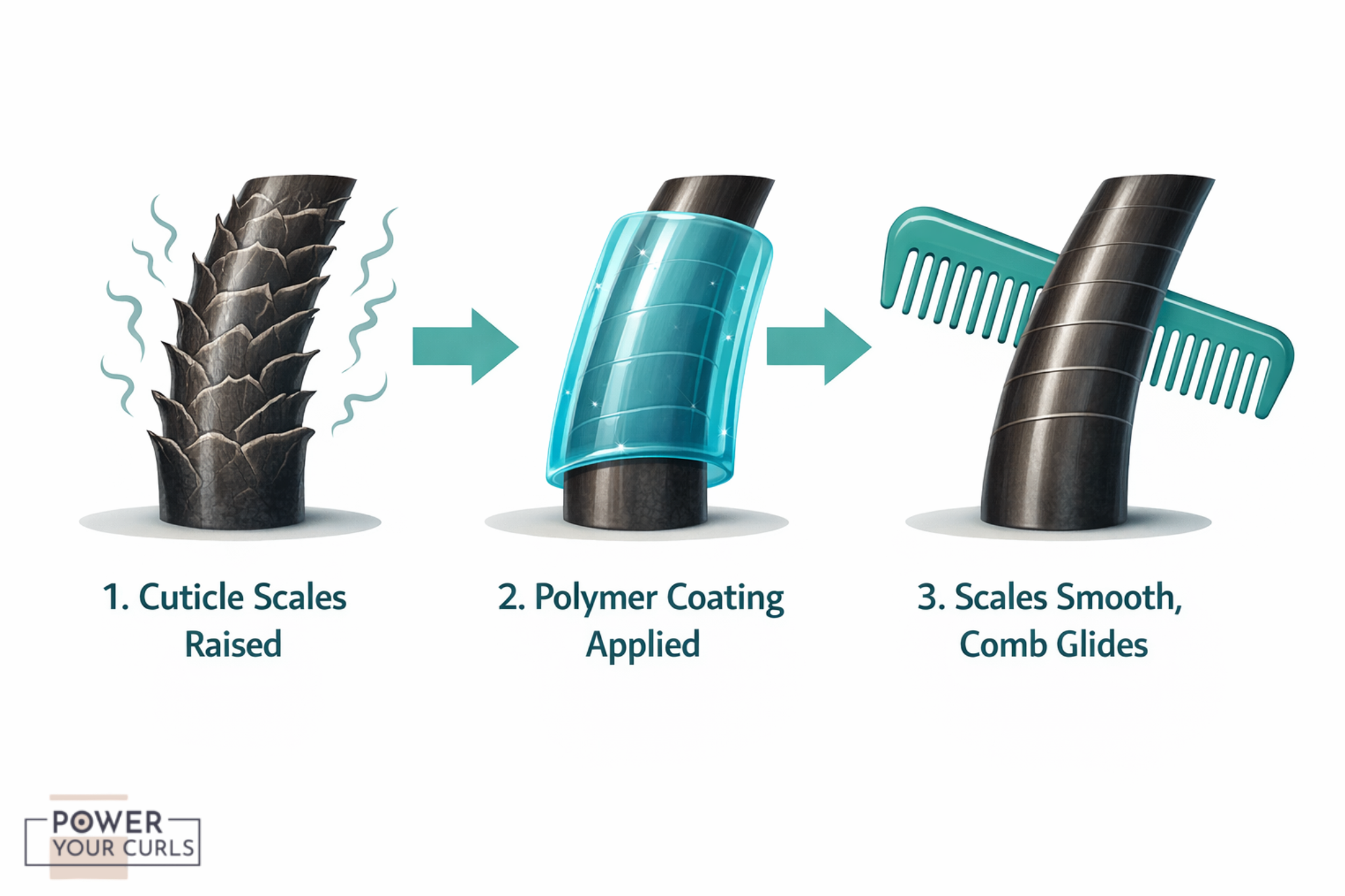
At a chemical level, detanglers work by coating the outer hair cuticle with polymers or oils to reduce friction. It lowers the hair’s pH so the cuticle scales contract and lie flat. This neutralizes the negative electrical charge that makes freshly-shampooed hair tangle and frizz. The result is that your comb moves through with dramatically less resistance.
Detanglers are most useful for the following hair textures and types:
- Long hair that knots at the ends
- Fine hair that tangles despite being moisturised
- Curly and coily hair types (3–4) where knots form naturally
- Children’s hair
- Hair coming out of braids or protective styles
| Pro tip
Detanglers provide fast, surface-level slip , great for the immediate mechanical problem of removing knots. They don’t deeply repair or nourish hair the way a leave-in does. Think of them as your emergency spray, not your daily moisturiser. |
If you’re looking for a starting point, the Curl Keeper Slip Detangler is a professional-grade pick. This delivers pure slip with no buildup, lightweight enough for every wash day.
For coily and textured hair, the Coil Calm Detangler + Condition is consistently praised for strong slip without heavy silicones. It’s a favourite for 3c–4c curl patterns.
And if you want something residue-free for fine or medium hair, the Kinder Curls Magic Mist Detangler. It is light enough for everyday use with no stiffness or sticky residue.
What Is a Leave-in Conditioner?
A leave-in conditioner is a lighter version of your rinse-out conditioner. This stays in your hair and keeps working throughout the day. Unlike a detangler, it penetrates deeper into the hair shaft to deliver ongoing moisture, protein, and protection.
For a deeper look at which formulas work best for different, we got your covered. Our guide to essential leave-in conditioners for curly hair covers the full range.
The benefits are broader and longer-lasting. A leave-in conditioner:
- Moisturises and hydrates dry, frizzy, or damaged hair
- Locks in moisture from your wash routine
- Protects against heat styling tools
- Guards against environmental damage
- Improves hair elasticity and softness over time
- Helps with light-to-moderate detangling
Leave-in conditioners come in sprays, creams, milks, and foams. Sprays are lighter and better for fine hair. The creams and milks are richer and better for thick, coily, or very dry hair.
For a versatile everyday option, people praise the Olive & Tea Tree Oil Leave-In Conditioner across hair forums. Its slip, heat protection, and ability to work across curl types without weighing hair down is remarkable.
If your hair is thick, dry, or damaged, the Shea Miracle Moisture Intense Leave-In Conditioner is a richer formula. Made with shea butter, it’s built for lasting moisture between wash days.
And if you want something accessible enough for daily use, the Aloe + Mint Hydrate Me Leave-In Conditioning Creme delivers. Its excellent softness and brushability at a price point that makes daily use realistic is unmatched.
The Oil Analogy That Makes It Click
The simplest way to understand why these two products exist is to think about the difference between olive oil and coconut oil.
| A detangler is olive oil; light, fast, immediate slip. A leave-in is coconut oil ,; richer, deeper, takes longer to absorb but nourishes for hours. |
Both are oils. Both add moisture. But they work at different speeds, at different depths, and for different durations. A detangler is your quick fix. It addresses the immediate mechanical problem of a knot by creating instant slip. A leave-in is your slow burn. It soaks in and builds hair health over time.
This is also why detanglers are almost always sprays and why the best leave-in conditioners tend to be thicker creams or milks. The form follows the function.
Detangler and Leave-in Conditioner Side-By-Side: How They Are Actually Different
The chart below shows how each product performs across five key benefit dimensions.
How to Add Moisture to Your Hair
One of the most-searched questions in hair care is simply: how do I add moisture? Both detanglers and leave-in conditioners are part of the answer, but they address moisture at different levels and timescales.
When hair is dry, the cuticle scales lift and snag on each other. Strands rub together, creating friction, and friction creates knots. Adding moisture isn’t just about feel; it directly reduces how often and how severely your hair tangles.
Fast Moisture: The Detangler Approach
A detangler adds moisture quickly and on the surface. Think of it as an emergency slip. It coats the hair shaft immediately, giving strands enough lubrication to move past each other without tearing.
The moisture a detangler provides is fast but shallow. It gets absorbed or evaporates quickly, which is why a detangler is a situational tool rather than a daily treatment. Learning the right technique for detangling curly hair makes a bigger difference than any single product.
Deep Moisture: The Leave-in Approach
A leave-in conditioner adds moisture slowly and deeply. It contains humectants (like glycerin) that actively pull water from the air into the hair shaft. They also have occlusive ingredients (like shea butter) that seal that moisture in. This process takes time, which is why a leave-in’s full effect is over hours, not minutes.
A well-chosen leave-in, like the Natural Hair Milk Leave-In Detangler, works as both the moisturising and the slip-providing step. It’s ideal for the first layer of the LOC method below.
The LOC Method: Layering Moisture for Maximum Effect
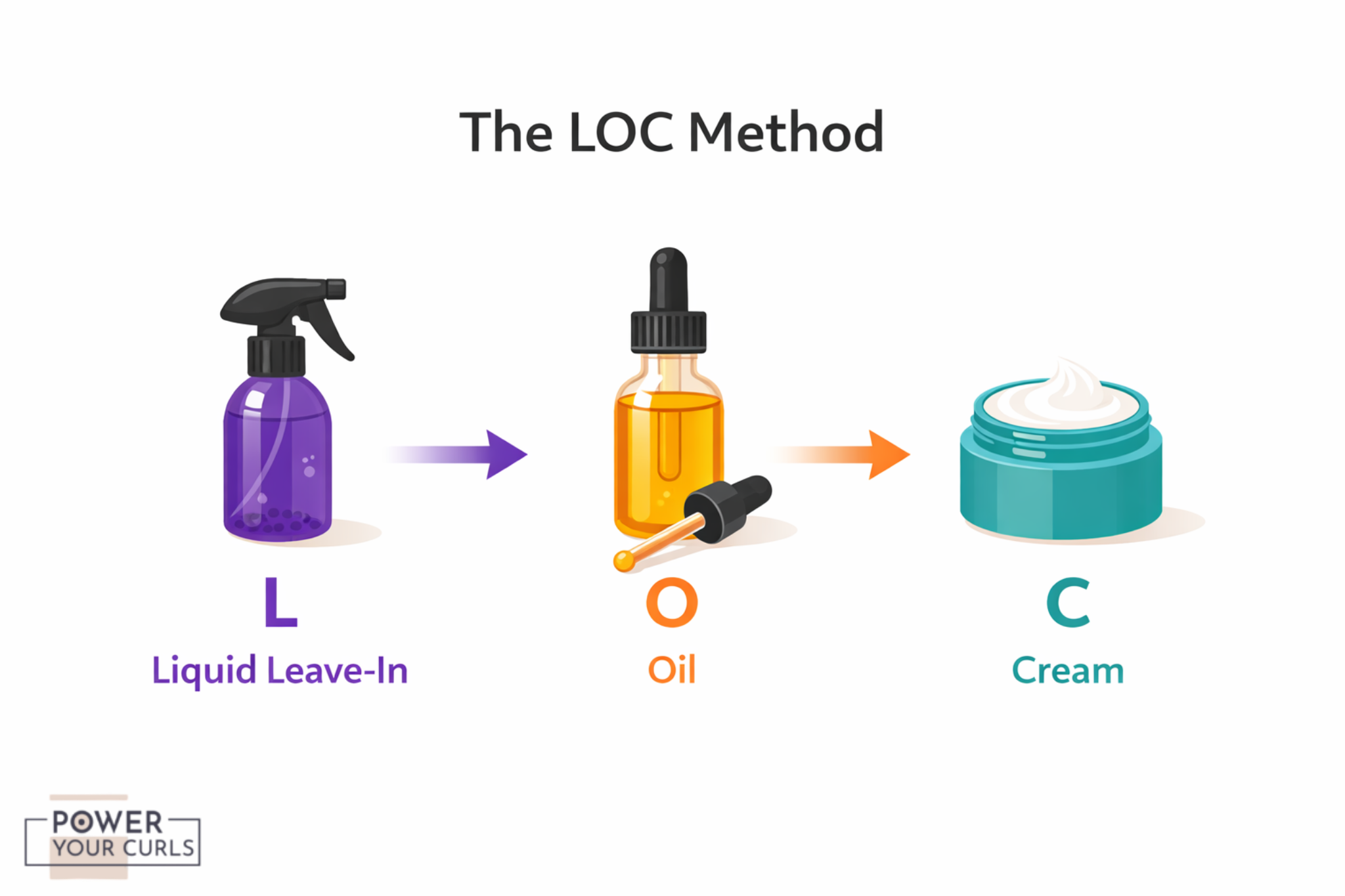
The LOC Method is a popular technique from the natural hair community that sequences moisture products for maximum absorption. Layering hydration this way is one of the most effective approaches for coils that lose moisture quickly:
- L for Liquid: A water-based leave-in conditioner. Adds water-based moisture directly into the hair shaft. Apply to damp hair first.
- O for Oil: A natural oil (argan, jojoba, coconut). Seals the water-based moisture in and prevents evaporation.
- C for Cream: A cream or butter as a final sealant and styler. Locks everything in for lasting hydration between wash days.
This method is especially popular for 4a–4c hair types that lose moisture quickly. It’s not necessary for everyone, but for very dry or high-porosity hair, it can be transformative.
Online hair communities are one of the most honest sources of real-world experience. What stands out isn’t just which products people use, but how differently they think about them in the first place.
Do you really need both?
A common takeaway is that many people don’t. For straight to moderately curly hair, a good leave-in conditioner with enough slip can handle both conditioning and detangling. Used on wet hair in the shower, it can replace a separate detangler entirely.
For tightly coiled, very thick, or heavily tangled hair, use a dedicated detangler first. It often makes a noticeable difference in reducing breakage. The right technique for detangling without breakage matters as much as the product itself.
| “In the shower with conditioner and lots of water works great as a 2-in-1. You get to evenly distribute the conditioner whilst detangling at the same time. No extra products needed.” , r/curlyhair |
What if you only want detangling, and nothing else?
Some people actively want to avoid products that do too much. They’re looking for pure detangling without added moisture, fragrance, or styling effects. Children’s detanglers come up repeatedly as a solution. They’re lighter, simpler, less loaded with extra ingredients.
Two that consistently deliver: the Dream Kids Olive Miracle Detangling Leave-In and the Dark & Lovely Beautiful Beginnings Ouchless Detangler. Both are gentle enough for children’s hair but effective on fine or product-sensitive adult hair too.
When products aren’t working, check your shampoo first
One of the most overlooked insights from these communities is this:
If your hair keeps tangling no matter what you apply afterward, your shampoo may be the real issue.
A shampoo that strips too aggressively will dry out the hair, increase friction between strands, and create more tangles. This means your detangler or leave-in is constantly trying to undo a problem being recreated at every wash.
Spray or cream leave-in: which actually works better?
The answer depends almost entirely on hair type. Sprays tend to work best for fine hair, quick application, and refreshing between washes. Creams work better for thick, dry, coily, or damaged hair that needs deeper moisture. For fine hair specifically, err on the side of less. Even products marketed as lightweight can cause limpness if over-applied.
How to Use a Detangler and a Leave-in Conditioner
Using a detangler
- Apply to damp (not soaking wet) hair. This is when it works most effectively. Soaking wet hair dilutes the product and reduces slip.
- Section thick or very tangled hair before starting. Smaller sections mean better coverage and less yanking.
- Work the product through from the ends then upward, focusing on knotted areas first.
- Use a wide-tooth comb or detangling brush. Always start at the ends and work toward the roots. Never yank from root to tip.
- Never force through resistance. Spray more product and work gently until the knot releases.
Using a leave-in conditioner
- Apply to towel-dried or damp hair after rinsing out your regular conditioner. The hair should be damp, but not dripping.
- Focus on mid-lengths to ends, where dryness and frizz are most common. Go lighter at the roots to avoid a greasy look.
- Use a wide-tooth comb or fingers to distribute the product evenly. For creams, emulsify between your palms first.
- Layer under styling products. The leave-in always goes first, before curl creams, gels, or mousse.
- You can use a leave-in conditioner on dry hair between wash days for a moisture refresh. Spritz lightly and scrunch through.
| When using both
Apply the detangler first on damp post-wash hair to remove tangles with minimal breakage. Then follow with your leave-in conditioner. The already-smooth, tangle-free hair will allow the leave-in to distribute and penetrate more evenly. |
Which One Do You Actually Need?
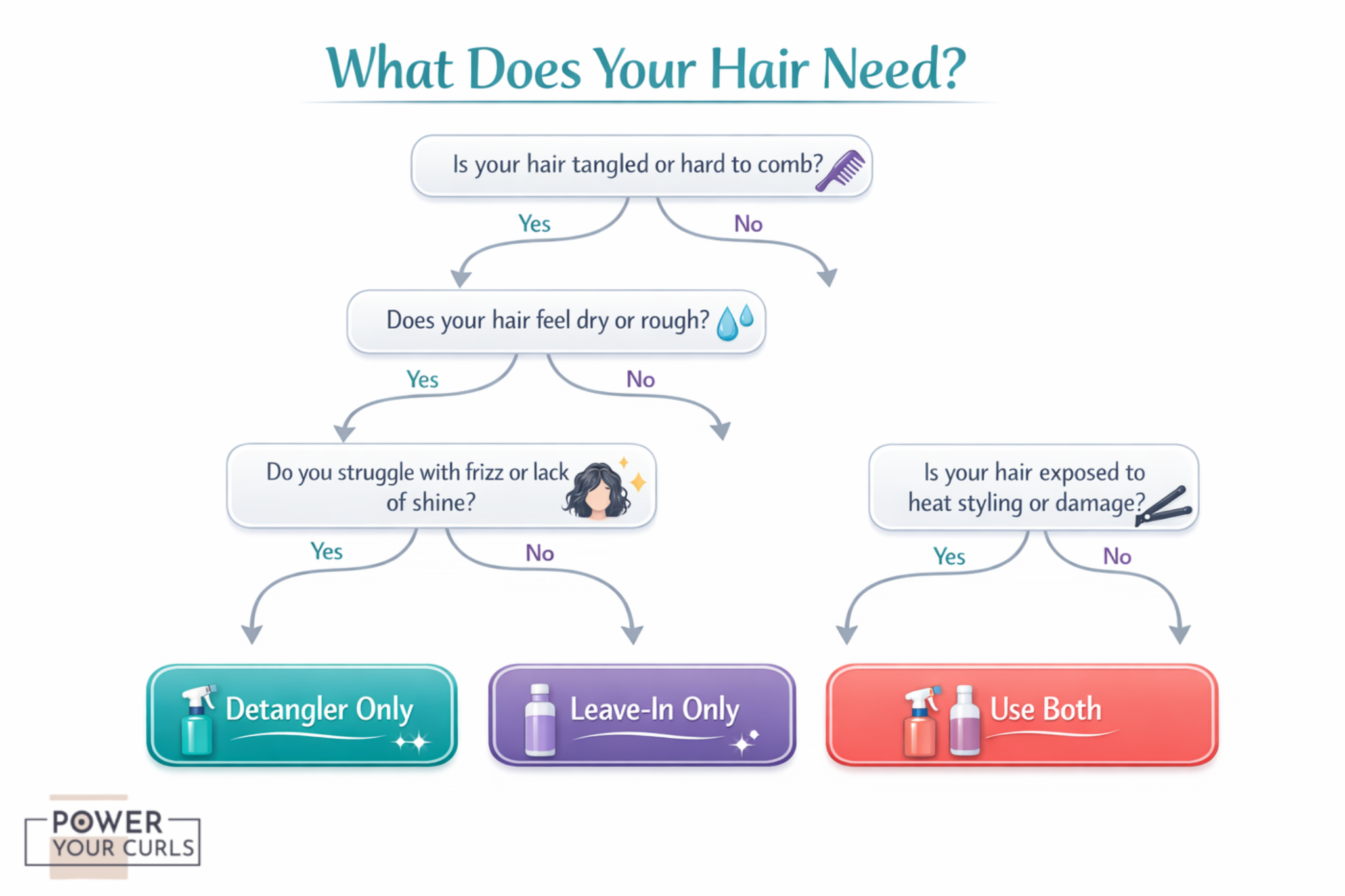
Use a detangler if your hair…
- Tangles easily but feels adequately moisturised
- Is fine and gets weighed down by conditioners
- Is in wigs, extensions, or coming out of a protective style
- Needs pure slip with minimal product
Use a leave-in if your hair…
- Is dry, frizzy, damaged, or colour-treated
- Needs daily moisture and heat protection
- Has tangles caused by dryness, not just mechanical friction
Use both if your hair…
- Is curly, coily, or very dry and tangles severely
- Is recovering from damage or a long-term protective style
- Needs deep moisture AND slip at the same time. Always detangle first, then put a leave-in second
There’s also a fourth option: 2-in-1 products that genuinely do both jobs. The Afro Naturals Leave-In Conditioner and the Hair Slip Conditioning Detangler are two community-trusted options. They provide strong slip for detangling while also conditioning the hair. The Knot Defying Instant Detangler is worth considering too. It bridges both categories without committing to two separate steps.
For a full roundup of the best leave-in conditioners across every curl type, see our complete guide here.
FAQs About Detanglers and Leave-in Conditioners
Is a detangler the same as a leave-in conditioner?
No, they share some ingredients and both improve manageability, but they are not the same. A detangler’s primary job is mechanical (removing knots) while a leave-in conditioner’s primary job is nutritive (moisturising and hair repair). A leave-in can often act as a detangler; the reverse is less reliably true.
Can I use a leave-in conditioner every day?
Yes, many people with dry, curly, or coily hair use a light leave-in daily. For fine or oily hair, every wash day (2–3 times a week) is usually enough. Spritz formulas tend to be better for daily use than cream formulas, which can build up.
Should I detangle before or after the shower?
Both approaches work. The key is the hair’s condition when you detangle. Detangling on soaking wet hair in the shower with conditioner in is generally the gentlest method. Detangling on dry hair before washing is useful for removing buildup from protective styles. Avoid detangling on partially dried hair since it’s when it’s most brittle and prone to breakage. For more on technique, our curly hair detangling guide covers the full approach.
Does a detangler or leave-in provide heat protection?
Most detanglers do not provide meaningful heat protection. They’re not formulated to stay on the hair long enough to do so. Many leave-in conditioners do include heat-protective ingredients, but check the label specifically. Look for a leave-in that explicitly states it protects up to a specific temperature (usually 450°F/230°C).
Is kids’ detangler okay for adults?
Absolutely. Products like the Dream Kids Olive Miracle Detangling Leave-In and the Dark & Lovely Ouchless Detangler are regularly recommended in hair forums. These are particularly for fine or low-porosity hair that gets weighed down by heavier formulas. Kids’ formulas tend to have fewer heavy conditioning agents, which makes them ideal for hair that needs slip without buildup.
Why does my leave-in make my hair harder to brush?
It’s usually one of three reasons:
- The formula is too heavy for your hair type (try a lighter spray version)
- You’re applying it to hair that still has residue from a previous product
- You’re using too much.
Begin by adding the leave-in conditioner to a small portion of damp hair and scale up as you go. If it’s still hard to brush your hair, try a clarifying shampoo. Using one will reset your hair before starting fresh with a better hair care routine.
Detanglers and Leave-In Conditioners: The Bottom Line
Detanglers and leave-in conditioners may seem like the same hair care product, but they meet different needs. These two work best together rather than as substitutes.
A detangler is a quick and practical solution to manage knots and reduce breakage during styling. On the other hand, a leave-in conditioner provides longer-lasting protection while nourishing and hydrating your hair throughout the day.
The best choice depends on what your hair needs at that moment. It could be for immediate manageability, lasting hydration, or a combination of both.
