
The best shampoos for hair loss contain caffeine or ketoconazole, the two ingredients with some clinical evidence, but no shampoo can reverse hereditary hair loss on its own. The treatments with the best evidence are medical, such as minoxidil and prescription medicines from a dermatologist, so treat a shampoo as an add-on.
Here is what each ingredient can realistically do, how our hair loss shampoos compare, and when to book a doctor instead.
Can a shampoo stop hair loss?
A shampoo alone is unlikely to stop hair loss, because it only stays on your scalp for a few minutes. The American Academy of Dermatology’s guide to hair loss treatment lists what dermatologists use: minoxidil, laser devices and microneedling at home; finasteride for men and spironolactone for women on prescription; and in-clinic options such as steroid injections, PRP and hair transplants. Even minoxidil usually takes about 6 to 12 months to show results.
Shampoo does not appear on that list. The AAD also notes that supplements such as biotin, iron or zinc only help if a blood test shows you are deficient. Some shedding is normal too: most people lose 50 to 100 hairs a day.
Hair loss shampoo ingredients with some evidence
Caffeine and ketoconazole have the most research behind them, though neither has strong proof yet.
Caffeine
A 2025 systematic review of topical caffeine found nine clinical trials covering 684 people with pattern hair loss, excess shedding or thinning, four of them using caffeine shampoo. Every trial favoured caffeine, but the quality of evidence was medium in three, low in one and very low in five, mostly because of missing placebo groups and unknown caffeine levels. The authors’ verdict: caffeine products may be worth a try, but results are not guaranteed.
Ketoconazole
Ketoconazole 2% is an antifungal shampoo that may also help pattern hair loss. In a 1998 study, it improved hair density and the share of growing hairs about as much as a 2% minoxidil regimen. The authors said larger controlled studies were needed. It is a medicated shampoo, so follow the pack label and ask a pharmacist or doctor how often to use it.
Peptides, biotin and rosemary
Peptide, biotin and rosemary shampoos mostly rest on lab findings or on studies of leave-on products, not shampoos. The rosemary trial behind most rosemary claims used an oil left on the scalp; see how to use rosemary oil for hair growth if that is what you are after. Biotin only helps hair if you are deficient, according to the AAD.
Best hair loss shampoos at Power Your Curls
These are the shampoos in our hair loss shampoos and treatments collection, described by what their makers say they do.
| Product | Key ingredients | What the maker says | How to use |
|---|---|---|---|
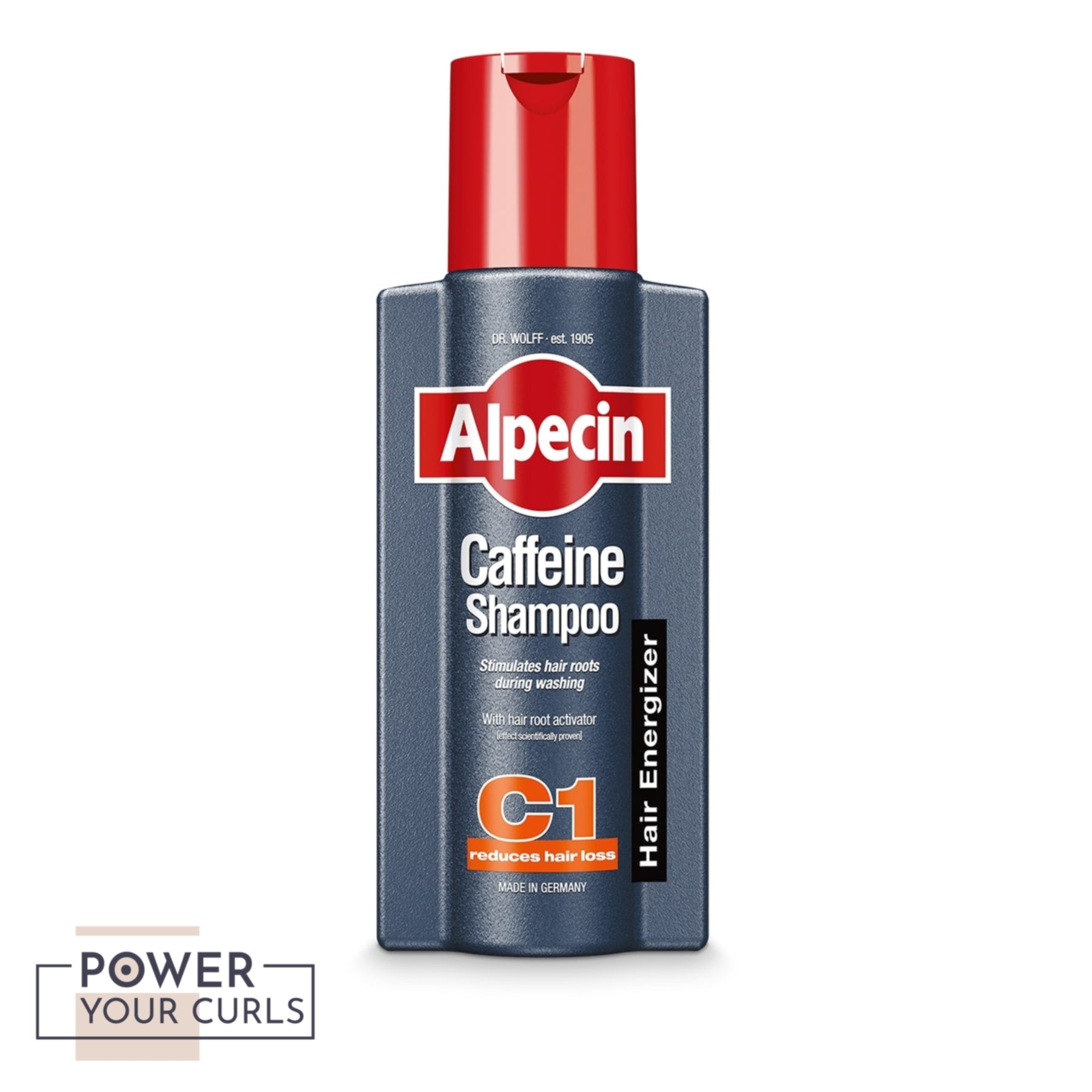
| Alpecin Caffeine Shampoo C1 | Caffeine | Aimed at hereditary hair loss; says caffeine reaches the follicles within 120 seconds of washing | Daily; leave on the scalp for 2 minutes |
| Some By Mi Cica Peptide Anti Hair Loss Shampoo | Centella asiatica (cica), 11 peptides, biotin | Hydrates a dry scalp and calms inflammation to reduce hair fall | Apply to wet hair and scalp, rinse thoroughly |
| Mielle Rosemary Mint Strengthening Shampoo | Rosemary, mint, biotin | Moisturising cleanse that helps strengthen weak, brittle hair; made for types 3A to 4C | As a regular wash |
| Pantene Gold Series New Lengths Root Stimulating Shampoo | Apricot oil, green tea | Cleanses and detoxes the scalp; sulfate-free; part of a length-retention routine | Massage into wet hair, lather, rinse |
For a leave-on caffeine step, Alpecin Caffeine Liquid is massaged into a towel-dried scalp each morning and after washing, and not rinsed out. If your main issue is breakage rather than loss from the root, the Mielle and Pantene options suit curly hair best. We have not listed dandruff shampoos here: they treat flaking, not hair loss.
How to use a hair growth shampoo on curly hair
Focus the shampoo on your scalp and give it time to work before rinsing. A simple routine:
- Wet your hair thoroughly and part it into sections if your curls are dense.
- Apply shampoo to the scalp, not the lengths, and massage gently with your fingertips.
- Leave it on for as long as the label says; Alpecin C1 specifies 2 minutes.
- Rinse, then condition your lengths so the wash does not leave curls dry.
- Keep styling low-tension: DermNet warns that tight braids, weaves and extensions can cause traction alopecia, a cause of hair loss no shampoo will fix.
Want to add an oil? Our comparison of which oil is best for hair growth covers rosemary, castor, coconut and argan.
When to see a dermatologist
See a dermatologist if your hair loss is sudden, patchy, comes with an itchy, sore or scaly scalp, or simply worries you. The AAD says that the sooner treatment begins, the better the outlook, and a dermatologist can tell excessive shedding from true hair loss. Heavy shedding a few months after childbirth, illness, surgery or major stress often settles within six to nine months, but it is still worth getting checked. If you think a medicine is causing it, talk to your doctor before stopping it.
If you are a woman with curly hair and your parting looks wider, our guide to hair thinning in curly-haired women explains the common causes and next steps.
FAQ
Do caffeine shampoos work?
They may help a little. Trials of caffeine shampoos and lotions have all reported benefits, but most lacked randomisation or a placebo group, so the evidence is not strong yet.
Which shampoo is best for hair fall?
For hereditary thinning, a caffeine shampoo used daily with a 2-minute contact time, or a ketoconazole shampoo used as directed on the label. For hair fall from breakage, a moisturising, sulfate-free shampoo plus regular conditioning helps more.
Can a hair growth shampoo regrow hair?
Do not expect regrowth from a shampoo alone. For regrowth, talk to a dermatologist about proven options such as minoxidil.
How long does a hair loss shampoo take to work?
Give any product at least three to six months of regular use. Even minoxidil, a proven treatment, usually takes 6 to 12 months to show results.
