

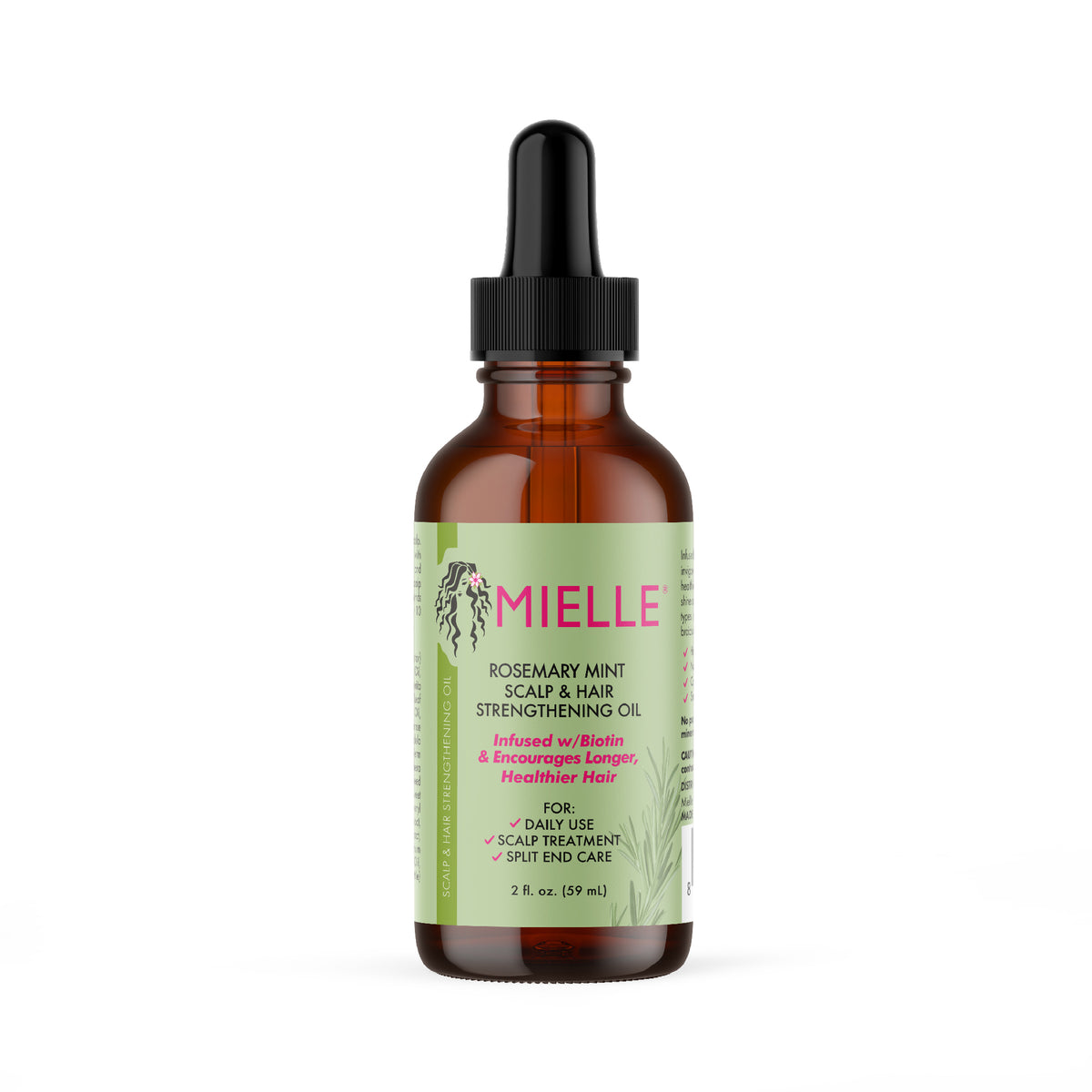
To use rosemary oil for hair growth, mix a few drops of pure rosemary essential oil into a carrier oil (or pick a ready-made rosemary blend), massage it into your scalp two or three times a week and leave it on for a few hours or overnight. Plan on about six months: in the best-known trial, nobody saw a difference before then.
Below is what that research does and does not show, plus how to apply rosemary oil to curly, coily and wavy hair without irritating your scalp.
Is rosemary oil good for hair? What the evidence says
Rosemary oil has some evidence for hereditary hair thinning, but it rests mainly on one small trial. In that 2015 study by Panahi and colleagues, 100 people with androgenetic alopecia (pattern hair loss) used either rosemary oil or 2% minoxidil for six months. A 2024 review describes the group as men aged 18 to 49 in a single-blind trial.
Here is what the researchers found:
- At three months, neither group had a significant change in hair count.
- At six months, both groups had a significant increase in hair count, with no significant difference between rosemary oil and minoxidil.
- Scalp itching rose in both groups, but it was more common with minoxidil.
The limits matter. It was a single trial with 50 people per group, there was no placebo group, everyone was male, and the comparison was with 2% minoxidil rather than a stronger formula. Nobody tested it on women, on curly hair specifically, or on other kinds of hair loss such as shedding after illness or breakage from tight styles. The authors of the 2024 review conclude that more studies are needed. So rosemary oil is a reasonable, low-cost thing to try, but it is not a proven replacement for treatment from a dermatologist.
How to use rosemary oil for hair
How you use rosemary oil depends on what is in the bottle: pure essential oil must be diluted first, while ready-made blends can go straight on the scalp.
Pure rosemary essential oil: always dilute it
Never put neat essential oil on your scalp. The label on NOW 100% Pure Rosemary Oil says to carefully dilute it with a carrier oil such as jojoba, grapeseed, olive or almond oil before use, and to check a professional reference for dilution ratios. A Cleveland Clinic dermatologist suggests coconut or jojoba oil as a carrier to prevent irritation and only a few drops in shampoo or conditioner.
Ready-made rosemary blends, including Mielle rosemary oil
Ready-made blends are already diluted, so follow the pack directions. The popular Mielle Rosemary Mint Scalp and Hair Strengthening Oil is applied in small amounts to sectioned scalp, massaged in and left in; the label also allows daily use. Aunt Jackie’s Elixir Essentials Biotin, Rosemary and Mint oil uses a dropper, needs no rinsing and can be used daily. Iva Curls Hair Growth Oil with Rosemary is a pre-wash treatment: leave it on for at least 30 minutes or overnight, then shampoo, two to three times a week. You can compare more options in our hair growth oils collection.
Step by step
- Patch test first: apply a little of your mix to a small patch of scalp and wait to see whether it itches or turns red.
- Section dry or damp hair into four or more parts so you can reach the scalp.
- Apply a few drops along each parting, using a dropper or applicator bottle.
- Massage with your fingertips for a minute or two. Do not scratch.
- Leave it on for a few hours or overnight (or as long as the product label says), then wash as usual if your product needs rinsing.
Who should be careful
Patch test before every new product, especially if you have sensitive skin or eczema. Cleveland Clinic advises that rosemary oil is not recommended if you are pregnant or breastfeeding. Stop if your scalp itches or burns, as itching was the side effect reported in the trial. If your hair is falling out suddenly or in patches, see a dermatologist before trying oils.
How often to use rosemary oil and how long before results
Most people use rosemary oil two or three times a week and need around six months to judge whether it is working. That timescale matches the trial, where no change showed up at three months, and the Cleveland Clinic dermatologist’s advice of two or three times a week for six months.
Hair grows slowly, so new growth takes months to show. Our guide to how fast hair grows explains why. It is also normal to shed between 50 and 100 hairs a day, so a few strands in the shower are no reason to give up. Take a photo of your parting in the same light every month; it is a fairer test than the mirror.
How to make rosemary oil for hair at home
You can make a gentle rosemary-infused oil by steeping dried rosemary in a carrier oil, but it is much weaker than essential oil and has not been studied for hair growth. The trial tested rosemary oil, not kitchen infusions, so its results do not carry over.
- Fill a clean, completely dry glass jar about a quarter full with dried rosemary. Dried herbs keep water out of the oil, so it lasts longer.
- Cover with a carrier oil such as olive, jojoba or coconut oil.
- Warm the jar gently in a pan of hot water for an hour or two, or leave it somewhere warm and dark for a couple of weeks, shaking now and then.
- Strain through muslin into a clean bottle, label it with the date, and make small batches you will use within a few weeks.
| Option | Strength | Prep | Best for |
|---|---|---|---|
| DIY rosemary infusion | Mild | Hours to weeks | A gentle pre-wash scalp massage |
| Pure rosemary essential oil | Very concentrated | Must be diluted every time | Mixing your own scalp blend or adding to a carrier you already like |
| Ready-made rosemary blend | Already diluted | None | Convenience and daily or leave-in use |
Rosemary oil tips for curly and coily hair
For curly hair, put rosemary oil on the scalp, not the lengths, and pair it with low-tension styling. A few practical tips:
- Use a nozzle or dropper so the oil reaches the scalp through dense curls without coating every strand.
- Oil under braids and twists is fine (the Mielle and Elixir Essentials labels mention protective styles), but keep those styles loose. DermNet notes that tight braids, weaves and extensions can cause traction alopecia, which can become permanent.
- Rosemary oil is light and does little to seal moisture into your lengths. Use a richer oil on your ends; our comparison of which oil is best for hair growth covers castor, coconut and argan.
- If you already like using oils on your scalp, our guide to essential oils for scalp health covers other options such as peppermint and tea tree.
- In the UAE heat, a light pre-wash treatment is often more comfortable than leaving a heavy oil in all day.
FAQ
Is rosemary oil good for hair?
For pattern hair thinning, one trial found diluted rosemary oil worked about as well as 2% minoxidil after six months, with less itching. The evidence is limited to that small study in men, so treat it as worth trying rather than proven.
Can I use Mielle rosemary oil every day?
Yes. The Mielle Rosemary Mint oil label includes a daily-use option: apply a small amount to the scalp and comb through to the ends. Cut back if your scalp itches or gets greasy.
Does rosemary oil work for women?
We do not know yet. The main trial only included men, so results in women with thinning hair have not been tested in the same way. Women with thinning hair should also see a doctor, as thinning can have causes that need treatment. Our guide to hair thinning in curly-haired women explains more.
Should I use rosemary oil or a hair loss shampoo?
They do different jobs: an oil stays on the scalp, while shampoo rinses off in minutes. See our guide to the best shampoos for hair loss for ingredients with some evidence behind them.
