

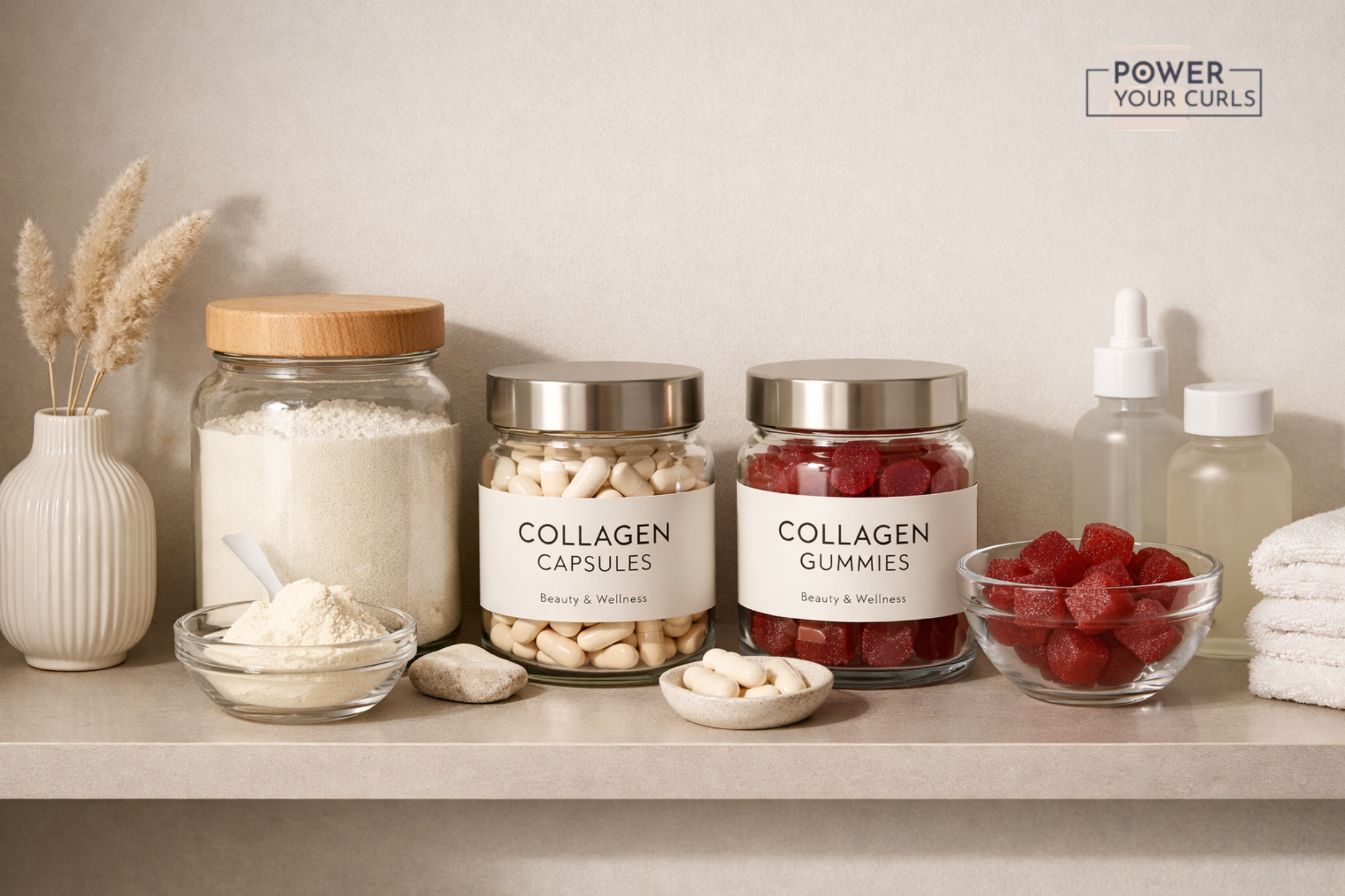
You can find collagen supplements everywhere, from powders to gummies. These products promise so many benefits, but can they deliver for your curls? We dug into the science, consulted dermatologists, and gathered real community experiences so you can decide for yourself.
- What Is Collagen, Exactly?
- Four Ways Collagen Can Promote Hair Growth
- Does Collagen Actually Work for Hair? The Honest Answer
- Community Collagen Results: What's Actually Happening
- Alternative Practices to Collagen That Promote Hair Growth
- How to Take Collagen Supplements for Hair Growth Safely
- FAQs About Collagen and Hair Growth
What Is Collagen, Exactly?
Being the most abundant protein in the human body, collagen makes up approximately 30% of your body’s total protein storage. It acts as a structural scaffold for your skin, bones, cartilage, tendons, blood vessels, and yes, your hair. According to dermatologist Dr. Shilpi Khetarpal of the Cleveland Clinic,
“Collagen is the primary structural protein that we find in cartilage, skin, and hair.”
The challenge? We naturally lose collagen as we age, and production slows down after our mid-20s. That gradual decline is part of why skin loses firmness, joints get creaky, and hair can become thinner over time.
Animal by-products (bones, skin, fish scales) are the primary source of most collagen supplements. Supplement manufacturers break down the protein bonds into gelatin. They then process this down further into manageable forms like powders, capsules, and gummies.
There are also plant-based collagen providers. However, these alternatives work differently by giving you the nutrients to produce the protein instead of the collagen directly.
Four Ways Collagen Can Promote Hair Growth
According to records from both hair care researchers and specialists alike, there are ways that collagen can promote hair growth. These below are just a few.
Does Collagen Actually Work for Hair? The Honest Answer
For all the promising theories above, the clinical evidence is genuinely thin. As Dr. Khetarpal puts it,
“There isn’t a lot of clinical data really showing that [collagen supplements work]. When you take these collagen supplements, they are digested by the GI tract. And it’s not really enough collagen to get absorbed into the bloodstream and delivered back to your hair, skin, nails.”
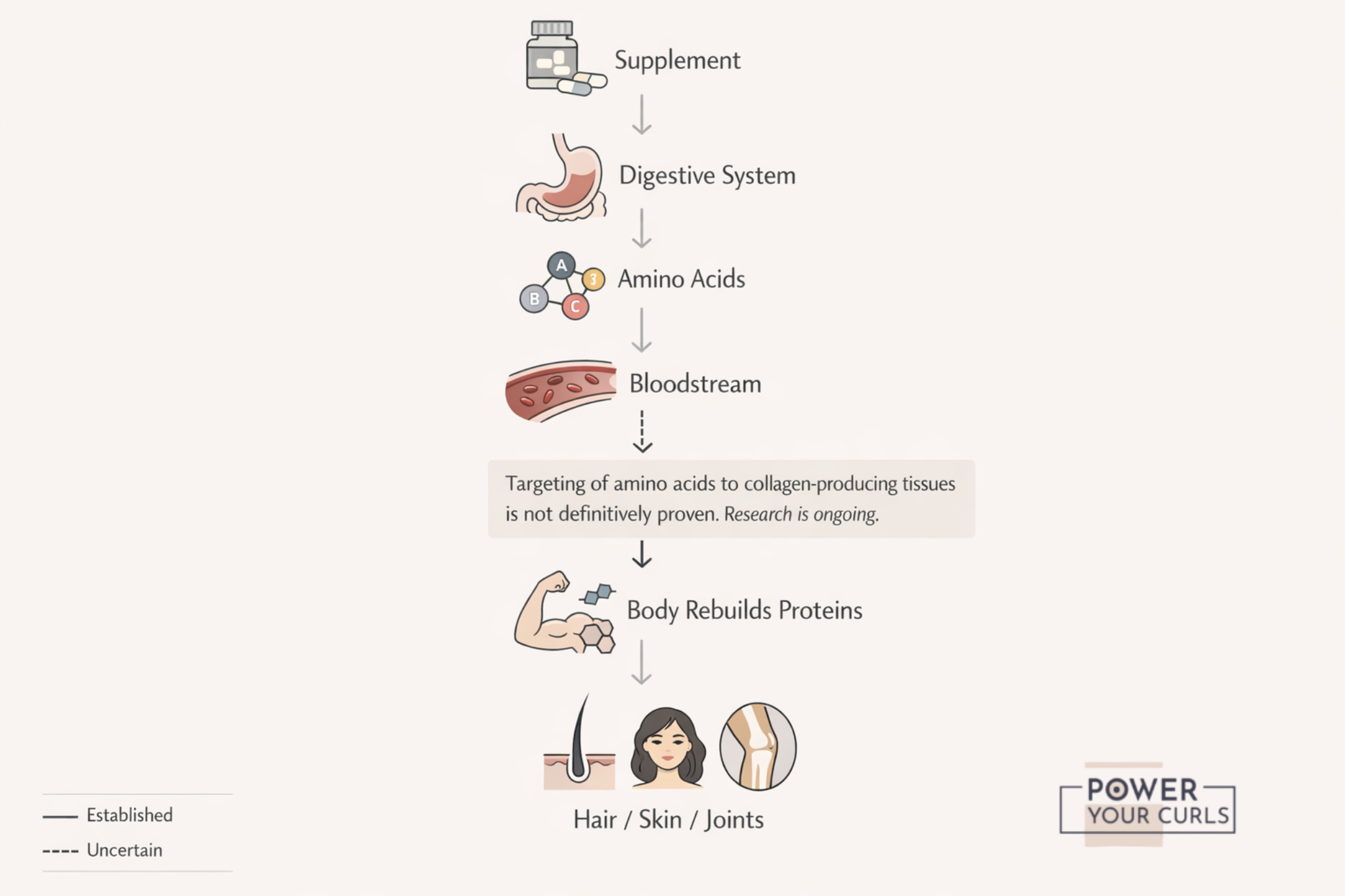
The Mayo Clinic echoes this concern: when collagen is ingested, it gets broken down. It turns into individual amino acids in the gut. The body then reassembles proteins as it sees fit, with no guarantee that those proteins will go to your scalp. Studies that do exist are mostly small, short-term, and often funded by the very companies selling the supplements.
The FDA classifies collagen as a food rather than a pharmaceutical product, which means supplements aren’t subject to rigorous drug-level testing. This has led to issues with inaccurate labeling and contamination in some products. Some people also experience GI side effects or skin breakouts, a point echoed by several community members below.
The Bottom Line
Collagen probably won’t hurt, but it’s not a magic curl potion. The science shows possible but unconfirmed benefits for hair growth.
Your best investment remains a protein-rich diet and gentle hair practices. You also need to address any nutrient deficiencies (like vitamin D or iron) with your doctor’s guidance. If you do try collagen, choose reputable brands, read ingredient labels carefully, and go slowly to watch for reactions.
Community Collagen Results: What’s Actually Happening

Real Experiences
We gathered firsthand experiences from the curly hair community, and it’s clear: results with collagen are anything but consistent. While some users swear by it, others see little to no change—and a few experience downsides.
Some users report noticeable growth and overall improvement.
“I put powdered collagen in my coffee every morning for two years. My hair has grown out a lot. My nails grow like crazy, my joints feel better. When I stopped, my hair fell out more and my body felt worse—I couldn’t wait to start again.”
For others, the changes go beyond hair.
“I didn’t tell my hairdresser I was taking it, and she immediately noticed how fast my hair had grown. The biggest surprise though? It helps me sleep—I knock out fast, and my friends noticed the same.”
But not everyone sees clear hair benefits
“I’ve taken collagen daily for years. I think it helps my nails a lot, but I’m not sure it’s done anything for my hair loss—maybe just length.”
Some users noticed improvements in skin instead.
“I saw a massive difference in my skin with collagen and bone broth. I started for my hair, but honestly haven’t noticed much change there.”
And for some, it’s simply not worth it.
“Caused terrible breakouts, so I stopped before I could see any benefits.”
“I didn’t notice a difference. What worked better for me was scalp massage, less heat styling, good nutrition, and staying hydrated.”
Is there a noticeable pattern?
In the midst of these experiences, a few developments emerge:
- Nails and skin get more consistent support from collagen than hair
- Its use promotes faster hair growth in some users, but not less shedding
- Consistent, long-term use of collagen may lead to the intended results
- The best outcomes for your hair typically come about with healthy hair habits
- Side effects (breakouts, allergic reactions, etc.) can still occur
The Takeaway from Collagen-use
It’s true that collagen, with all its benefits, isn’t a guaranteed fix for hair growth. However, as part of a broader care routine, this protein may offer other supportive benefits. For some, it’s a staple. For others, it’s unnecessary.
The real takeaway? Your results will probably depend on your body, your habits, and what your hair actually needs.
Alternative Practices to Collagen That Promote Hair Growth
Whether you add collagen to your routine, these evidence-backed practices will do more for your curl health:
🥗 Eat a protein-rich, nutrient-dense diet
Protein makes up all of your hair. Getting adequate dietary protein gives your body the raw materials it needs without the uncertainty of supplements. It’s best to get it from whole foods like eggs, legumes, fish, and poultry.
Foods like bone broth, parmesan, and dark leafy greens also supply the amino acids proline, glycine, and hydroxyproline. These compounds make up collagen naturally.
🌡️ Minimize heat styling
Flat irons, curling wands, and blow dryers cause direct structural damage to your curl pattern and shaft. Always use a heat protectant, and embrace air-dry days as often as you can.
🩸 Check your nutrient levels with a doctor
Deficiencies in vitamin D, iron, and zinc are common causes of shedding and slow growth. This is especially true for curlies and those who’ve experienced postpartum hair loss. A simple blood panel can reveal what your hair is actually missing. Read our full guide to vital vitamins and minerals for healthy hair to learn more.
💆 Scalp massages with nourishing oils
Regular scalp massage increases blood circulation to the hair follicles. Community members who paired it with hair oil consistently reported it as one of the most effective things they tried.
Try the As I Am Dry & Itchy Scalp Care Oil to get started. You can also explore our guide to 10 essential oils for scalp health.
💧 Stay hydrated and manage stress
Dehydration and chronic stress both impair hair growth cycles. These are free interventions, and they work.
How to Take Collagen Supplements for Hair Growth Safely
Fair enough! Dr. Khetarpal has a few practical suggestions to minimize risk and get the most out of your trial:
Read the Full Ingredient List
Supplements have additives (flavourings, fillers, dyes, etc.) that can trigger allergies like food sensitivities. More popular versions of collagen (marine, grass-fed bovine) are great if you prefer a cleaner and purer blend.
Start slowly
Don’t jump straight into a daily high-dose routine. Try it once and wait a few days before making it regular. Taking a few days with one dose of collagen helps you catch side effects like GI discomfort and breakouts early.
Pick Well-Known and Reputable Brands
Bigger corporations have the funding to conduct their own testing for their products. These industry giants tend to be the leaders in quality control. When in doubt, look for products with third-party certifications.
Pair It With Vitamin C
Vitamin C is required for collagen synthesis. Taking your supplement alongside a vitamin C-rich food or drink. Like the classic pairing of orange juice, this combination may help your body make the most of what it’s absorbing.
Prefer a supplement with a cleaner, more targeted formula? The HAIRtamin Advanced Formula is a 100% vegan option with biotin, rosemary, zinc, and turmeric. No collagen, no guesswork.
FAQs About Collagen and Hair Growth
Does collagen help with hair growth?
The scientific evidence on collagen is limited. While collagen provides amino acids like proline that support keratin production, clinical studies are mostly small, short term, and often industry-funded. Collagen may offer antioxidant and dermis support, but sufficient research is needed.
Dermatologists caution that collagen taken orally doesn’t even reach your hair. Instead, it’s broken down by the GI tract before the scalp can receive it.
What type of collagen is best for hair growth?
If you’re looking into bioavailability and some antioxidant properties, choose. marine collagen. Another best option would be grass-fed bovine collagen. Always check for third-party tested products to make sure they’re as safe as possible. Pair the collagen with vitamin C for better nutrient absorption.
How long does collagen take to work for hair growth?
Community members who reported positive results typically used collagen consistently for several months to two years. Hair growth is slow — any supplement effects would take at least 3–6 months to notice. Results after taking any supplements for hair growth may vary widely between individuals.
Are there side effects of taking collagen for hair?
Possible side effects from taking collagen include:
- Skin breakouts
- GI discomfort
- Allergic reactions
Since collagen doesn’t go through a meticulous drug-level screening, it’s best to start slow with these supplements. Carefully read the labels to check for possible health triggers for you and watch out for added ingredients as well.
