

If you use both, put mousse on first and gel on top. The usual order on curly hair is leave-in conditioner, then curl cream, then mousse, then gel, with each layer applied to wet hair; mousse can also be your only styler if creams weigh your curls down.
Mousse adds volume and soft definition, and gel adds the hold that keeps it there. Here is how to layer them for your hair type.
Mousse or Gel First? The Layering Order
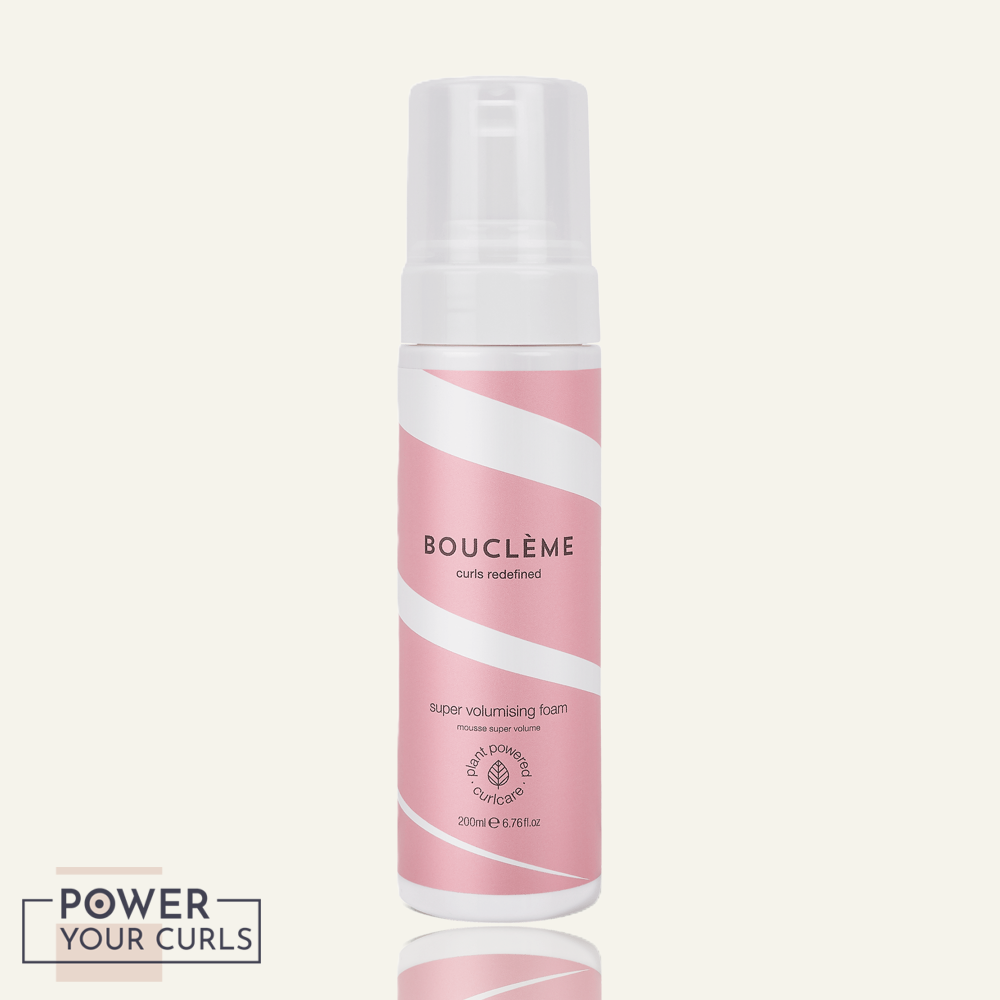
Mousse goes before gel because it is the lighter, softer-hold product, and gel seals everything underneath into a cast. Product labels back this order up: Bouclème’s directions for thirsty hair are curl cream, then Super Volumising Foam, then a styling gel, finished with a few pumps of oil.
- Leave-in conditioner on soaking-wet hair, mid-lengths to ends.
- Curl cream (optional) for moisture and clumping. Skip it if your hair is fine or wavy and gets weighed down.
- Mousse, squeezed or scrunched in section by section for volume and definition.
- Gel (optional) for hold, especially if your curls drop or frizz by midday.
- Dry, then scrunch out the crunch. Air dry or diffuse, and once your hair is fully dry, break the cast gently.
Not sure how much of each to use? Our guide on how to use curl cream covers the cream step in detail, and the step-by-step guide to scrunching hair shows how to press each layer in without breaking up your curl clumps.
When mousse goes on alone
Use mousse as your only styler if your hair is fine, wavy or easily weighed down. A light leave-in followed by mousse often gives enough definition without the heaviness of a cream. Some people also flip the order and scrunch mousse over gel for extra root volume, which is worth trying if your curls dry flat.
What Does Mousse Do for Curly Hair?
Mousse gives curls light, flexible hold and volume without the stiffness of a strong gel. A review of hair cosmetics describes mousse and setting lotions as leave-on products applied to wet or dry hair, which “do not form rigid bonds and act by enhancing interfiber forces” (Gavazzoni Dias, 2015). In practice, that means strands are encouraged to stick together into clumps, rather than being locked into a hard cast.
Formulas differ, so pick one that matches your goal. Browse the full curl mousse collection, or start with one of these, described here from their own labels:
- The Bouclème Super Volumising Foam combines hyaluronic acid with linseed and chia seed extract to reduce frizz and enhance curl retention.
- Mielle’s Pomegranate & Honey Curl Defining Mousse is a non-sticky holding mousse made for type 4 hair, with shea butter, pomegranate, honey and jojoba oil.
- Aunt Jackie’s Frizz Patrol Anti-Poof Setting Mousse is a lightweight setting mousse for waves, curls and coils, with grapeseed, tamanu and jojoba oils, and is labelled for roller, rod, twist and braid sets.
Mousse for Wavy vs Curly vs Coily Hair
The looser your pattern, the more mousse can do on its own; the tighter your pattern, the more it works as a setting layer over moisture.
| Hair type | How to use mousse | Layer it with | Starting amount |
|---|---|---|---|
| Wavy (2A to 2C) | As your main or only styler, for lift and soft waves | A light leave-in; skip heavy creams | 1 to 2 pumps or a small palmful for short to mid-length hair |
| Curly (3A to 3C) | Over cream for volume and definition | Leave-in and curl cream, then gel if you need more hold | A palmful per section, more for long or thick hair |
| Coily (4A to 4C) | As a setting layer for wash-and-gos, twist-outs and sets | A rich leave-in or cream first | A generous amount, applied section by section |
How much mousse to use
Start small and add more only where your hair still looks undefined. Bouclème advises starting with one to two pumps of its foam because “a little goes a long way”, while Mielle’s label calls for a liberal amount on each section of type 4 hair. Too much mousse on fine hair can leave it stiff or flat, and too little on coily hair gives frizz and fast shrinkage.
Should You Apply Mousse to Wet or Damp Hair?
For most curly hair, apply mousse to wet hair, straight after your leave-in or cream. Wet hair spreads product evenly and lets curls clump before they start to dry. The Bouclème foam is squeezed into wet curls, Mielle’s mousse goes on clean, damp hair, and Frizz Patrol can be used on wet or dry hair, so always check your own product’s directions.
Damp, rather than dripping, hair can give more volume because there is less water to dilute the product. Either way, be gentle. Hair is delicate when wet, and the American Academy of Dermatology recommends a wide-tooth comb rather than a brush for detangling wet hair (AAD). Wet hair can stretch by about 30% without damage, but stretching to 80% causes it to break (Gavazzoni Dias, 2015), so scrunch and squeeze instead of pulling.
Use mousse on dry hair only to refresh. Lightly mist your curls with water first, then scrunch a small amount through the frizzy sections. For more lift between wash days, see our tips to add volume to curly hair.
Curl Mousse FAQs
Can you use mousse and gel together on curly hair?
Yes. Apply mousse first for volume and definition, then gel on top for hold. You can browse gels in our styling creams and gels collection.
Do you put mousse on wet or dry hair?
Usually wet or damp, right after your leave-in or cream. Some setting mousses, such as Frizz Patrol, can also go on dry hair before a set.
Is mousse good for wavy hair?
Yes. Mousse is light enough that it rarely weighs waves down, which is why many people with wavy hair use it as their only styler.
Does mousse cause build-up?
It can, like any leave-on product, especially when layered with creams and gels. A regular clarifying wash keeps it in check; see how often to use clarifying shampoo on curly hair.
