

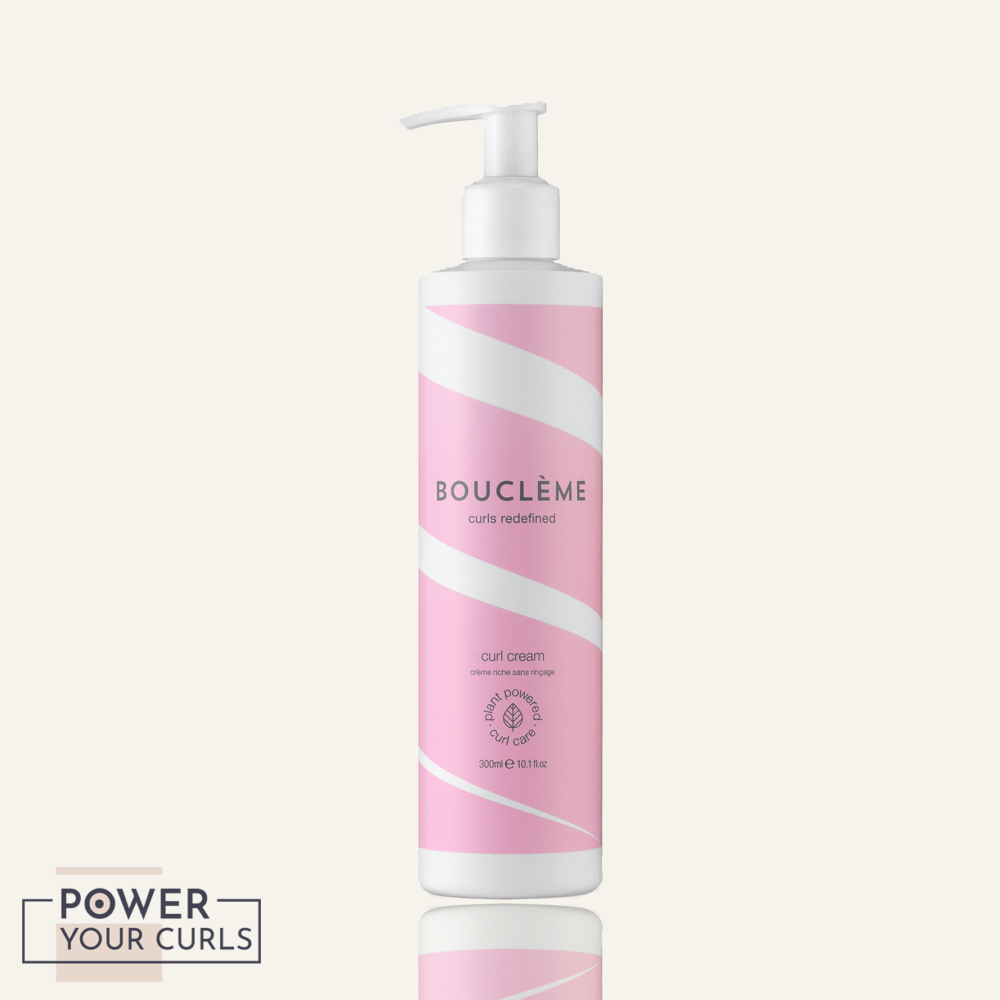
To use curl cream, rake or scrunch it through soaking-wet, freshly conditioned hair one section at a time, then scrunch and leave your curls to air dry or diffuse. Start with a small amount and build up, and add a gel on top if you want more hold.
Curl cream moisturises and defines, a leave-in conditioner mainly softens and detangles, and many routines use both. Here is how to get the amount, the order and the wetness right.
How to Use Curl Cream: Step by Step
Apply curl cream straight after you rinse out your conditioner, while your hair is still dripping. That is when it spreads most evenly and helps curls form clumps.
- Wash and condition. The American Academy of Dermatology advises using conditioner every time you wash textured hair, coating the ends, which are the most delicate part (AAD).
- Detangle gently with conditioner in. Use your fingers or a wide-tooth comb, because hair is delicate when wet (AAD).
- Add a leave-in conditioner if your hair is dry. Skip it if your curl cream is rich enough on its own.
- Section your hair. Two to four sections for wavy hair, more for thick or coily hair.
- Apply the cream. Emulsify it between your palms, then rake it through with your fingers, glide it down with flat “praying hands”, or use a curl-defining comb or brush.
- Scrunch each section upwards to encourage clumps, and add gel now if you want more hold.
- Dry without touching. Air dry, or diffuse on low speed and low heat, then gently break up any stiffness once your hair is fully dry.
For the full routine around this step, see our after-shower curly hair routine.
How Much Curl Cream to Use
Use less than you think and add more only where your hair still looks frizzy or undefined. The Iva Curls Curl Defining Cream label suggests a dime-sized amount raked through soaking-wet hair, which suits shorter or finer hair; longer, thicker and coily hair usually needs more.
| Hair type | Short to chin length | Shoulder length and longer | Watch out for |
|---|---|---|---|
| Wavy (2A to 2C) | A dime-sized amount | One to two dime-sized amounts | Limp, greasy-looking waves |
| Curly (3A to 3C) | A coin-sized amount | A small palmful, split between sections | Frizz means too little; stringy clumps mean too much |
| Coily (4A to 4C) | A small palmful | A generous amount, section by section | Dryness and shrinkage, which call for more |
These are starting points, not rules. Too much product on fine hair is a common reason for flat, oily-looking results; a review of hair cosmetics notes that leave-on products on straight, untreated hair “may cause an oily look and dull the hair” (Gavazzoni Dias, 2015).
Should You Apply Curl Cream to Wet or Damp Hair?
Most curl creams work best on soaking-wet hair, though some are made for damp hair. The Bouclème Curl Cream label says to apply it to soaking-wet hair for best results, while tgin’s Rose Water Hydrating Curl Cream goes on damp hair in sections. Follow the directions on your product.
Soaking-wet hair gives smoother clumps and less frizz, but can dilute a light cream. Damp hair holds a little more volume. If your curls feel crunchy or look frizzy, try the opposite of what you are doing now.
On dry hair, use curl cream only to refresh. Bouclème suggests mixing a little with water and squeezing it into your hair, or spot-treating individual curls.
Curl Cream With or Without Gel
Curl cream can be used alone, but add gel on top if your curls lose their shape or frizz by midday. The Iva Curls cream is labelled as a one-and-done styler that you can follow with foam for volume or gel for hold, and the tgin cream is described as a one-product wash-and-go with lightweight hold.
If you layer, the cream always goes first and the gel last, because gel forms the cast that holds everything underneath. Our guide to mousse or gel first explains where mousse fits in that order.
Curl Cream vs Leave-In Conditioner vs Gel
A leave-in conditioner softens and detangles, a curl cream adds moisture plus light definition, and a gel adds hold. Conditioners work by reducing friction, detangling, minimising frizz and improving combability, partly by adding positive charges that offset the hair’s negative charge (Gavazzoni Dias, 2015).
| Leave-in conditioner | Curl cream | Gel | |
|---|---|---|---|
| Main job | Softens, detangles, adds slip | Moisturises and defines curls | Holds curl shape |
| Texture | Spray, milk or light lotion | Thicker cream or custard | Clear or slightly cloudy gel |
| Hold | None | Light | Light to strong |
| Order | First | After leave-in | Last |
| Best for | All hair types, especially tangle-prone hair | Dry, frizzy or undefined curls | Curls that drop or frizz during the day |
Do you need both curl cream and leave-in conditioner?
Not always. Some curl creams double as a leave-in: Bouclème describes its Curl Cream as a leave-in conditioning cream. For extra-dry hair, tgin suggests using its leave-in conditioner before the curl cream. If your hair tangles easily or feels dry by day two, use both; if creams weigh it down, pick one.
For a closer look at the leave-in side, read our guide to detangler vs leave-in conditioner and our tips on how to use leave-in conditioner on curly hair. You can compare options in our deep and leave-in conditioner collection and our curl cream collection.
Curl Cream FAQs
Do you put curl cream on wet or dry hair?
Wet hair for styling, ideally straight after conditioning. On dry hair, mix a small amount with water and use it only to refresh frizzy curls.
Can I use curl cream instead of leave-in conditioner?
Often, yes, especially if your cream is moisturising and your hair does not tangle much. Very dry or coily hair usually does better with a leave-in underneath.
Should I use curl cream before or after gel?
Before. Curl cream goes on first for moisture and definition, and gel goes on last to hold the shape.
Does curl cream cause build-up?
It can over time, especially with rich creams layered under gel. A clarifying wash every so often resets your hair; see how often to use clarifying shampoo on curly hair.
