

You spend hundreds on luxury masks. Yet, much to your frustrations, your curls still feel like straw. No matter what product you try, the dryness keeps coming back. This cycle of frustration leads to the same “bad hair day” over and over again.
Most people blame the weather or their shampoo. But the real problem often starts inside the hair’s structural blueprint. Your unique follicle shape is actually fighting against your hydration efforts. Have you ever stopped to ask, “Why is curly hair dry?
Curly hair is naturally dry, for a reason. Your scalp’s protective oils cannot travel down a spiral hair shaft as easily as a straight one. The moisture inside each curl strand eventually evaporates without this natural coating. This leaves your ends unlubricated and exposed, and your curls frizzy and brittle from root to tip.
Straight hair allows oils to glide down with zero resistance. So why is curly hair naturally dry? The answer lies in the biology of your curl pattern. Once you understand that, fixing dryness becomes much easier.
- Is Curly Hair Naturally Dry: The Science Behind It
- 7 Signs Your Curly Hair Is Dry
- What Causes Dry Curly Hair?
- How Does Hair Porosity Affect Dryness?
- Why Is Curly Hair Dry and Frizzy at the Same Time?
- Why Does Curly Hair Feel Dry Even After Moisturizing?
- How to Fix Dry Curly Hair: A Step-by-Step Guide
- Best Ingredients for Dry Curly Hair
- FAQs About Why Is Curly Hair Dry
- What Healthy, Hydrated Curly Hair Looks and Feels Like
Is Curly Hair Naturally Dry: The Science Behind It
Research shows your scalp is a natural hydration machine. Curly hair isn’t broken. Oil distribution is simply less efficient. It starts with sebaceous glands pumping out sebum to lubricate the hair. While straight hair is a highway for oil, curly hair is a physical obstacle course.
As mentioned before, the twists and bends block the oil’s path. This lack of lubrication causes the cuticle layer to lift at every bend, creating gaps. The moisture escapes through like an open window. Hair research shows that the tighter the coil, the thirstier the strand, as the oil simply never leaves the scalp.
Leaving these “open” cuticles to air-dry leaves them frizzy and porous. Using a hair diffuser on low heat helps the cuticle settle and keeps more moisture inside the strand. Whatever you do, never brush dry curls. It can snap the fragile strands when hair is dry and lubricant-free. Always apply a treatment to prime this obstacle course before styling.
7 Signs Your Curly Hair Is Dry
Is your hair actually difficult, or is it just thirsty? Most people mistake structural dryness for “bad” hair, but our lab research proves it’s a biological signal. Identifying these signs early is the only way to stop long-term cuticle damage before your curls become harder to repair.
Based on our microscopic analysis at Power Your Curls, here are the seven clinical indicators that your hair is starving for moisture:
1. Zero Elasticity
Healthy curls should bounce back when gently pulled. If your strand snaps immediately, it is dry and brittle. This happens when the internal protein bonds lack water.
The hair fiber, without enough moisture, loses all its natural flexibility. The act of brushing curly hair dry completely shatters each stubborn strand. You will notice more short, broken hairs on your bathroom floor.
2. Excessive Frizz
Frizz is a cry for moisture from the atmosphere. When the hair is thirsty, the outer cuticle lifts to grab water. This creates the “halo” effect often seen in a humid air dryer.
This is a key curly hair dry sign. The hair expands as it tries to hydrate itself from the air. This process disrupts your natural curl pattern and creates a “poofy” texture.
3. Rough Surface Texture
Run your fingers from the ends up to the scalp. The lack of moisture raises the scales on your strands and dries your curls if it feels like sandpaper. The dryness is because it lacks the sebum needed to smooth these scales.
Raised scales catch on each other and create a coarse feel. Healthy hair should feel smooth and sleek to the touch. Roughness indicates that the protective lipid barrier has worn away.
4. Persistent Tangling
Dry hair lacks the “slip” of natural lipids. Strands snag on each other, creating knots like “fairy knots”. This is why detbgling curly hair while it’s dry can damage the cuticle layer for length retention.
Dehydrated hair fibers act like Velcro when they touch. You will experience more snagging during your normal detangling routine.
5. Dull, Lifeless Appearance
Light reflects best off smooth, flat surfaces. Dry hair has a jagged surface that absorbs light instead of reflecting it. Dry curls will appear more matte than the typical shine of healthy and hydrated hair.
Healthy curls have a natural, healthy glow. If your hair looks ashy or greyish, it needs a hydrating mask. This lack of shine proves the cuticle is not lying flat.
6. Rapid Absorption
Notice how your hair reacts to a leave-in conditioner or serum. If it “drinks” the product instantly, your porosity is likely high. This indicates a severe lack of internal moisture.
High porosity hair has many gaps in the cuticle. Water enters quickly but leaves just as fast. This leaves the hair fiber constantly thirsty and vulnerable to damage.
7. Difficult Styling
Dry curls lose their defined shape and look “poofy.” Using a hair diffuser may even make the dryness look worse. This means the hair cannot hold its pattern.
Without moisture, the “clumping” of curls becomes impossible. You may notice your hair lacks a consistent “before and after” result. Dehydrated hair simply refuses to cooperate with your favorite styling gels.
Identifying these signs is the first step toward recovery. Research confirms that chronic dryness leads to lasting damage. Spotting these signs of dryness early on can help you save your curls before any permanent damage settles in.
What Causes Dry Curly Hair?
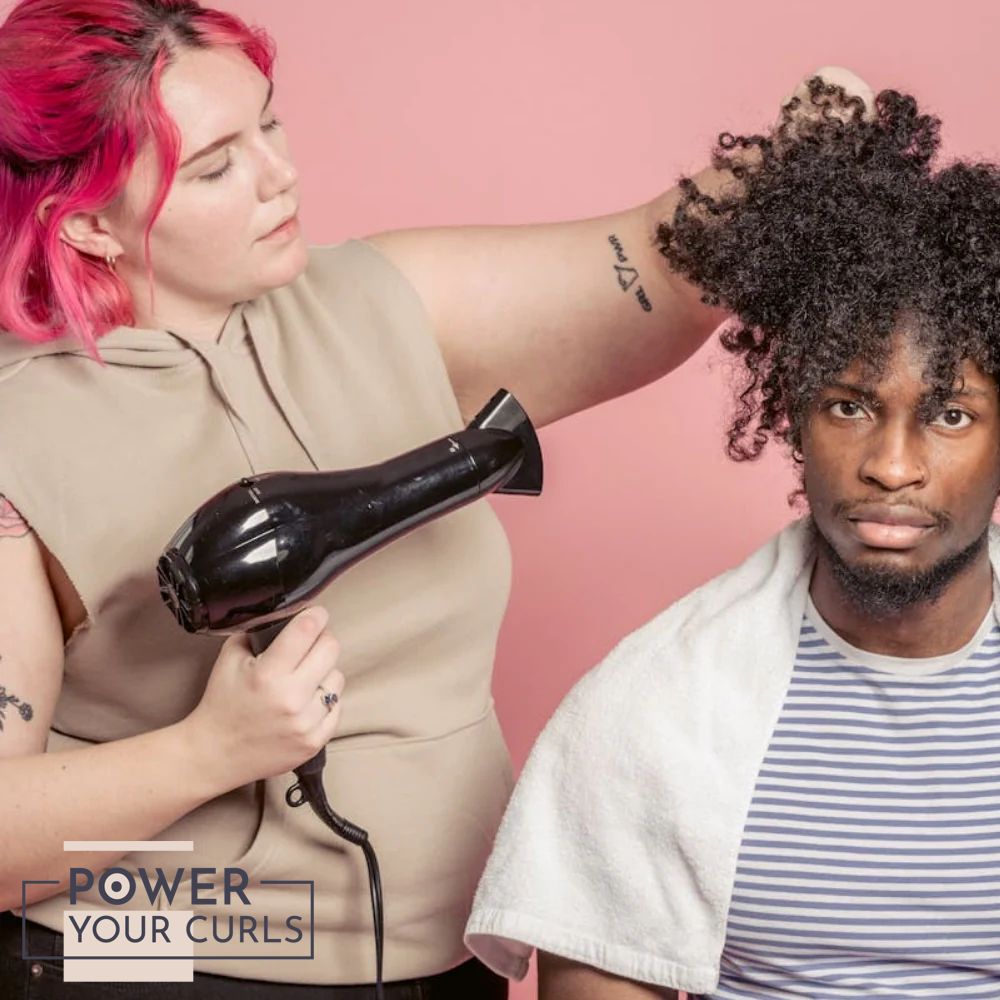
Have you ever wondered why your curls stay thirsty even after using expensive “miracle” masks? Most people blame their products, but the issue is usually hidden in your hair’s biological blueprint. At Power Your Curls, our laboratory did the research. It shows that dryness is a complex interplay between your genetics and how you handle your strands daily.
We have identified four specific triggers that cause curly hair to lose its internal moisture balance. Understanding these factors is the only way to stop the cycle of chronic frizz and breakage. Here is the scientific breakdown of why your curls are struggling to stay hydrated:
- Structural Sebum Blockage: Sebum is your scalp’s natural waterproof coating. Curl twists act as physical roadblocks, stopping oil from reaching the ends. Without this seal, internal moisture evaporates into the air.
- Genetic Porosity Levels: Porosity determines how well your hair holds onto water. High porosity hair has gaps that let moisture escape instantly. This leaves your curls dry and brittle within hours.
- Mechanical and Heat Stress: Using a hair dryer without a diffuser destroys the lipid barrier. Dry brushing disrupts the natural curl pattern and creates frizz because it causes microscopic tears. These tears leak out vital proteins and moisture.
- Chemical Over-Processing: Bleach and dyes strip away the hair’s protective layer. We see a massive difference in “before and after” hydration tests. Chemically treated curls require double the maintenance to prevent snapping.
Stop throwing money at “miracle” masks that only sit on the surface of your strands. Once you pinpoint these specific biological triggers, you can stop the guesswork. You can start a routine that actually solves the structural crisis right away.
Fixing your curls isn’t about buying more products. It’s about providing the exact hydration your unique hair architecture demands.
How Does Hair Porosity Affect Dryness?
Porosity is your hair’s ability to absorb and keep moisture. Think of it as the gatekeeper for your hair’s hydration. Hair science shows that porosity explains why curly hair is dry regardless of products.
Low porosity hair has tightly packed, overlapping cuticle scales. These scales act like a shield, making it hard for water to enter. Without heat or the right deep conditioning mask, your curls remain perpetually thirsty.
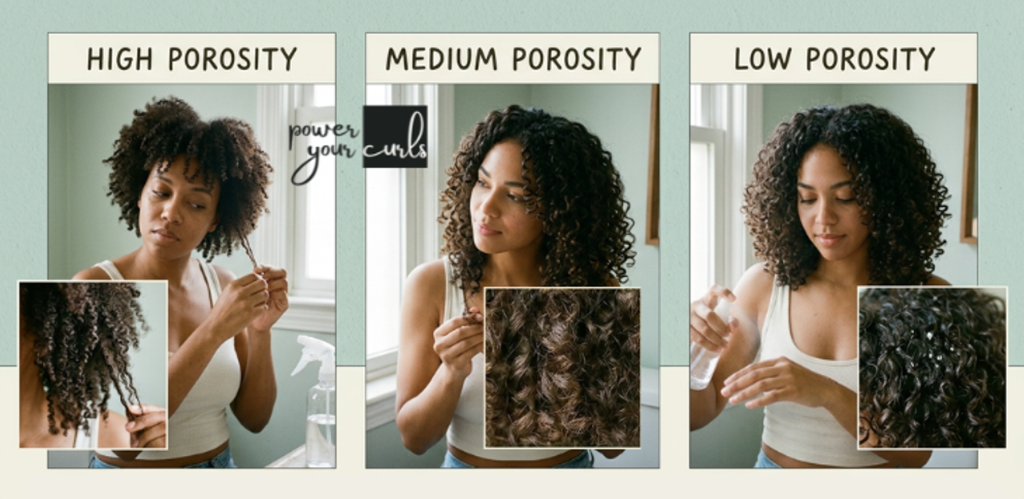
High porosity hair has gaps or holes in the cuticle layer. While water enters easily, it evaporates just as fast. This leaves your hair feeling dry and brittle only minutes after washing.
High porosity often leads to hair that is dry and frizzy. The open cuticles allow environmental humidity to disrupt your natural curl pattern. Combing curls without moisture increases friction between strands because it further chips these fragile scales.
We found that wavy hair dries less often due to lower porosity. Tighter curls usually face more damage, raising their porosity levels over time. Using a hair diffuser can help seal these gaps during the drying process.
Why Is Curly Hair Dry and Frizzy at the Same Time?
It feels like a total trap. Your curls feel like straw, yet they poof up the second you walk outside. This happens because frizz is just a loud cry for water.
When your hair stays thirsty, the outer layers lift and stretch. They are desperately trying to drink moisture from the humid air.
As your hair soaks up this dampness, the strands swell up unevenly. This creates that messy, chaotic texture we call frizz. Now you have hair that is dry and puffy at the same time.
Your curls are literally reaching out for the hydration they lack inside. This frantic search for water breaks the tiny bonds that hold your curl shape.
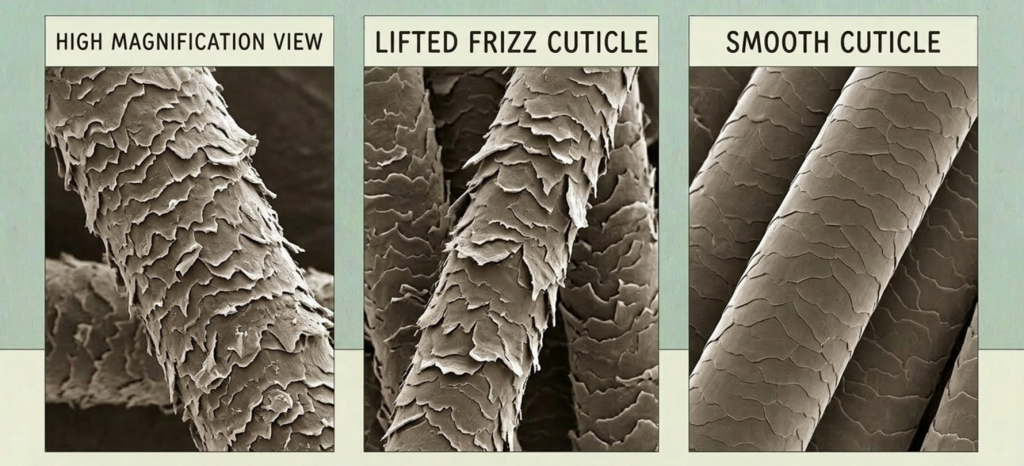
Brushing your hair in this weak state only makes things worse. It tears at your hair’s natural armor and causes even more friction.
To stop this, use a hair diffuser on a low heat setting. This helps lock the surface down before the humidity disrupts your curl pattern. Follow up with a good serum to seal those gaps for good.
Why Does Curly Hair Feel Dry Even After Moisturizing?
You’ve layered on the richest masks and conditioners, yet minutes later, your hair feels like straw again. This frustrating flash-dry effect usually happens because of your moisturizer.
It is just sitting on the surface rather than soaking in. If that water never penetrates the internal cortex, your hair stays brittle no matter how much product you pile on. This is why curly hair is dry even after heavy masking.
Often, the culprit is a hidden layer of product buildup acting like a waterproof barrier. This invisible film effectively blocks new moisture from entering the hair shaft. It leaves your curls parched underneath a greasy exterior.
To fix this, you may need to clarify your scalp first to reset the hair’s surface and tear down that barrier. Once your hair is clean. You can use a hair diffuser on low heat to gently nudge the cuticle open. This allows your products to finally reach the inner layers.
This targeted heat ensures deeper hydration rather than a surface-level fix. Stop guessing why your hair products aren’t working and start sealing your moisture where it actually belongs: inside the strand.
How to Fix Dry Curly Hair: A Step-by-Step Guide
Are you tired of drowning your curls in mousses and treatments that never seem to sink in? We’ve proven that fixing dry hair requires a structural shift, not more products. Our lab data confirms that trapping moisture deep inside the fiber is the key, not just applied to the surface.
- Clarify Your Canvas: Remove product buildup first. Heavy silicones block new moisture from entering the hair shaft. Use a sulfate-free clarifying shampoo to reset your curls.
- Deep Hydration Under Heat: Apply a moisture-rich mask to soaking wet hair. Use a steamer or a warm towel for 15 minutes. Heat opens the cuticle so water can reach the cortex.
- Seal the Scales: Rinse with cool water to close the cuticle. Apply a leave-in conditioner while your hair is dripping. This creates a synthetic sebum layer to prevent evaporation.
- Mechanical Safety: Never brush curly hair dry. Brushing dry hair causes friction that tears the protective scales. Use your fingers or a wide-tooth comb only during the conditioning stage.
- Controlled Drying: Avoid using a standard hair dryer on high heat. Use a hair diffuser on a low, cool setting. This “sets” the curl pattern before it can air dry into frizz.
- The Finishing Seal: Apply a lightweight oil to your dry ends. This mimics natural scalp oils that cannot reach your tips. It prevents the “poofy” look caused by moisture loss.
Following this protocol fixes the root cause of why curly hair is dry. By treating your hair as a biological structure rather than a surface to be coated, you will see a difference. Consistency is key to maintaining a healthy lipid barrier and keeping your curls vibrant for years to come.
Best Ingredients for Dry Curly Hair
Why is curly hair dry even after conditioning? Many formulas lack the specific lipids needed for textured hair. The research team prioritizes ingredients that mimic your scalp’s natural sebum.
We look for molecules small enough to penetrate the hair cortex. Surface-level coatings only hide the problem temporarily. Use these proven ingredients to repair your hair’s structural integrity:
- Honey or Glycerin: These humectants pull water into the hair fiber.
- Shea Butter or Argan Oil: These emollients fill gaps in the cuticle layer.
- Hydrolyzed Silk or Wheat Protein: These fill structural tears in the shaft.
- Aloe Vera: This balances the pH level to keep scales flat.
- Cetyl Alcohol: This “fatty alcohol” provides slip without stripping moisture.
These ingredients work best when applied to soaking wet hair. Avoid heavy waxes that create a waterproof barrier and cause buildup. Your chosen product should feel light, not greasy.
FAQs About Why Is Curly Hair Dry
Q: How to fix dry curly hair?
Stop the surface-level masking. Repair your lipid barrier by clarifying buildup, deep hydrating under heat, and sealing with a hair diffuser. Use humectants like glycerin to trap water inside the cortex.
Q: Why is brushing curly hair dry bad?
Brushing curly hair while dry breaks up the curl pattern and creates friction between strands. This leads to frizz, breakage, and split ends. You should detangle curly hair when wet and conditioned.
Q: Does curly hair need more moisture than straight hair?
Yes. The spiral shape blocks scalp oils from reaching your ends, so curly hair needs extra hydration through conditioners and leave-ins.
Q: Why does curly hair get drier?
The “spiral staircase” shape prevents scalp oils from lubricating the shaft. This lack of natural coating leaves cuticles raised, allowing internal moisture to leak out and causing a dry, brittle texture.
What Healthy, Hydrated Curly Hair Looks and Feels Like
Healthy curls are more than just a look. Hair science shows that hydration creates a functional, flexible structure. When you hydrate your hair, the internal protein bonds are resilient.
Your curls will have a natural, reflective shine. This proves the cuticle layer is lying flat and smooth. You will notice a dramatic change in your curl definition.
Hydrated hair feels cool to the touch and has high elasticity. If you pull a curl, it should bounce back instantly. This flexibility prevents the snapping seen when curly hair is naturally dry.
Tangles will also become a rare occurrence in your routine. Smooth cuticles glide past each other without catching or creating friction. This is the hallmark of a healthy lipid barrier.
