
Rosemary oil is the best-supported oil for hair growth: in one trial it matched 2% minoxidil after six months. Castor, coconut and argan oils have little or no evidence for growing hair, but they condition curls and reduce breakage, which helps you keep the length you grow.
Here is how the four compare, and how to choose one for your hair type.
Hair growth oils compared
The table sums up what the research shows for each oil, not what the marketing says.
| Oil | What the evidence shows | Best use | Hair type |
|---|---|---|---|
| Rosemary (essential oil) | One trial in 100 men with pattern hair loss: hair count rose at 6 months, similar to 2% minoxidil (Panahi 2015) | Diluted scalp massage 2 to 3 times a week | All; it is light and goes on the scalp |
| Castor / Jamaican black castor | No clinical trials showing growth; a lab study suggests a possible mechanism (2026 review) | Sealing ends and edges, hot oil treatments | Thick, coily, dry hair |
| Coconut | Reduced protein loss from hair in a lab study (Rele and Mohile 2003); no growth evidence | Pre-wash treatment to protect strands | Most curl types, especially damaged hair |
| Argan | Used for softness and shine; no clinical growth trials we could find | Light finishing oil on lengths for frizz | Fine to medium curls and waves |
| Pumpkin seed | Small trial in 60 women with pattern hair loss compared it with 5% minoxidil foam; both improved hair shaft measures over 3 months (summarised in a 2024 review) | Scalp oil (less common) | All |
If growth is your main goal, start with rosemary; our guide on how to use rosemary oil for hair growth covers dilution and timing. Browse every option in our hair growth oils collection.
Is castor oil good for hair?
Castor oil is good at coating and sealing hair, but there is no clinical proof that it makes hair grow. A 2026 narrative review of castor oil in dermatology notes that most castor oil hair claims come from cultural practice and have not been studied for clinical effect. The growth theory rests on a lab finding that ricinoleic acid, castor oil’s main fatty acid, blocks an enzyme that makes prostaglandin D2, a compound found at higher levels in balding scalps. That has not been tested in people as a hair treatment.
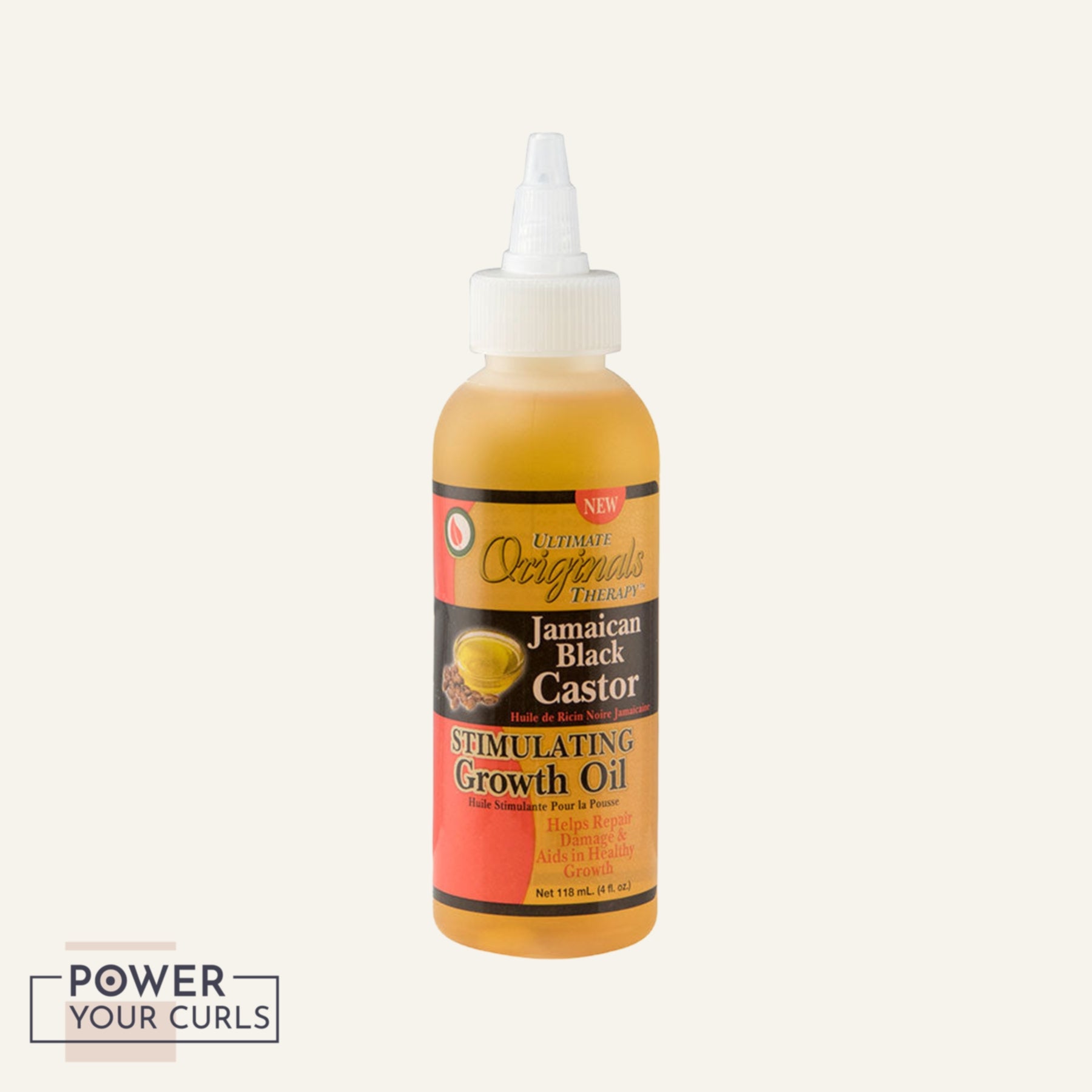
Where castor oil earns its place is as a thick sealant for coily hair and edges. Jamaican black castor oil (JBCO) is made from roasted castor beans; Kuza describes beans that are roasted, ground and boiled. Kuza Jamaican Black Castor Oil Extra Dark goes on roots and scalp without rinsing or as a hot oil treatment; IC Fantasia 100% Natural JBCO can be used on damp hair or under a cap after shampooing; and Jamaican Black Castor Stimulating Growth Oil is a lighter blend aimed at breakage and shine.
One caution: the same review describes a rare case of hair felting, where hair suddenly matted beyond repair after a first use of castor oil. Apply it in sections, work it through gently, and do not pile a lot onto long, loose hair.
Is coconut oil good for hair?
Yes, coconut oil is good for protecting hair, though not for growing it. In a lab study by Rele and Mohile, coconut oil was the only one of three oils (alongside sunflower and mineral oil) that markedly reduced protein loss from both undamaged and damaged hair when used before or after washing. The researchers put this down to its main fatty acid, lauric acid, which is small enough to get inside the hair shaft.
Less protein loss means fewer weak spots, which helps curls that break easily from detangling or colouring. Use it as a pre-wash treatment for 30 minutes or so. Ultimate Originals Coconut Oil Stimulating Growth Oil is described as an all-purpose oil for repair, strength and shine. Coconut oil turns solid in a cool, air-conditioned room, so warm the jar in your hands or in warm water first.
Is argan oil good for hair?
Argan oil is good for softness, shine and frizz, but we found no clinical trials showing it grows hair. Treat it as a finishing oil. It is lighter than castor, so it suits fine to medium curls and waves that heavier oils weigh down. Ultimate Originals Argan Oil Stimulating Growth Oil can be used on wet or dry hair from roots to ends or as a hot oil treatment; there are more argan blends in our oils and serums range.
How to choose a hair growth oil for curly hair
Choose by job: rosemary on the scalp for growth, and castor, coconut or argan on the lengths to stop breakage. Many curly routines use two oils:
- Thinning at the scalp: diluted rosemary oil two or three times a week, and see a dermatologist if it is sudden or patchy.
- Breakage and slow length retention: coconut oil before washing, castor oil to seal ends.
- Fine or low-porosity curls: a few drops of argan oil, as heavier oils can leave them limp.
- Thick, dry 4C hair: castor or JBCO on edges and ends, mixed with a lighter oil if it feels too sticky.
If you want to add scalp-friendly essential oils to a carrier oil, see our guide to the best essential oils for scalp health.
FAQ
Which oil is best for hair growth and thickness?
Rosemary oil has the strongest evidence for growth, from one trial in men with pattern hair loss. No oil has been shown to thicken individual strands; oils mainly reduce breakage, which makes hair look fuller over time.
Which oil is good for hair growth in curly hair?
Rosemary oil on the scalp, diluted in a carrier oil. For length, coconut and castor oils help curly hair hold on to growth by protecting strands from breakage.
Can I mix castor oil and rosemary oil?
Yes. Castor oil works as a carrier for rosemary essential oil; add a few drops of rosemary to it. Because castor oil is very thick, many people thin it with a lighter oil such as jojoba. Patch test the mix first.
Will a hair growth oil fix hair loss?
Not on its own. Proven treatments for hair loss are medical, so see a dermatologist if you are losing hair. Our guide to the best shampoos for hair loss covers what else can help.
