
You can’t fully reverse heat damage in curly hair, but you can make it look and feel much better: trim away the worst-damaged lengths, use protein and moisture treatments to smooth what remains, and cut back on heat while healthy curls grow in. Then protect every heat session so the damage doesn’t return.
Can heat-damaged curly hair be repaired?
Not completely. A dermatology review of hair cosmetics explains that keratin is an irreplaceable protein, and that amino-acid products do not replace or restore its damaged structure. The same review notes that heat breaks down tryptophan, one of the amino acids in hair protein, and that hair can seem fine straight after styling, only for the damage to show once washing strips away the oils.
What treatments can do is improve the surface. That review describes hydrolysed protein depositing on the cuticle scales and helping to seal the cuticle after flat ironing, improving colour and shine. So the honest goal is better-looking, stronger-feeling curls now, and undamaged new growth over time.
Signs of heat-damaged curls
The clearest sign is curls that stay straight or limp after a full wash day, while the rest of your hair curls as normal. Other signs include:
- Loose or straight sections, often around the face or wherever you use a flat iron most.
- Dry, rough or straw-like texture that conditioner doesn’t fix.
- Split ends and breakage. Split ends form once the cuticle has been removed and cracks run along the fibre.
- Dullness and frizz that no styler seems to control.
- Colour change. In one lab study, hair dried at a hot 95°C changed colour, particularly getting lighter, after just 10 treatments.
A simple check: wash, condition and style as usual with no heat, then let your hair air dry. Sections that still won’t curl after a couple of wash days are heat damaged.
Recovery plan for heat-damaged curls
Recovery is a mix of removing what can’t be saved and looking after what can. Work through it in this order.
| Step | What to do | Why it helps |
|---|---|---|
| 1. Pause the heat | Put flat irons and curling wands away and air dry or diffuse on the lowest setting for a few weeks. | The AAD advises that excessive heat can cause damage and recommends limiting blow drying and hot tools. |
| 2. Trim the damage | Cut off split ends and straight sections, either in one go or with regular small trims as your curls grow. | Splits can’t be sealed back together, and left alone they keep travelling up the hair. |
| 3. Add a protein treatment | Use a protein treatment as the pack directs. | Hydrolysed protein can deposit on the cuticle and help seal it after heat styling. |
| 4. Follow with moisture | Deep condition and use conditioner on the full length of your hair. | The AAD recommends conditioner on the entire length for curly or dry hair. |
| 5. Consider coconut oil | Use it as a pre-wash or post-wash treatment. | Of the oils tested in one study, coconut oil was the only one that reduced protein loss in damaged and undamaged hair. |
| 6. Handle gently | Blot with a T-shirt or microfibre towel and detangle damp hair with a wide-tooth comb. | The AAD says textured hair should be combed while damp with a wide-tooth comb. |
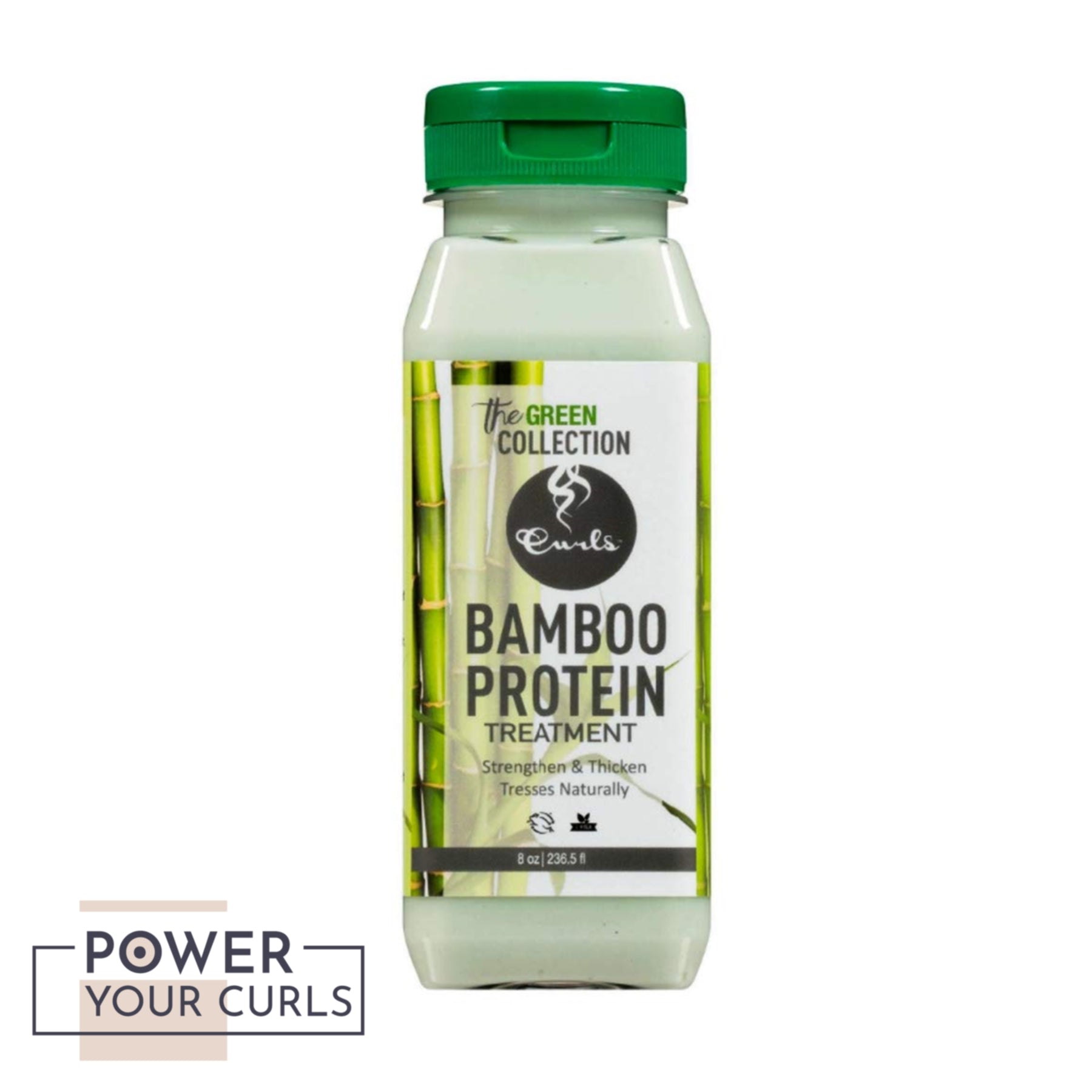
Two protein treatments we stock suit this step. CURLS The Green Collection Bamboo Protein Treatment is applied to damp hair and left to air dry before your styler. tgin Miracle RepaiRx CPR Protein Treatment goes on after shampooing, sits under a warm towel or plastic cap for three minutes, then rinses out. Balance protein with moisture: if hair starts to feel stiff, switch to deep conditioning for a wash or two.
How to prevent heat damage next time
Prevention comes down to less heat, lower heat and a heat protectant every time. These habits keep new growth healthy:
- Use a heat protectant for curly hair. The AAD recommends a product to protect your hair from the heat, and silicone heat protectors spread heat along the hair surface to help stop water inside the fibre boiling. Find one in our heat protectants collection; Curl Keeper Thermal Defence, for example, is combed through wet hair and its label says to let hair dry to at least 95% before using flat irons or curling wands.
- Turn the temperature down. In the hair dryer study, the least surface damage came from drying at about 47°C with the dryer 15 cm away and moving, while 95°C at 5 cm caused the most. The AAD advises using the lowest heat setting.
- Use hot tools less often. The AAD suggests using hot combs and curling irons around once a week or less, and keeping contact time short.
- Diffuse on low, not high. Our guide on how to diffuse curly hair without frizz covers low-heat techniques, and if your dryer only has one setting, see the best hair dryers with a diffuser for curly hair.
For more on flat irons and wands specifically, read how to avoid damage while heat styling curly hair.
FAQ
Can heat-damaged curly hair be repaired?
Not fully, because damaged keratin can’t be rebuilt. Protein treatments, conditioning and trims improve how it looks and feels, and new growth comes in undamaged if you protect it.
Will heat-damaged curls come back?
Lightly damaged curls often look more defined after a few weeks of protein, moisture and no heat. Sections that stay straight after several heat-free wash days usually need to be trimmed out.
What is the best heat protectant for curly hair?
One you will actually use every time, applied to wet hair and suited to the tool you use. Check the label for timing, as some, like Curl Keeper Thermal Defence, give different dryness levels for dryers and flat irons.
Is a protein treatment enough to fix heat damage?
No. Protein helps the surface, but it works best alongside trims, regular conditioning and a break from heat.
