

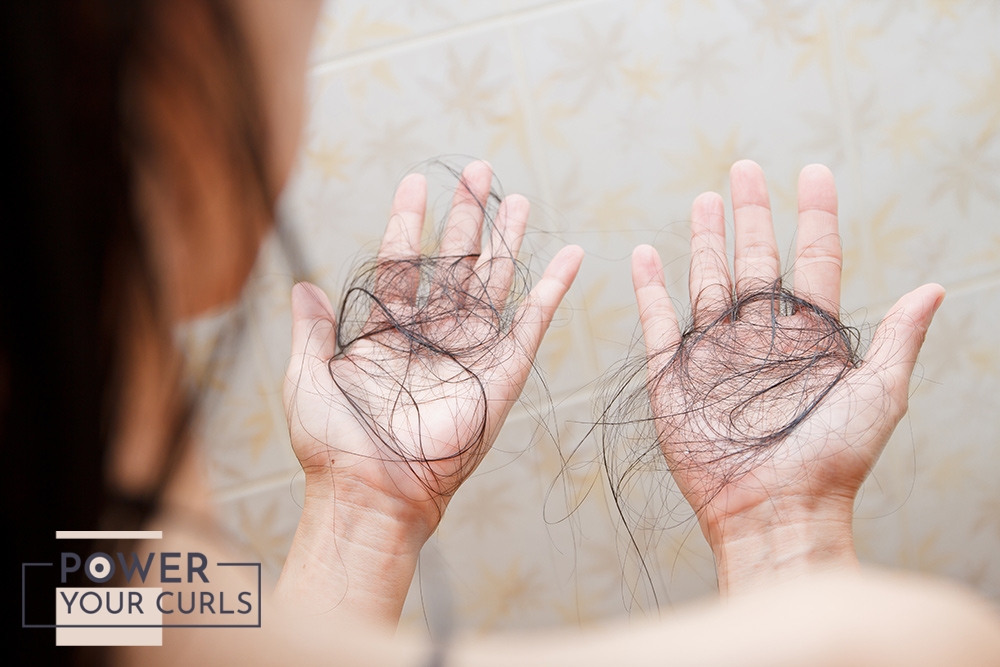
Most new mothers notice heavy shedding a few months after giving birth. It usually peaks around four months and settles by the baby’s first birthday. In curly hair it can also change how your curls clump, hold shape and feel, which is why many people say their curl pattern changed after pregnancy.
Why Does Hair Fall Out After Pregnancy?
Hair falls out after pregnancy because many follicles that kept growing during pregnancy enter the resting phase together after birth, then shed. Dermatologists call this telogen effluvium. The American Academy of Dermatology links it to falling oestrogen after delivery and says it is temporary.
Hair normally cycles through growth, transition, rest and shedding (the 4 stages of hair growth). After a trigger such as childbirth, the shedding shows up 2–4 months later, according to DermNet.
| Stage | Typical timing after birth | Source |
|---|---|---|
| Shedding starts | About 3 months (average 2.9) | Hirose et al. 2023 |
| Shedding peaks | About 4–5 months | AAD; Hirose et al. 2023 (average 5.1) |
| Shedding stops | About 8 months (average 8.1) | Hirose et al. 2023 |
| Hair back to normal | By the baby’s first birthday for most women | AAD |
It is very common. In a Japanese survey of 331 mothers, 91.8% reported at least some postpartum hair loss, and longer breastfeeding was linked to more of it (Hirose et al. 2023). The authors note that women with hair loss may have been more likely to answer. A 2016 review also argues the condition is less well defined than its reputation suggests (Mirallas and Grimalt 2016), so treat these figures as typical, not fixed.
Shedding does not mean your hair has stopped growing. To see how quickly regrowth fills in, see how fast hair grows per week, month and year.
Can Pregnancy Change Your Curl Pattern?
Pregnancy may change how your curls look, but we found no published study that measures curl pattern in the same women before and after pregnancy. The reports are real and common. The research to explain them is thin, so be wary of anyone who says it is “definitely hormones” or that it is permanent.
Three things can make curls look different after birth:
- Density. Heavy shedding leaves fewer strands to clump together, so curls can look looser, frizzier or less defined until regrowth catches up.
- New growth. Hair grown during and after pregnancy may differ in texture from older lengths, so roots and ends can behave differently for a while.
- Hormones and the follicle. Curl shape is set by the follicle, and hormones can influence follicles. We explain what is known in why curly hair suddenly goes straight.
Most people find their curls settle within the first year as shedding stops and length grows back. Rule out simpler causes first: product build-up, heat or colour damage, and extra length weighing curls down.
Is It Postpartum Shedding or Hair Thinning?
Postpartum shedding is spread evenly across the scalp and eases within months; thinning is usually concentrated in one area and does not ease. DermNet notes that telogen effluvium never causes total baldness. A widening part or thinner hair at the crown suggests female pattern hair loss, which can start around the same time and is easy to mistake for postpartum shedding.
If your shedding fits the second pattern, read our guide to curly hair thinning on top and at the crown.
How to Care for Curly Hair After Pregnancy
The aim is to lose as few extra strands as possible to handling while the shedding runs its course. DermNet recommends gentle hair care and avoiding vigorous brushing, combing and scalp massage during telogen effluvium.
- Detangle only when hair is wet and coated in conditioner. Use fingers or a wide-tooth comb and work from ends to roots. Our detangling guide covers the method, and when to brush curly hair covers tools.
- Expect more hair in your hands on wash day. Shed hairs stay trapped in curls between washes, so a wash-day handful looks worse than daily loss really is.
- Choose lighter products. The AAD suggests a volumising shampoo, a conditioner made for fine hair applied mainly to the ends, and skipping heavy “intensive” conditioners. For curls, swap a rich butter for a lighter leave-in so thinner curls are not weighed down.
- Keep styles loose. Low-tension updos and claw clips are gentler than tight buns and ponytails. See types of hair clips and how to use them.
- Consider a shorter cut. The AAD notes that a shorter style can look fuller and is easier to manage with a newborn. It also takes weight off curls so they spring back.
- Keep the scalp clean. Sleep-deprived weeks often mean fewer wash days, and build-up can make an itchy scalp worse. See how to remove product build-up from your scalp.
- Check before starting treatments. Ask your doctor or pharmacist before using a hair-loss treatment or supplement while pregnant or breastfeeding. Our guide to the best shampoos for hair loss is a starting point for that conversation.
Watch your baby’s fingers and toes. Long curly strands shed easily and can wrap around a baby’s finger, toe or other body part. The AAD warns that a single strand can cut off circulation. Gently unwind it, and if you cannot remove it, contact your baby’s doctor or go to the emergency room.
What Home Care Can Do, and When to Get Help
Home care can reduce breakage and make hair look fuller, but it cannot stop telogen effluvium early. A professional adds value when a problem lasts or does not fit the normal pattern.
Some aesthetic clinics also offer in-clinic scalp treatments. Private Aesthetic Center by Punin, a cosmetology center in Cyprus based in Limassol, offers one aimed at dandruff and hair growth alongside its postpartum recovery services. Treatments like this sit alongside a medical check if shedding lasts, not in place of one.
| Concern | What home care can do | When professional help adds value |
|---|---|---|
| Heavy shedding | Gentle detangling, loose styles, lighter products | Still heavy beyond 12 months, or getting worse |
| Thinner-looking curls | Lighter leave-ins, a shorter cut, volumising shampoo | A widening part or thinning at the crown |
| Dry or frizzy texture | Leave-in conditioner, less heat, gentler wash routine | Breakage that continues despite changes |
| Itchy or flaky scalp | Regular washing, removing build-up | Redness, scaling or soreness that persists (types of dandruff) |
| Patchy bald spots | None | See a doctor promptly; this is not postpartum shedding |
When to See a Doctor About Postpartum Hair Loss
See a doctor or dermatologist if your hair has not returned to normal by your baby’s first birthday, which is the point the AAD recommends an evaluation. Go sooner if you notice any of these:
- Bald patches or hair loss in one area, rather than all over
- A widening part or thinning crown that keeps progressing
- Unusual tiredness or other symptoms that make you wonder about your thyroid or iron levels
- Shedding that started before birth or more than six months after it
A doctor may check iron, thyroid function, vitamin B12 and folate, which DermNet lists as things to check and correct in telogen effluvium. For the nutrients involved, see our list of vitamins and minerals for healthy hair.
