
Walk into any hair repair aisle, and you’ll find $30 to $60 serums promising breakthrough bond-building technology, molecular repair, and next-generation follicle science. Most of these formulas lean on ingredients — plant oils, botanical extracts, fermented starches — that have been part of daily hair care in specific communities for centuries, sometimes millennia. The “innovation” is often reformulation, not discovery.
The scale involved is not small. The global hair care market is on track to grow from roughly $118.9 billion in 2025 to $261.6 billion by 2035, and the hair oil segment specifically- the category most directly built on traditional botanical ingredients- is projected to more than double, from around $25.3 billion in 2025 to $54 billion by 2035. A meaningful share of that growth is coming from ingredients with centuries of documented use behind them, now sold back to consumers as discovery.
The numbers behind the ancestral-ingredient boom
2025
2035
CAGR
CAGR
The purpose of this piece is to look at 5 ancestral hair care ingredients with real histories behind them, and to hold each one against the clinical evidence that actually exists. Some hold up. Some don’t. The goal isn’t to dismiss tradition or to romanticize it, it’s to separate what’s proven, what’s plausible, and what’s marketing.
- How Each Ingredient Was Evaluated Against Clinical Evidence
- 1. Amla (India)
- Amla is projected to grow faster than the broader hair-oil market.
- Same ancestral ingredient. Very different price story.
- Longer hair isn't always faster-growing hair.
- 2. Yucca Root (Native American SW)
- 3. Rice Water (China and Vietnam)
- 4. Chébé (Chad, Africa)
- 5. Argan Oil (Morocco)
- Five traditions. Five very different evidence profiles.
- Who Gets Credit
- Five traditional practices. Five different commercial opportunities.
- The Takeaway
How Each Ingredient Was Evaluated Against Clinical Evidence
The entries are listed in order of their clinical feasibility.
Each entry below is assessed on the same terms: where the practice originated and who developed it, how it was traditionally applied, what benefits are actually claimed, and what clinical or mechanistic evidence exists to support those claims.
Growth claims are treated separately from condition and retention claims, because they are not the same thing; a treatment that reduces breakage can give the illusion of hair growth without doing anything to the follicle itself. Understanding that distinction starts with the hair growth cycle itself: hair moves through active growth, transition, and resting phases. A treatment can only be said to affect “growth” if it measurably shifts that cycle, not just the condition of hair that’s already there.
That distinction gets blurred constantly in product marketing, and it’s the throughline of this piece: the same evidence-first approach I’ve taken when assessing red light therapy or reviewing the science behind the scalp microbiome.
Note
- There’s a tendency to treat ‘traditional’ and ‘unproven’ as the same category, and that’s just not accurate. Some of these practices have mechanisms that hold up perfectly well under modern scrutiny. Others are doing something real, just not what they’re marketed for. The honest answer is different for each one.
Diving straight into the list without further filler talk.
1. Amla (India)
The first one on this list is easily the most clinically tested and proven ingredient.
Origin and History
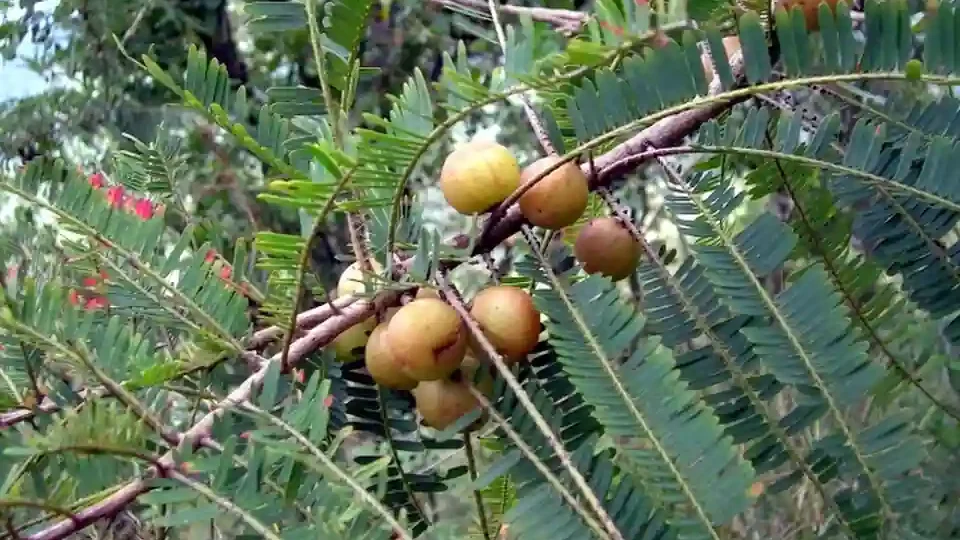
Amla, the fruit of Phyllanthus emblica, has a documented place in Ayurvedic medicine stretching back thousands of years, alongside use in the Siddha, Unani, and Tibetan medical systems.
Classical Ayurvedic texts and later Persian medical writing both reference amla as a hair tonic, applied both orally and topically, mentioned specifically as a restorative taken over time.
First-century Ayurvedic writing already described amla oil as a treatment for hair fall, roughly 2000 before the same ingredient resurfaced in a wellness-influencer’s morning routine.
How It’s Traditionally Used
In classical practice, amla is prepared as a warm oil infusion and massaged directly into the scalp, often as part of a broader scalp massage ritual believed to stimulate circulation. The oil is left on for an extended period before rinsing it out. It’s also consumed as a fruit, juice, or churna (powder), reflecting an interesting Ayurvedic view that hair health starts internally.
Amla is rarely used in isolation; it’s traditionally blended with other herbs like bhringraj, reetha, and brahmi into multi-ingredient formulations (traditionally known as trifala) rather than applied as a single-note treatment.
Noted Benefits
- Increases the active growth phase: clinical measurement shows a higher proportion of hair follicles shifting into the anagen (growth) stage and out of the resting (telogen) stage after consistent use
- Improves hair density and follicle size: documented in controlled measurements using scalp imaging technology, not just self-reported thickness
- Rich in vitamin C, antioxidants, and phytochemical compounds, including tannins and flavonoid glycosides that support the vitamins and minerals profile associated with healthier hair and scalp function
- Multi-mechanism action: proposed to work through antioxidant protection, mild DHT-blocking activity, and support for dermal papilla cell proliferation simultaneously, rather than through a single pathway
- Well-tolerated for long-term use: researchers note a near-zero side-effect profile, which matters for a treatment meant to be used consistently over months
What the Clinical Evidence Shows
Amla has the strongest clinical backing of any tradition in this piece. A 2024 triple-blind, randomized, placebo-controlled trial in women with female androgenetic alopecia found a statistically significant increase in the anagen-to-telogen ratio after 12 weeks of oral amla syrup (p=0.002), along with significantly higher physician- and patient-reported satisfaction compared to placebo.
A separate 90-day study using TrichoScan measurement found meaningful improvements in hair growth rate, density, and both vellus and terminal hair counts in a topical serum formulation (p<0.0001). A 2025 systematic review covering 16 herbal randomized controlled trials named amla, alongside rosemary, as one of the most clinically evidenced botanicals for hair fall management.
NOTE: Researchers are careful to note the evidence base is newer and smaller in scope than decades-old treatments like minoxidil, but it is genuine controlled-trial evidence, not just lab or anecdotal data.
The Market
Amla is projected to grow faster than the broader hair-oil market.
The difference is modest in percentage points, but meaningful at market scale: heritage ingredients can become growth categories of their own rather than simply participating in overall hair-care expansion.
The global amla oil market is valued at roughly $500 million as of 2024 and is projected to roughly double to $1 billion by 2034, growing at a 6.7% CAGR, widely outpacing the broader hair oil market’s 5.1% growth rate, driven by what one industry report calls a wider “Ayurvedic renaissance.”
India’s own hair oil market, worth $1.82 billion in 2025, is seeing amla-specific products grow at 7.02% CAGR even as legacy coconut oil retains the largest overall share. Amla rarely stands alone commercially: Marico’s Ayurvedic blend line combining amla with bhringraj and brahmi reportedly reached over 1,240 crore rupees in the 2024 fiscal year, up 14.6%, suggesting heritage multi-ingredient blends are outperforming single-ingredient amla products in premium urban markets.
The price gap is the clearest illustration of the markup story: a 300ml bottle of traditional Dabur amla oil, made in India and sold globally, runs around $6-10.
Fable & Mane’s HoliRoots oil, amla and ashwagandha reformulated with a French-perfumer scent and Western packaging, sells a 55ml bottle, roughly a sixth of the size, for $38, and a full 100ml size for $56 through prestige retailers.
Same ancestral ingredient. Very different price story.
Amla provides one of the clearest examples of how a familiar traditional ingredient can move from everyday hair oil into prestige beauty.
The Verdict
Amla is the one tradition on this list with real randomized controlled trial support for an actual growth-related outcome. It’s not a replacement for established medical treatments, but it’s the rare case where centuries of traditional use, modern clinical trial design, and market growth all point in the same direction.
Longer hair isn’t always faster-growing hair.
A treatment can improve the amount of hair you retain without changing what happens inside the follicle.
Hair Growth
A true growth claim implies an effect on the follicle or hair-growth cycle itself.
- Anagen / telogen ratio
- Hair density
- Growth rate
- Follicle activity
Length Retention
Hair can appear fuller or become longer simply because less of the existing hair is breaking off.
- Less mechanical breakage
- Less tangling
- Better moisture retention
- Lower surface friction
2. Yucca Root (Native American SW)
Origin and History
Yucca root, called mole in some Southwestern traditions, was used for generations by Navajo, Pueblo, and other nations of the American Southwest as a shampoo and soap. The plant served the community beyond hair care too: its leaves supplied fiber for weaving, and its flowers were eaten. Early ethnobotanical accounts from the region specifically describe yucca root washes producing long, strong, shining hair, with the Navajo tradition in particular documented as prizing yucca-washed hair as a marker of health and care.
How It’s Traditionally Used
Fresh or dried root is pounded — historically using a stone mortar and pestle, or a metate — and infused in water, releasing a naturally foaming, soap-like lather without any added detergent. The resulting liquid is worked through wet hair much like a modern shampoo, sometimes with other herbs added for scent, then rinsed thoroughly. The practice has continued largely unchanged into the present, still passed down as a home remedy rather than commercialized at scale.
Benefits
- Cleanses without synthetic sulfates: an alternative to the sulfate-based surfactants common in commercial shampoo, which can strip natural oils from the scalp
- Lathers naturally: saponins produce a genuine foam without added synthetic foaming agents
- Maintains a lower, scalp-friendlier pH: sitting closer to the scalp’s natural acidity than most commercial shampoos
- Traditionally used for dandruff and scalp irritation relief: associated anti-inflammatory and antifungal properties are cited across ethnobotanical and modern natural-hair sources alike
- Removes buildup gently: the same surfactant action credited with lifting product residue without the harsher stripping effect of synthetic clarifying shampoos
What the Evidence Shows
Yucca root’s cleansing power comes from saponins — plant compounds with a dual water-attracting and oil-attracting structure that let them lift dirt and oil the way a mild detergent does. This isn’t a growth claim, and it was never really presented as one; it’s a cleansing tradition, and the underlying saponin chemistry is well understood and consistent with the benefits described. The lower pH point in particular lines up with what dermatologists now recommend broadly for scalp health — yucca-based cleansers sit naturally around pH 4.5-5.5, compared to pH 5-7 for most commercial shampoos — well before “pH-balanced” became a shampoo marketing term.
The Market
Yucca is the outlier of the five in commercial terms: it hasn’t been absorbed into a dedicated market category the way amla, argan, and chébé have. It shows up as a supporting ingredient in sulfate-free and “clean” shampoo bars and natural soap formulations rather than anchoring its own product line or market-research category — a sign that its cleansing chemistry, while sound, hasn’t been marketed back to consumers with the same scale as the botanical oils on this list. There’s no premium single-ingredient yucca serum on the market to point to; raw dried yucca root sells for roughly $8-12 online, and it remains one of the only traditions here that hasn’t been meaningfully repackaged at a markup, simply because it hasn’t been widely commercialized at all.
The Verdict
Yucca isn’t a growth story. It’s a case where a centuries-old practice turns out to be doing exactly what modern formulation science would now recommend — gentle, low-pH, sulfate-free cleansing — decades before the industry started marketing those same qualities as innovation.
3. Rice Water (China and Vietnam)
Origin and History
Rice water is the most globally recognized of the five traditions here, largely thanks to the Red Yao women of Huangluo, China, known for hair averaging around six feet in length and for graying slowly into their eighties. The Yao women’s tradition is documented enough to have produced a modern landmark: in 2023, the village set a Guinness World Record for the longest hair-combing chain during its annual Long Hair Festival.
The practice of rinsing hair in the starchy water left over from washing or soaking rice appears more broadly across parts of Asia under various names, including a Japanese tradition known as yu-su-ru, with roots reportedly traced to Heian-period court women (794 to 1185 CE) who were known for floor-length hair. Footage of Yao hair rituals circulating online is largely what pushed rice water into mainstream global beauty content in recent years.
How It’s Traditionally Used
Rice is soaked or boiled, and the cloudy, starchy liquid is strained off and often left to ferment at room temperature for 24 to 48 hours, which concentrates its active compounds. The water is applied as a final rinse after normal washing, worked through the hair and scalp, left to sit for roughly 15 to 20 minutes, and then rinsed clean. The Yao women’s specific version reportedly combines fermented rice water with local herbs, prepared in a clay pot rather than a plastic or metal container.
Benefits
- Smooths the hair shaft and reduces surface friction: inositol content coats the cuticle, making strands glide against each other rather than catching
- Improves detangling: less friction during combing or brushing translates directly into fewer snags and less mechanical stress
- Reduces breakage indirectly: by lowering friction, rice water can reduce the split ends and snapping that come from everyday manipulation, contributing to a protein-treatment-like strengthening effect on the strand
- Adds shine and softness: a widely reported cosmetic benefit consistent with rice water’s starch-and-amino-acid film-forming effect on the hair surface
- Inexpensive and simple to prepare at home: requiring only rice and water, unlike commercial rinse-out treatments or comparable botanical rinses like rose water
What the Evidence Shows
This is the clearest myth-versus-fact case in the set. Multiple reviews of the published literature, including searches of PubMed and NIH databases, have found no clinical trials showing that rice water rinses stimulate hair follicles, increase hair count, or prevent hair loss in humans.
What does have support is narrower: inositol, one of rice water’s key compounds, has been shown to penetrate damaged hair shafts and reduce surface friction, which explains the smoother, less tangle-prone feel many users report. A small, often-cited 2010 paper suggested a scientific basis for this friction-reduction effect but relied heavily on historical examples rather than controlled testing.
It’s worth separating rice water rinses from rice bran extract specifically — a 2022 systematic review of ten studies found rice bran-derived products showed promise for hair growth in lab and animal models, which is a different substance and a different evidence base than the diluted starch water used in the traditional rinse. For the rinse itself, the effect is real but surface-level, not follicular. People who report thicker-looking hair after months of use are most likely seeing reduced breakage and normal ongoing growth, not accelerated growth.
The Market
Rice water’s commercial footprint is harder to size precisely than the other traditions here because it rarely anchors its own market-research category — it shows up folded into the broader “rice protein” and “fermented rice” ingredient trend across shampoo, conditioner, and shampoo-bar formulations, riding the same skinification and clean-beauty wave driving the scalp-treatment category’s roughly $4.7 billion year-to-date sales as of April 2026.
Its commercial reach is driven almost entirely by social content rather than dedicated product-category investment, which tracks with the evidence gap: it’s a viral ingredient story more than a clinically differentiated one. Premium formulations built around it, like INALA’s fermented rice water treatment, sell for $44-59 per bottle; the traditional version costs whatever a bag of rice runs, since the “active ingredient” is the leftover water most people already pour down the drain.
The Verdict
Rice water does something real for the visible hair shaft and nothing measurable for the follicle. The Yao women’s remarkable hair is very likely the product of many contributing factors beyond rice water alone — genetics, diet, and hair care practices as a whole — not evidence that this one step is doing the heavy lifting.
4. Chébé (Chad, Africa)
Origin and History
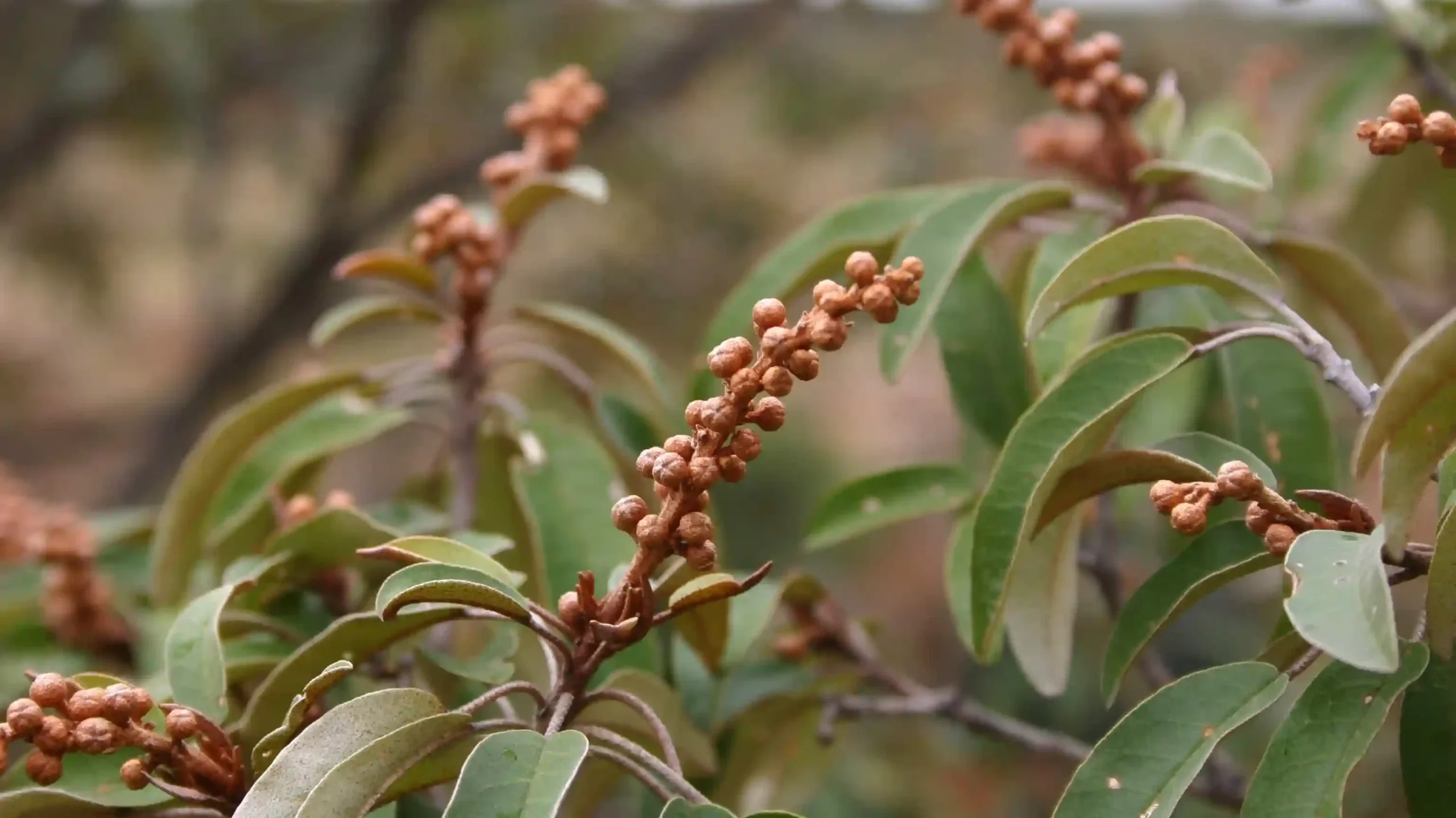
Chébé powder is ground from the seeds of a flowering plant that grows wild in the Guéra Massif mountains of Northern Chad. For generations, women of the region’s Bassara Arab tribe have harvested and pulverized the seeds into a fine powder, mixed with oils into a paste applied directly to the hair strand — a practice historically passed down from mother to daughter and, until relatively recently, kept largely within the region before spreading globally through social media.
How It’s Traditionally Used
Chébé powder is combined with oils — traditionally including clove, mahaleb, and other regional botanicals — into a thick paste, then applied section by section directly onto the hair strands rather than the scalp, a key difference from most treatments on this list. Hair is often then styled into a protective updo and left for days or weeks between washes, allowing the paste to continue coating and protecting the strand through repeated handling.
Benefits
- Reduces breakage: the coating effect strengthens the hair shaft against mechanical stress from combing, styling, and daily wear
- Retains length over time: a direct consequence of less breakage; hair that isn’t snapping off simply stays longer
- Moisturizes and improves manageability: particularly noted for coily and textured hair types, where moisture retention is a common challenge
- Supports scalp balance: reported alongside the strand-level protection, though this effect is less documented than the breakage-reduction benefit
- Doesn’t stain skin or fabric: a practical advantage over some comparable traditional treatments like henna
What the Evidence Shows
There is no clinical research showing chébé powder stimulates dormant or damaged follicles, and dermatology-focused reviews are direct about this: coating the hair shaft does nothing for follicle-level issues like traction alopecia or scarring. What chébé plausibly does is support moisture retention and reduce mechanical breakage, which is enough on its own to explain the dramatic length many practitioners achieve — length retention over years, rather than accelerated growth. The distinction matters most for anyone using chébé specifically to address thinning or a receding hairline, where it isn’t the right tool.
The Market
Chébé is the earliest-stage commercial story of the five; it doesn’t yet have a dedicated market-tracking category the way argan or amla oil do, and its growth is almost entirely social-commerce driven.
That’s still meaningful context: beauty and personal care was the top-selling product category on TikTok Shop globally in 2024, moving roughly 370 million items, and it’s this same viral-commerce channel that has taken chébé from a regional practice largely confined to Chad into a product now sold by dozens of independent brands internationally within a few years.
Raw chébé powder itself is inexpensive; around $8-10 for a 2oz bag, enough for months of use, but the formulated “chébé butter” blends that dominate the market, mixing the powder with shea and mango butter into a ready-to-use paste, typically run $18-30 for a comparable 6-8oz jar.
The Verdict
Chébé is a length-retention story, not a growth story, and that distinction is worth stating plainly given how often it’s marketed as a “hair growth” product. What it does well is protecting strands from breakage — it does well enough that generations of visible results speak for themselves.
5. Argan Oil (Morocco)
Origin and History
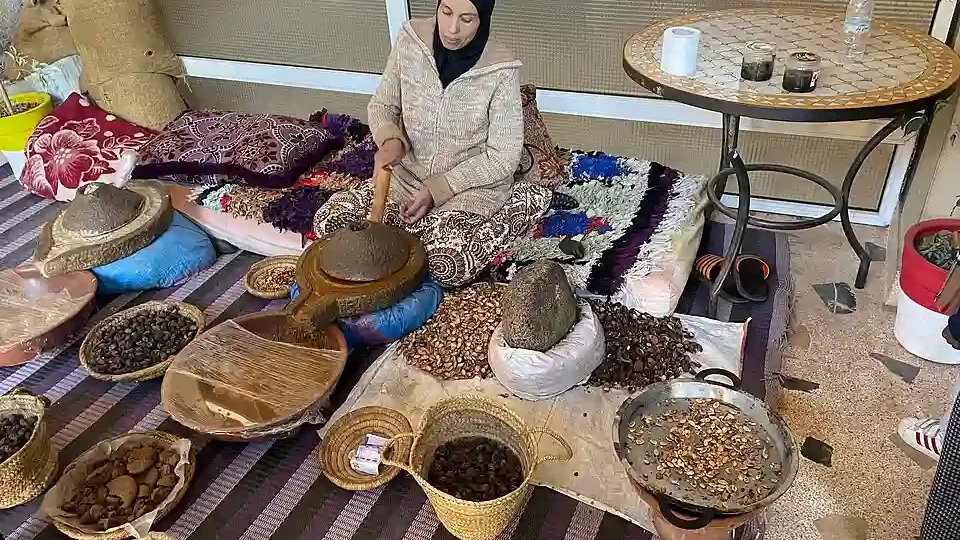
Argan oil comes from the kernel of the argan tree, a species found almost exclusively in southwestern Morocco. It has been part of Moroccan cosmetic and culinary tradition for centuries, historically used on both skin and hair, before becoming a global cosmetic phenomenon — branded “liquid gold” — in the early 2000s. It’s now one of the most commercially ubiquitous ingredients in hair care worldwide, appearing in products across nearly every price point.
How It’s Traditionally Used
Traditional extraction is labor-intensive: argan fruit is dried, the nuts cracked by hand — historically work carried out by Moroccan women’s cooperatives — and the kernels cold-pressed to release the oil. Used both as a culinary staple and a cosmetic treatment, it’s traditionally applied to hair ends and skin, valued as much for everyday moisture as for any specific therapeutic claim.
Benefits
- High in antioxidants, essential fatty acids, and vitamin E: a nutrient profile that supports its use across both scalp and skin applications
- Adds shine and softness: one of the most consistently reported and best-supported cosmetic effects
- Offers protection against UV and environmental damage: antioxidant activity has documented benefits for protecting hair from sun exposure and other environmental stressors
- Lightweight texture that controls frizz: absorbs without the heavy buildup associated with denser oils
- Multi-purpose across skin and hair: the same antioxidant and fatty-acid profile that benefits hair also supports skin conditioning, extending its traditional versatility into modern routines
What the Evidence Shows
Argan oil has the largest gap between commercial ubiquity and hair-specific clinical evidence of any tradition in this piece.
There’s no clinical support for argan oil preventing hair loss or stimulating regrowth; reviewers who’ve gone through the available studies describe the follicle-stimulation claims as essentially unsupported, and one 2021 study often cited in its favor lacked a control group entirely, comparing results only to baseline over six months in a condition (hair shedding) known to resolve on its own with time. What is better established is its antioxidant content and its documented benefits for skin, including evidence for UV protection that may extend to protecting hair from environmental damage. Its core hair benefits are cosmetic: shine, softness, and frizz control, all genuinely real, just not the same as growth.
The Market
Argan is by far the most commercially dominant tradition in this piece, though market-size estimates vary sharply by research firm, from roughly $480 million to over $2 billion for 2026 alone, depending on methodology and scope.
What’s consistent across sources: personal care and cosmetics account for the large majority of demand (multiple estimates put haircare and skincare applications at 45-60% of total use), the United States alone represents close to 30% of global demand, and argan is the fastest-growing single oil segment within the broader $25.3 billion global hair oil market, expanding faster than legacy categories like coconut oil as premiumization and K-beauty-style serum formats pull it into new product formats.
The category’s flagship product, Moroccanoil Treatment, also known as the formula credited with starting the entire argan oil hair-care boom in 2007, sells a 3.4oz bottle for $44-50, while unbranded 100% pure argan oil in the same size range is widely available for $12-18.
The Verdict
Argan oil is the most widely used and least hair-specifically-evidenced tradition here. That gap between market presence and clinical support is exactly why it makes sense as the entry point into the next section.
Five traditions. Five very different evidence profiles.
The important question isn’t whether an ingredient is traditional. It’s what the evidence says it actually does.
Amla
Yucca
Rice Water
Chébé
Argan Oil
Who Gets Credit
All five of these ingredients now show up in premium Western reformulations — repackaged into $30 to $60 serums, masks, and treatments, frequently marketed as scientific breakthroughs rather than centuries-old practice, inside a global hair oil category alone worth $25.3 billion in 2025 and heading toward $54 billion by 2035. Some brands do this transparently, sourcing ingredients directly from the originating regions and building in profit-sharing with the communities who developed the technique. Many don’t: the ingredient gets listed, the tradition and the people behind it don’t. It’s the same pattern seen across the broader clean beauty ingredient boom — and the same hype-versus-evidence gap we’ve flagged before with ingredients like collagen and shea butter, where a real traditional ingredient gets a modern marketing story that outruns what the evidence actually says. First-century Ayurvedic texts documented amla oil as a hair fall treatment roughly two thousand years before it appeared in a TikTok hair-oiling tutorial, and coconut oil’s use on South Asian scalps predates most of the countries running “clean beauty” campaigns around it today by millennia — a timeline gap that rarely makes it into the marketing copy.
Five traditional practices. Five different commercial opportunities.
The commercial value of an ancestral ingredient isn’t determined only by whether it stimulates hair growth. Cleansing, conditioning, breakage reduction and sensory benefits can all become profitable product categories.
This is worth naming plainly in the piece rather than treating it as a footnote: the same evidence-honesty this article applies to growth claims applies here too.
A product can use amla, chébé, or argan oil and be completely honest about what the ingredient does, or it can borrow the story of the tradition while erasing where it came from. Readers evaluating “ancient secret” marketing claims are better served knowing both things at once.
The Takeaway
The pattern across all five: retention, condition, and cleansing are not the same as growth, and only one of these traditions has clinical evidence for the latter. That’s not a knock against the other four — chébé’s centuries of visible results and yucca’s sound chemistry are real achievements on their own terms. But conflating “my hair looks fuller because it’s breaking less” with “this stimulated new growth” is exactly the gap that lets modern marketing overstate what these ingredients — traditional or reformulated — can actually do.
